Modern air defense is a race against time. As aerial threats become faster, stealthier, and more complex, the ability to detect and destroy them within seconds has become critical.
That challenge gave rise to the Aster missile family, one of Europe’s premier air defense solutions.
Today, Aster protects warships and ground forces alike, serving as a key component of several nations’ air and missile defense networks. This guide explores its development, variants, capabilities, and growing role in modern warfare.
At a Glance
| Category: | Details: |
| Type | Surface-to-air missile |
| Role | Naval and land-based air defense |
| Manufacturer | MBDA |
| Origin | Europe through a France and Italy-led program |
| Variants | Aster 15 and Aster 30 |
| Weight | Aster 15: 310 kilograms (683 pounds) Aster 30: 450 kilograms (992 pounds) |
| Length | Aster 15: 4.2 meters (13.8 feet) Aster 30: 4.9 meters (16.1 feet) |
| Speed | Aster 15: Mach 3 (3,704 kilometers/2,302 miles per hour) Aster 30: Mach 4.5 (5,557 kilometers/2,685 miles per hour) |
| Range | Aster 15: 30 kilometers (19 miles) Aster 30: Up to 150+ kilometers (93 miles) |
| Propulsion | Solid propellant, two-stage |
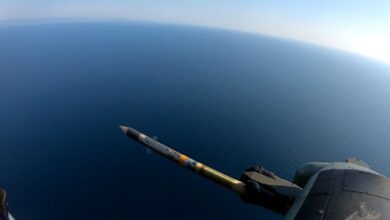
| Launch Method | Vertical launch |
| Guidance | Inertial guidance with an active radar seeker |
| Target Types | Aircraft, helicopters, drones, cruise missiles, ballistic missiles |
| Deployment | Naval and land-based systems |
| Key Land System | SAMP/T |
What Is the Aster Missile?
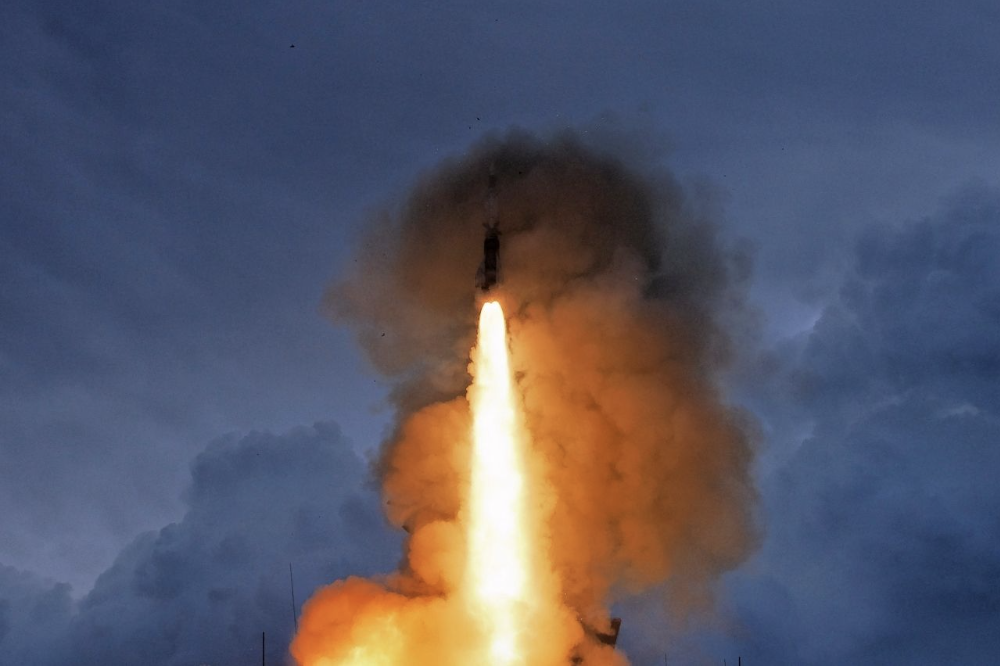
The Aster missile family is designed to engage aircraft, helicopters, drones, cruise missiles, and certain ballistic missile threats.
Unlike many earlier air defense missiles that focused primarily on aircraft interception, the Aster missiles were designed from the outset to counter a broad range of modern aerial threats.
Today, it serves as the primary interceptor for several European naval and ground-based air defense systems.
How the Aster Came to Be
During the 1980s, European nations recognized the need for a new generation of air defense missiles capable of replacing aging systems while addressing increasingly complex threats.
France and Italy became the program’s primary partners, seeking a missile that could provide both fleet air defense at sea and area air defense on land.
Development was led by the consortium that eventually became MBDA, combining expertise from several European defense companies.
Key Milestones:
- 1981: France and Italy establish a joint requirement for a next-generation surface-to-air missile.
- 1989: The Aster program enters full-scale development.
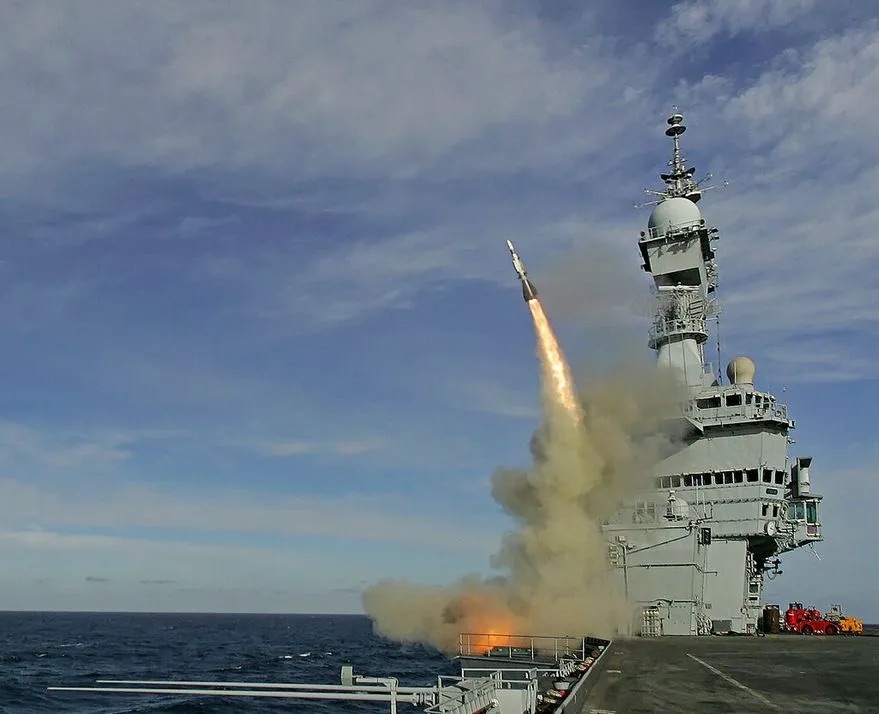
- 2002: The Aster 15 enters operational service. First fired from the Aircraft Carrier Charles de Gaulle.
- 2010: The Aster 30’s initial operational capability with SAMP/T in the French service.
- 2023: The Aster 30 Block 1 NT reaches a major development milestone, introducing enhanced capabilities against more sophisticated ballistic missile threats.
From Concept to Operational Service
The resulting missile family emphasized high maneuverability, advanced guidance systems, and compatibility across multiple launch platforms.
After years of testing and refinement, Aster entered operational service in the early 2000s aboard naval vessels and later through land-based systems.
Aster Variants
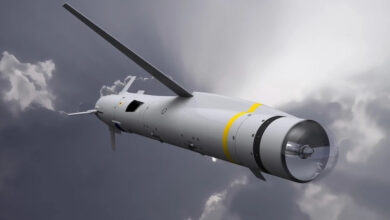
The Aster missile family is built around two primary operational variants: the Aster 15 and the Aster 30. While both share common technologies, including active radar guidance and the missile’s distinctive PIF-PAF maneuvering system, they are optimized for different defensive roles.
Aster 15
The Aster 15 is the short- to medium-range member of the family, designed primarily for point and local-area air defense. It is intended to protect warships and critical installations from nearby aerial threats.
Its rapid reaction time and high maneuverability make it particularly effective against fast-moving targets, including sea-skimming anti-ship missiles. The missile is commonly deployed aboard naval vessels that require a compact yet capable air defense solution.
Aster 30
The Aster 30 is the long-range variant, developed to provide area air defense and missile defense capabilities over much larger distances.
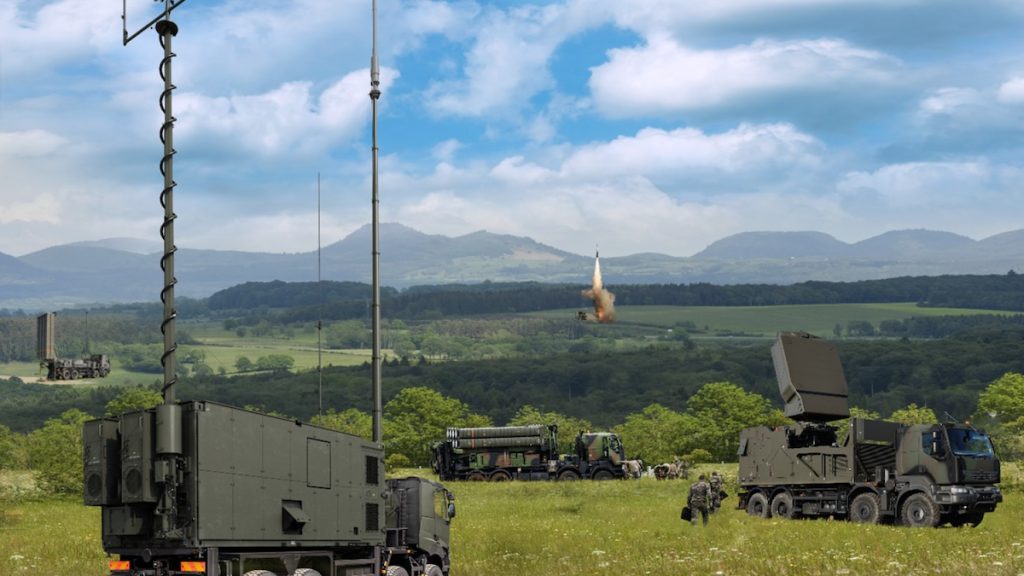
The missile serves as the primary interceptor for the SAMP/T ground-based air defense system and is also deployed aboard advanced naval platforms such as air defense destroyers and frigates.
Newer variants, including the Aster 30 Block 1 and Block 1 NT, incorporate enhanced sensors and guidance systems to improve performance against short- and medium-range ballistic missiles.
How the Aster Missile Works
Key Features
PIF-PAF Maneuvering System
One of the Aster missile’s most distinctive features is its Pilotage en Force–Pilotage Aérodynamique Fort (PIF-PAF) control system. This combines aerodynamic controls with lateral thrusters, allowing the missile to execute extremely sharp maneuvers during the terminal phase of interception.
Rapid Reaction Capability
The Aster is designed to detect, track, and engage threats within seconds, allowing operators to respond quickly to fast-moving aircraft, missiles, and drone attacks before they reach protected assets.
Simultaneous Multi-Target Engagement
The missile system can engage multiple threats at the same time, enabling air defense units to counter coordinated attacks involving aircraft, cruise missiles, drones, or ballistic threats from different directions.
High-Volume Defensive Fire
With a high rate of fire and vertical-launch architecture, Aster-equipped systems can rapidly launch successive interceptors to maintain defensive coverage during large-scale saturation attacks.
360-Degree Coverage
Unlike systems limited by launcher orientation, Aster missiles can be launched vertically and maneuver toward targets in any direction, providing all-around protection without requiring repositioning.
Strengths of the Aster Missile
- Advanced terminal interception: The missile’s high maneuverability makes it particularly effective during the final moments before impact, when precision is most critical.
- Proven operational service: The missile family has been adopted by several nations and integrated into some of the world’s most advanced naval and ground-based air defense systems.
Limitations of the Aster Missile
- Complex integration requirements: The missile performs best when integrated into sophisticated radar and command-and-control networks.
- Smaller user base: Compared with some American or Russian systems, the Aster family has fewer operators, potentially limiting economies of scale.
Global Use and Deployment
The Aster missile is in service with several European and international armed forces, including those of France, Italy, the UK, Saudi Arabia, Lithuania, Qatar, Ukraine, and Singapore, to defend military installations, population centers, and critical infrastructure against threats.
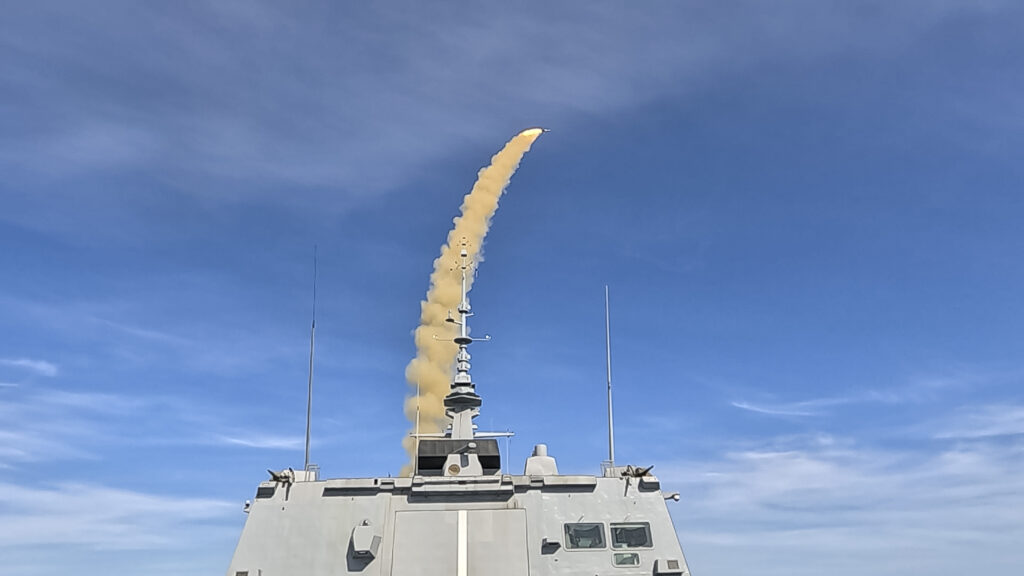
At sea, the Aster 15 and 30 equip major warship classes, such as the Type 45 destroyer, the Horizon-class frigate, and the FREMM frigate, to provide area air defense for carrier strike groups, amphibious task forces, and other high-value naval assets.
The Italian Navy has also been testing its compatibility with the P432 patrol vessel.
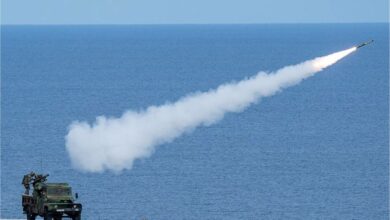
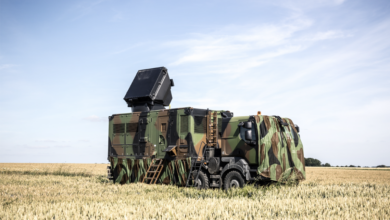
On land, the missile forms the backbone of the SAMP/T air defense system, providing area protection against aircraft and missile threats.
Combat Use
The Aster missile family forms the backbone of air and missile defense for several European armed forces against a broad spectrum of aerial threats:
- Combat-proven in the Red Sea: Since late 2023, French and Italian warships equipped with Aster missiles have repeatedly intercepted drones and anti-ship missiles launched by Houthi forces while protecting commercial shipping and coalition naval operations in the Red Sea. These engagements marked one of the missile family’s most significant real-world combat deployments.
- Defense of Ukraine: Although the Aster missile itself has not been independently highlighted as frequently as Patriot interceptors, Franco-Italian SAMP/T batteries using Aster 30 missiles have defended Ukrainian cities and critical infrastructure against Russian missile attacks.
Aster versus Major Competitors
| Missile/System | Country/Region | Maximum Range | Primary Role |
| Aster 30 | Europe | 150+ kilometers (93 miles) | Air and missile defense |
| MIM-104 Patriot | United States | 160+ kilometers (100 miles) | Air and missile defense |
| SM-2 | United States | 150+ kilometers (93 miles) | Fleet air defense |
| S-400 Triumf | Russia | Up to 400 kilometers (248 miles) | Long-range air defense |
| HQ-9 | China | Up to 300 kilometers (186 miles) | Area air defense |
Future Outlook
Ongoing modernization efforts are focused on improving performance against advanced ballistic missiles, hypersonic threats, and increasingly sophisticated drone swarms.
As modern battlefields become increasingly crowded with fast, maneuverable, and low-observable threats, the Aster family is expected to remain one of Europe’s most important defensive weapons.
Its combination of agility, flexibility, and multi-mission capability ensures that it will continue protecting ships, military bases, and critical infrastructure for years to come.