When the Cold War entered its most technologically intense years, air forces around the world raced to field faster, smarter, and more agile fighters.
France answered with a jet that looked familiar at first glance but was an entirely new machine beneath the skin. The Dassault Mirage 2000 blended speed, maneuverability, and advanced electronics into one of the most recognizable fourth-generation fighters ever built.
Here’s a closer look at how the Mirage 2000 came to be, what made it successful, and why it still matters today.
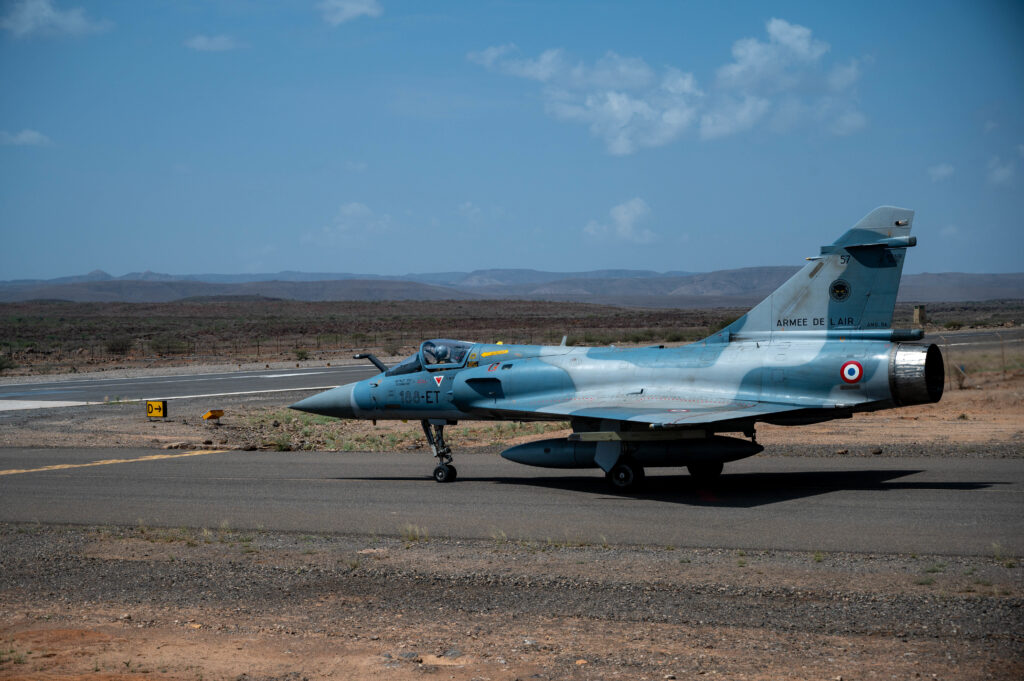
At a Glance
| Category: | Details: |
| Type | Fourth-generation multirole fighter |
| Role | Air superiority, interception, strike, reconnaissance, nuclear delivery |
| Manufacturer | Dassault Aviation |
| Crew | Standard: 1 Trainer and Strike Variants: 2 |
| Length | 14.36 meters (47.1 feet) |
| Wingspan | 9.13 meters (29.11 feet) |
| Height | 5.20 meters (17.1 feet) |
| Weight | Combat: 9,525 kilograms (21,000 pounds) Maximum Takeoff: ~17,463 kilograms (38,500 pounds) |
| Engine | 1 × SNECMA M53 afterburning turbofan (Maximum Thrust: 98 kN) |
| Maximum Speed | Mach 2.2 (2,717 kilometers/1,688 miles per hour) |
| Combat Radius | Around 740 to 1,550 kilometers (460 to 963 miles) depending on mission |
| Ferry Range | Approximately 3,335 kilometers (2,072 miles) with external fuel tanks |
| Service Ceiling | Around 60,000 feet (18,288 meters) |
| Rate of Climb | Approximately 285 meter per second (935 foot per second) |
| Radar | Thomson-CSF RDM/RDI; later RDY radar on upgraded variants |
| Flight Control System | Digital fly-by-wire |
| Main Gun | 2 × 30 mm DEFA cannons |
| Air-to-Air Missiles | Magic II, Super 530D, MICA |
| Air-to-Ground Weapons | Laser-guided bombs, cruise missiles, anti-ship missiles |
| Global Operators | Brazil, Egypt, Greece, India, Peru, Qatar, Taiwan, UAE |
| Successor Aircraft | Dassault Rafale |
What Is the Dassault Mirage 2000?
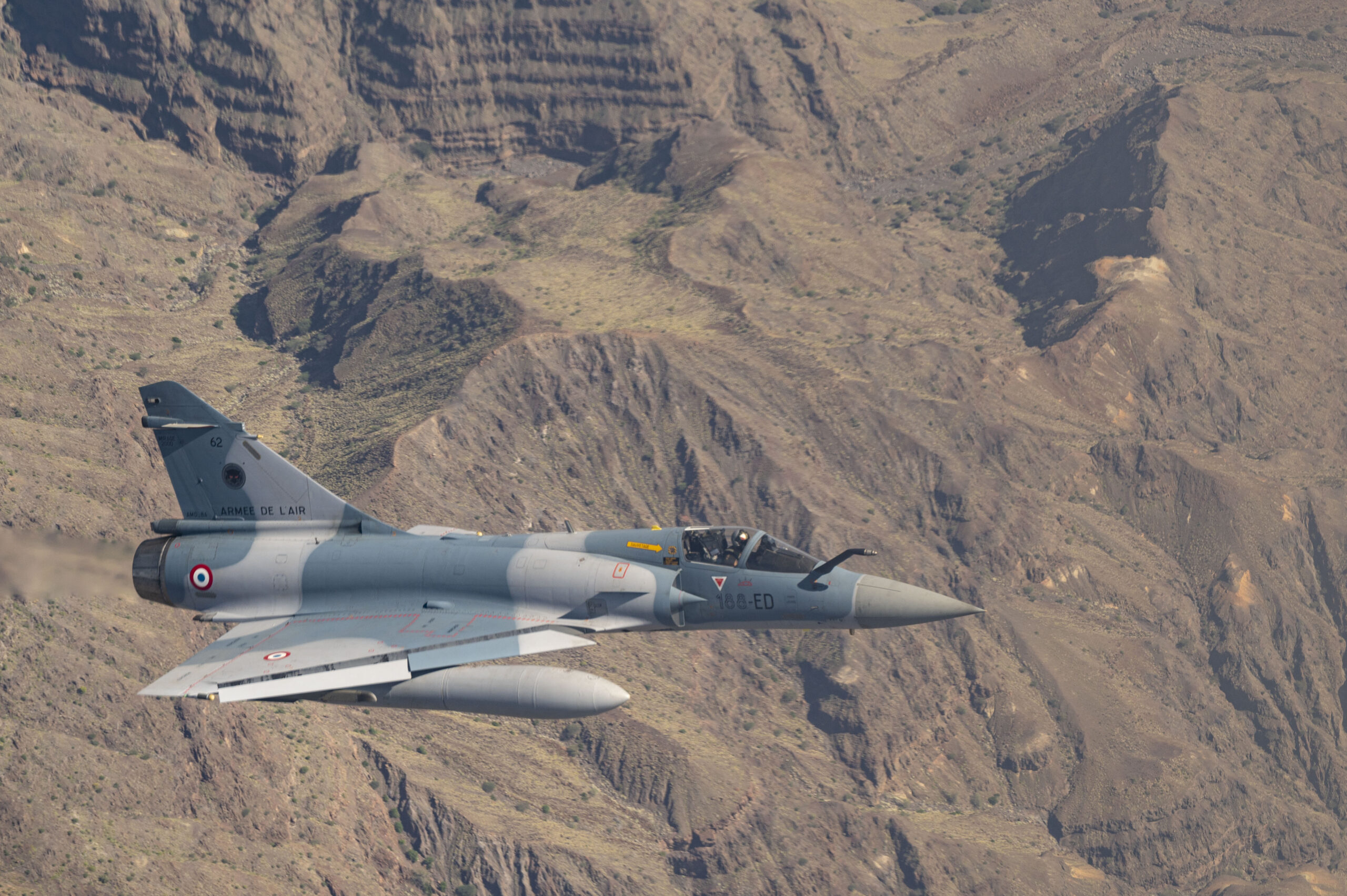
The Dassault Mirage 2000 is a French single-engine, fourth-generation multirole fighter developed by Dassault Aviation.
Designed around a tailless delta-wing layout, the aircraft was built for both air superiority and strike missions. It first flew in 1978 and officially entered service with the French Air Force in 1984.
The Mirage 2000 replaced older Mirage III and Mirage F1 aircraft while introducing fly-by-wire flight controls, improved radar systems, and modern missile integration.
More than 600 units were produced before the production line closed in 2007.
How the Mirage 2000 Came to Be
During the 1970s, France needed a lightweight but capable fighter that could compete with aircraft like the F-16 Fighting Falcon and MiG-29 without the cost and complexity of twin-engine designs.
Dassault initially explored several concepts, including variable-sweep wing aircraft, before settling on the “Delta 2000” concept.
The company returned to the delta-wing formula used in earlier Mirage fighters but paired it with unstable aerodynamics and digital fly-by-wire controls to improve agility and handling.
The prototype conducted its maiden flight on March 10, 1978, reaching supersonic speed during testing.
Mirage 2000 Variants
The aircraft evolved into several specialized versions over time. Here’s a quick look at how the Mirage 2000 family expanded across air superiority, strike, nuclear, and export roles.
| Variant | Primary Role | Key Features |
| Mirage 2000C | Air superiority fighter | Single-seat interceptor |
| Mirage 2000B | Trainer | Two-seat conversion trainer |
| Mirage 2000N | Nuclear strike | Carried France’s ASMP nuclear missile |
| Mirage 2000D | Precision strike | Dedicated ground-attack platform |
| Mirage 2000H/TH | Export multirole version | Single-seat (H) and two-seat trainer (TH) export variant for India, locally designated Vajra |
| Mirage 2000-5 | Advanced multirole | Upgraded radar and beyond-visual-range combat |
| Mirage 2000-9 | Export multirole version | Advanced avionics for UAE |
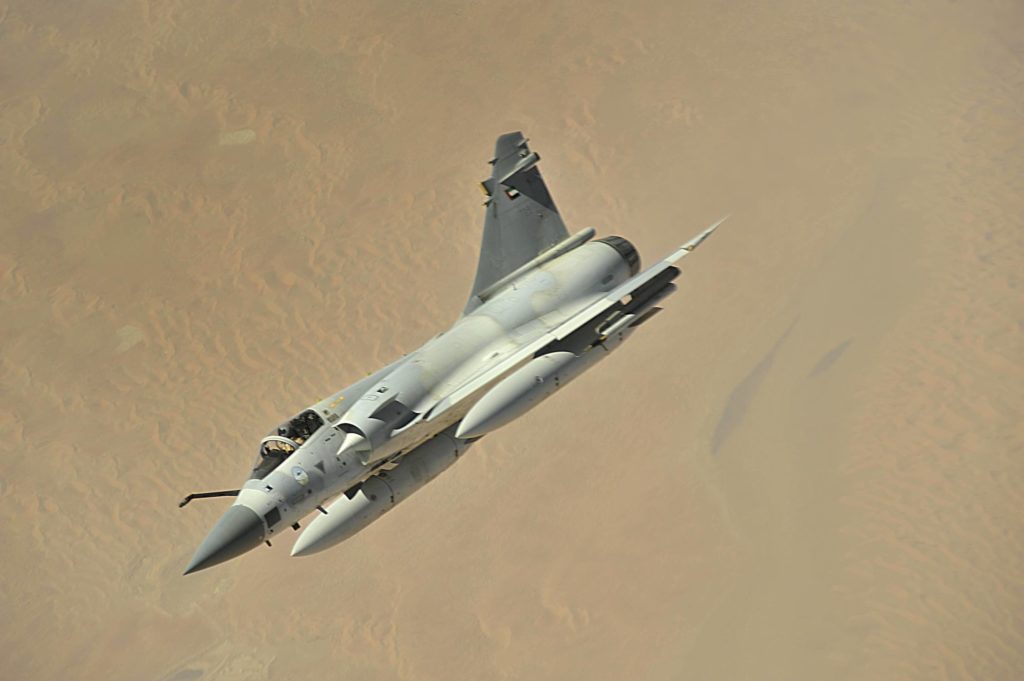
How the Mirage 2000 Works
Key Features
Delta-Wing Design
The Mirage 2000 uses a tailless delta-wing layout, giving the aircraft strong high-speed performance and excellent maneuverability. Delta wings also provide structural simplicity and large internal fuel capacity.
Fly-by-Wire Flight Controls
Unlike earlier Mirage fighters, the Mirage 2000 relies on computerized fly-by-wire controls. These systems constantly adjust the aircraft during flight, allowing the jet to remain stable even with an aerodynamically unstable design.
Multirole Combat Capability
The aircraft can carry air-to-air missiles, precision-guided bombs, anti-ship weapons, and reconnaissance pods. Modernized versions also integrate advanced radar and electronic warfare systems.
Strengths
- Proven combat reliability: French Mirage 2000s achieved high operational availability during NATO operations in Kosovo. Dassault states the aircraft demonstrated 100 percent wartime availability during the campaign.
- Excellent air-to-air performance: The Mirage 2000 became known for strong interception performance, high climb rates, and reliable beyond-visual-range engagement capability.
- Adaptability: Over the years, the platform evolved from an interceptor into a true multirole aircraft capable of nuclear strike, deep attack, and precision bombing missions.
Limitations
- Aging airframe: Although upgraded versions remain capable, the aircraft’s core design dates back to the 1970s. Modern stealth fighters now offer superior survivability.
- Limited stealth features: The Mirage 2000 lacks low-observable shaping and radar reduction technologies found on fifth-generation fighters.
- Sustainment challenges: Some operators face growing maintenance and spare-parts concerns as fleets age.
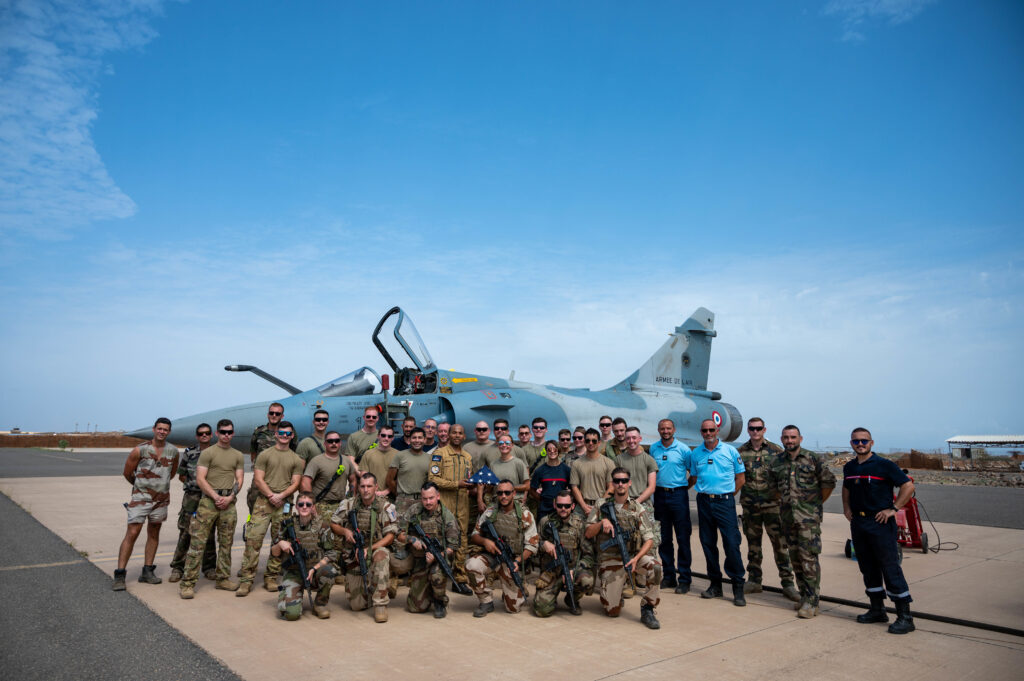
Global Combat Use
The Mirage 2000 has served with multiple countries, including France, India, the United Arab Emirates, Greece, and Taiwan.
French aircraft participated in the Gulf War, Kosovo, Afghanistan, Libya, and operations against ISIS. Indian Mirage 2000s gained particular recognition during the 1999 Kargil War with Pakistan, where they conducted precision strikes in mountainous terrain.
The Mirage 2000 has recently entered Ukrainian service, with France providing upgraded Mirage 2000-5 aircraft to support the country’s air defense and operational requirements.
Mirage 2000 vs Competitors
| Aircraft | Country | Engine Count | Maximum Speed | Primary Strength |
| Dassault Mirage 2000 | France | 1 | Mach 2.2+ (2,717 kilometers/1,688 miles per hour) | Agility and multirole flexibility |
| F-16 Fighting Falcon | United States | 1 | Mach 2 (2,450 kilometers/1,535 miles per hour) | Cost-effective multirole operations |
| MiG-29 | Russia | 2 | Mach 2.25 (2,778 kilometers/1,726 miles per hour) | High maneuverability |
| Saab JAS 39 Gripen | Sweden | 1 | Mach 2 (2,470 kilometers/1,535 miles per hour) | Modern avionics and efficiency |
Future Outlook
The Mirage 2000 is gradually being replaced by newer fighters such as the Dassault Rafale, but the aircraft still has operational life left in several air forces.
Upgraded variants continue receiving avionics improvements, new weapons integration, and mid-life modernization packages. France’s Mirage 2000D RMV upgrade program is one example of how operators are extending the aircraft’s usefulness into the next decade.
Even as stealth fighters dominate headlines, the Mirage 2000 remains a reminder that smart engineering, adaptability, and combat reliability can keep an aircraft relevant long after its first flight.