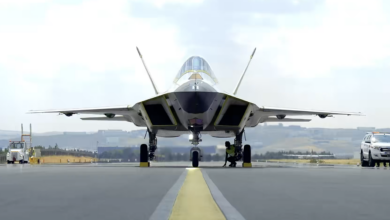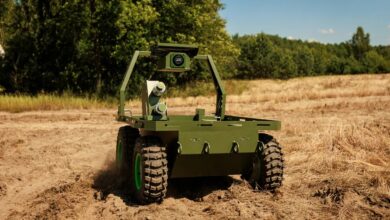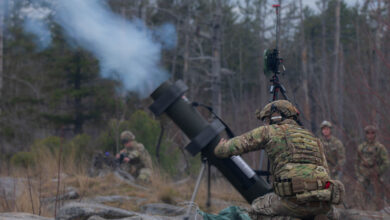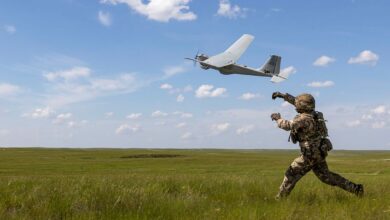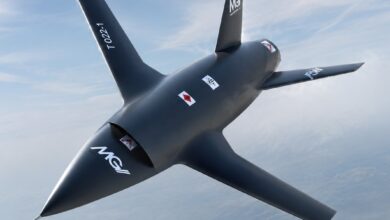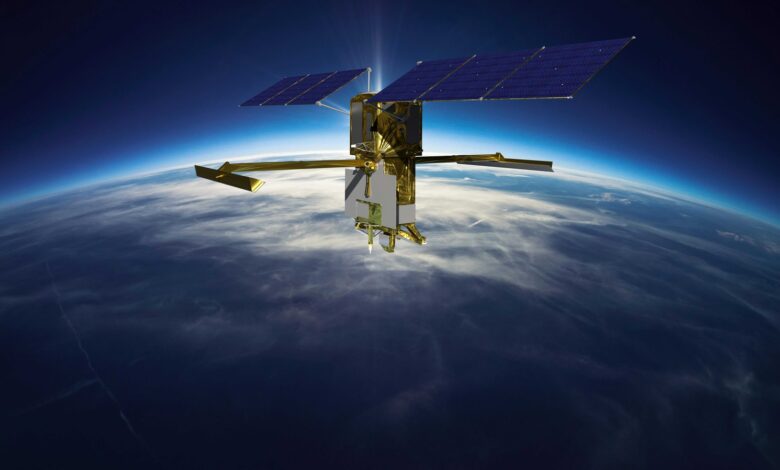
A Chatham House research paper has tracked the growing interest in dual-use technologies, the forms of capability that carry both civilian and military application and that are now drawing rising investment across the defense sector.
None of this surprises anyone who has watched defense climb the political agenda over the past several years.
What deserves more scrutiny is the term itself. It retains genuine value within legal and regulatory frameworks, but as NATO and its allies prepare for conflict on Earth and in orbit, its broader currency in public and strategic discourse has become a liability.
As CEO of a company building autonomy systems for satellites operating in contested orbits, I have a direct stake in this debate. My own products sit squarely inside current dual-use classifications. I’d argue that’s exactly why the terminology matters to get right, not a reason to discount what follows.
Exceptions Prove the Rule
Some technologies have no civilian application worth naming. An anti-personnel landmine serves no purpose outside war, and neither does a nuclear warhead. These are the exceptions.
Radar, rockets, satellites, GPS, and lasers all carry legitimate civilian uses alongside their military ones, which is less a curiosity than a general rule: the use of a technology is independent of the technology itself.
Language shapes perception, and “dual-use” shapes it badly. By drawing a line between the military and the civilian, the term implies two separate domains rather than a single contested space.
The history of warfare argues otherwise. American public consent for the war in Vietnam drained away over a decade, and as it did, the constraints on military action tightened correspondingly.
The Russian army in 1917 still held men in the field, but the economy behind them had collapsed, and without food, fuel, transport, or money, the front could not be sustained regardless of how many soldiers remained in the trenches.
A military’s effectiveness has never been separable from the society that funds, supplies, and consents to it.

Europe’s Comfortable Fiction
Europe’s discomfort with this reality is well documented and not hard to explain. The modern continent took shape in the rubble of two World Wars, and peace and solidarity sit among the founding ideals of the European project.
The Roman proverb holds that those who want peace should prepare for war, and Europe in 2026 finds itself caught precisely at that junction of wanting the resilience and self-sufficiency that a dangerous world demands, while remaining culturally unprepared for the sacrifices that resilience requires. “Dual-use” compounds this gap rather than closing it.
Russia is not waiting for Europe to resolve the tension. It is stalking satellites, conducting sabotage and cyber operations, running espionage networks, poisoning citizens on foreign soil, and sending drones into sovereign airspace.
The pressure is aimed squarely at the civilian realm: ground and space infrastructure, democratic governance, public trust. Russia does not observe the boundary that “dual-use” assumes, because modern conflict does not respect that boundary in the first place.
Realists Are Already Moving
The countries that take a Russian confrontation most seriously are the ones already dismantling the distinction.
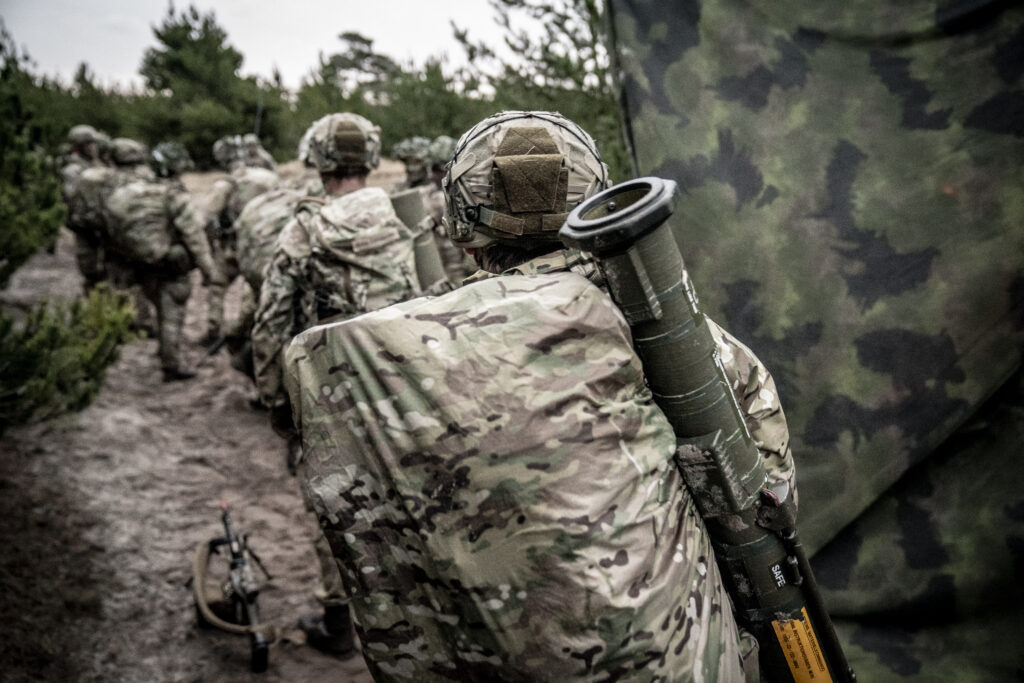
Finland’s comprehensive security strategy integrates the defense of the whole of society rather than treating civilian and military preparedness as parallel tracks.
The Baltic states are preparing their populations directly for the possibility of conflict. Sweden has joined NATO and adopted a formal policy of Total Defence.
Denmark has extended national service from four months to eleven and is expanding the number of conscripts it trains each year. The Netherlands has begun sending households guidance on surviving the first 72 hours of a major emergency.
The Case Europe Hasn’t Made to Itself
This is what realism looks like in Europe in 2026, and it leaves little room for the comforting fiction that war is the business of professionals, conducted somewhere over there, while the rest of society carries on undisturbed.
“Dual-use” has entered public discourse precisely because it allows that fiction to persist.
European resilience requires the opposite: clear-eyed assessment of the threat, willingness to set aside short-term convenience for long-term security, and support for the people and capabilities, autonomous systems, drones, sensors, and the architecture that connects them, on which that security increasingly depends.
Europe has not yet made that case to itself. It will not have the luxury of avoiding it indefinitely.

Graeme Ritchie is CEO and co-founder of Shield Space.
Graeme spent over two decades in special forces and operational command before leading MoD programmes in autonomy, counter-UAS, and Defence Space.
He now runs Shield Space, a UK defence tech company developing control and counterspace capabilities for NATO and its allies.
The views and opinions expressed here are those of the author and do not necessarily reflect the editorial position of The Defense Post.
The Defense Post aims to publish a wide range of high-quality opinion and analysis from a diverse array of people – do you want to send us yours? Click here to submit an op-ed.