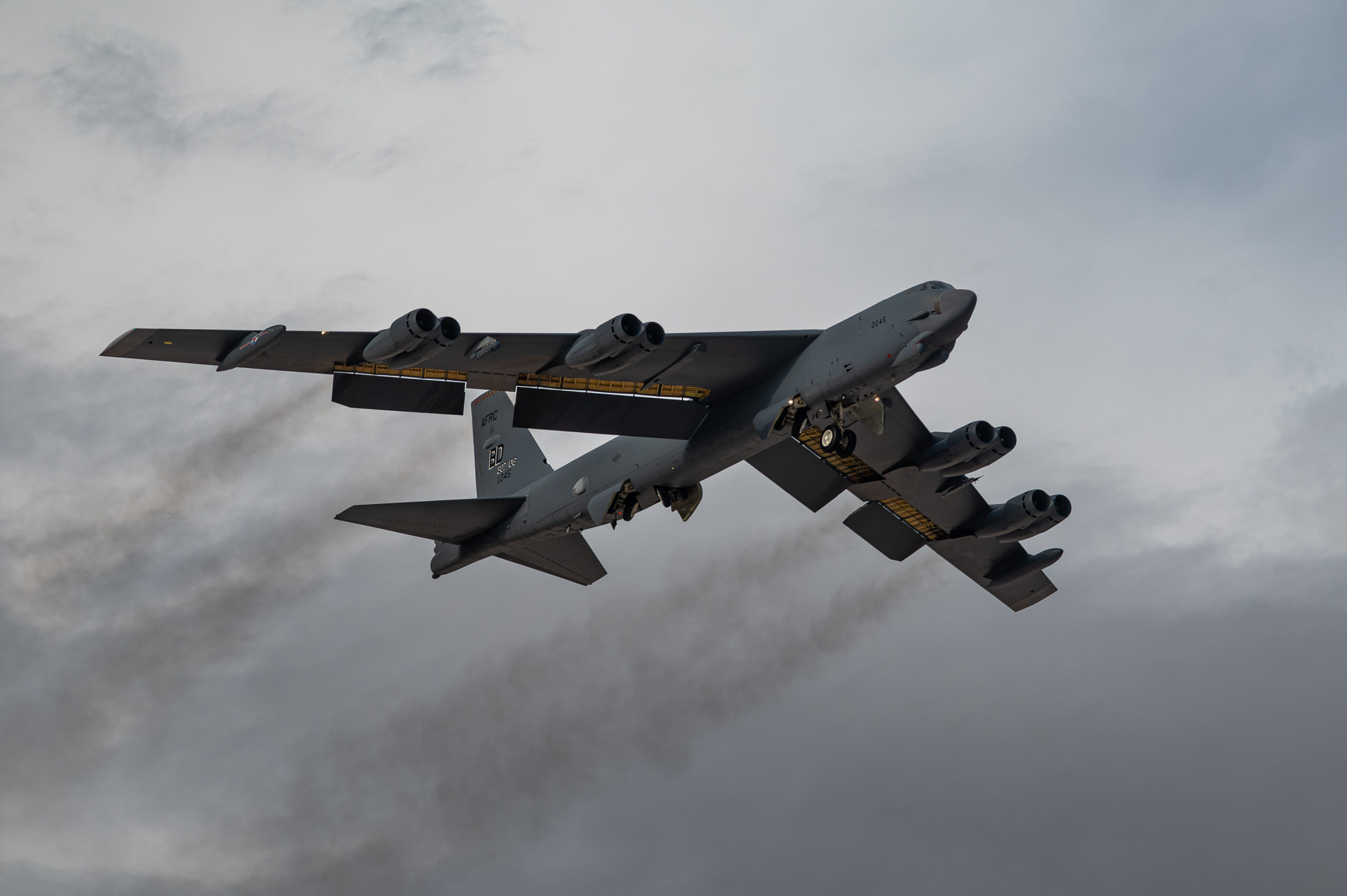

The US Government Accountability Office (GAO) has found that the US Air Force faces major complications across its $21-billion B-52 Stratofortress fleet modernization.
Ten of the 13 planned efforts to extend the supersonic gunship’s service life through 2050 suffer from mounting cost overruns, schedule delays, and operational risks, according to the agency’s report.
The primary concern stems from the Commercial Engine Replacement Program (CERP), which has seen budgets surge by $3 billion since 2023 to reach $15.4 billion alongside a 15-month operational delay.
These schedule slips threaten ongoing fleet maintenance, with repair depots already struggling with spare part shortages for the strategic bomber’s existing Pratt & Whitney TF33 powerplants.

The GAO emphasized that the issues could also result in a capability gap if engine overhauls drag further, reducing operational readiness for the military’s remaining 76 active B-52s.
Despite these setbacks, the air force plans to begin engine production before completing developmental flight testing, increasing the likelihood of costly reworks.
“By building engines before doing this testing, the Air Force increases the risk that the system will not operate as intended,” the GAO warned.
Recommendation and Response
The government watchdog proposed delaying the CERP production decision until officials analyze the risks.
The agency noted that the air force fully concurred with five of the GAO’s six recommendations, including expanding digital engineering tools and updating repair plans, but only partially agreed with delaying the CERP production decision.
Reviews conducted focused on performance, equipment requirements, and aircraft availability alongside site visits across the B-52 program office, depot, and logistics center.
“Department of Defense policy states cost estimates should consider risk and include an analysis that identifies and evaluates alternative courses of action that may reduce cost and risk,” the GAO said.
“Reassessing these risks would better inform decision-makers as they consider when to begin production.”