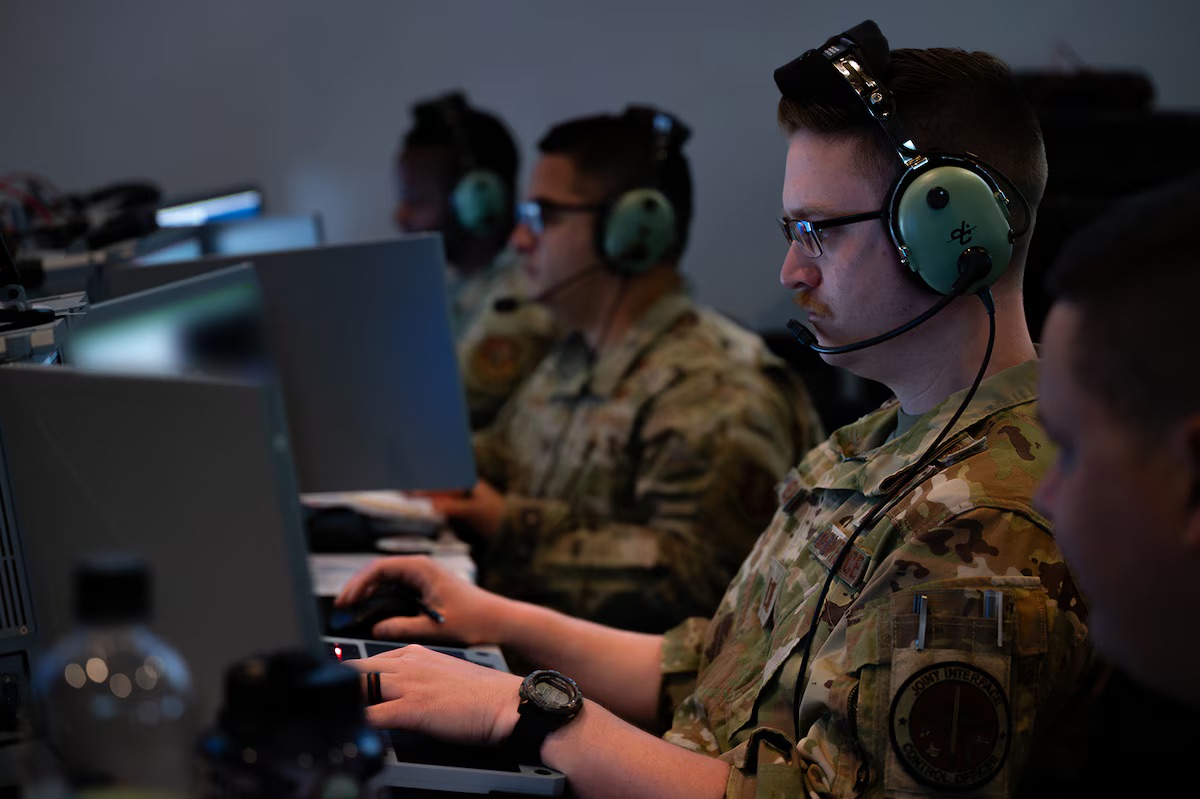
Military advantage depends on something far less visible but just as critical: the ability to collect information, share it instantly, and turn it into action faster than an opponent. That is where C4ISR comes in.
Short for command, control, communications, computers, intelligence, surveillance, and reconnaissance, C4ISR refers to the interconnected systems militaries use to understand the battlefield, coordinate forces, and make decisions in real time.
Rather than being a single platform or technology, C4ISR is a network of sensors, communications systems, command centers, software, satellites, aircraft, drones, and personnel working together to create a clearer picture of combat operations.
Breaking Down C4ISR
Command and Control (C2)
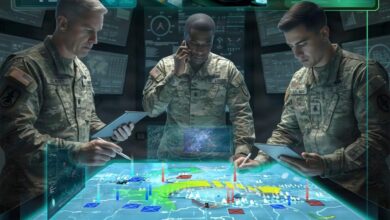
Command and control systems allow military leaders to direct forces during operations. This includes battlefield coordination, mission planning, target assignment, and real-time decision-making.
In practice, command centers receive information from multiple sources and distribute orders to aircraft, ships, ground units, and other assets simultaneously.
Communications and Computers (C4)
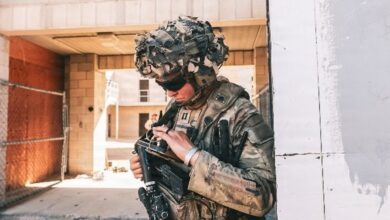
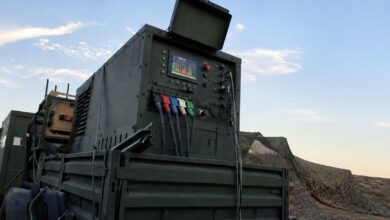
Secure communications networks and computing systems move large amounts of information rapidly across the battlefield. This includes encrypted radios, satellite communications, and secure data links connecting troops to headquarters and weapons platforms.
The computing layer is where raw data gets processed: sensor feeds are fused, targeting solutions are generated, and battlefield management software turns information into actionable output.
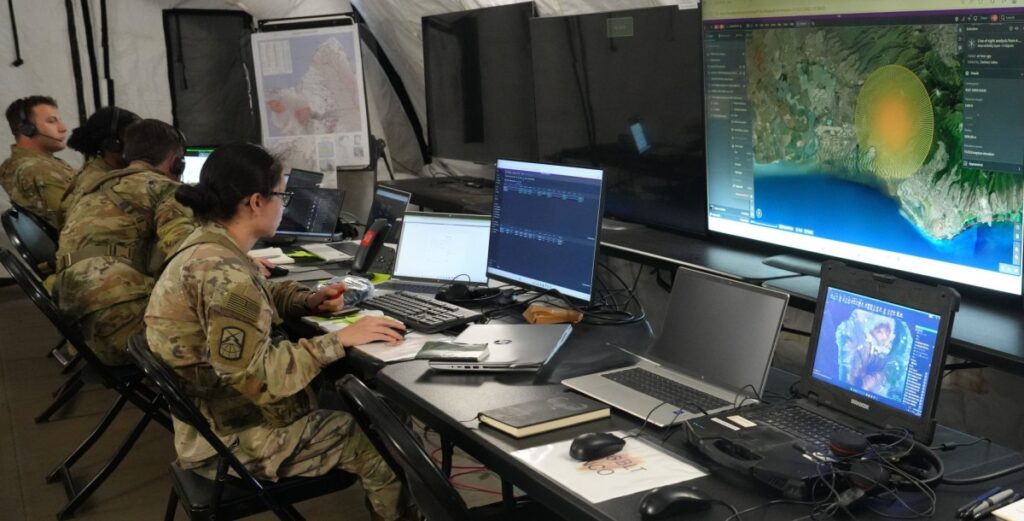
Intelligence, Surveillance, and Reconnaissance (ISR)
ISR covers the collection and analysis of information about enemy activity and battlefield conditions.
Satellites track troop movements, drones monitor targets, reconnaissance aircraft gather imagery, and radar systems detect incoming threats.
The goal is timely, accurate situational awareness, getting commanders the right information before they need to act.
Why C4ISR Matters
C4ISR allows militaries to detect threats earlier, respond faster, and coordinate more effectively. Instead of isolated units making independent decisions, modern forces operate as connected networks continuously exchanging information.
For example, a drone might identify a target, relay coordinates through a communications network, and allow artillery, aircraft, or missile systems to engage within minutes. Systems like Link 16, which connects NATO aircraft, ships, and ground units in real time, illustrate how this works at scale.
Speed and information dominance can shape the outcome of an engagement before opposing forces make contact.
That is why investment in C4ISR has grown steadily across major militaries, with programs like the Joint All-Domain Command and Control (JADC2) initiative aimed at extending this connectivity across every branch of the armed forces simultaneously.
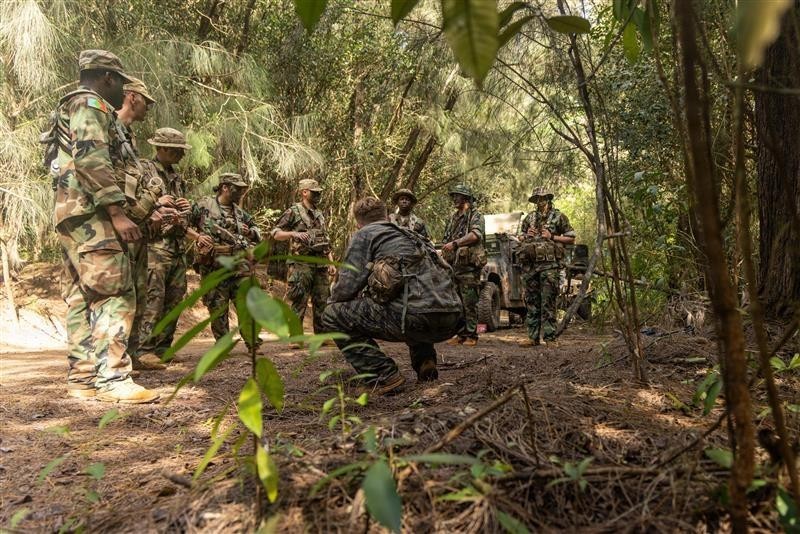
Vulnerabilities and Challenges
C4ISR systems are also high-value targets.
Jamming, cyberattacks, and electromagnetic interference can degrade or sever the data links these networks depend on. Operating in a contested electromagnetic environment, where an adversary is actively trying to blind or disrupt communications, is one of the central challenges modern C4ISR architects have to design around.
Redundancy, encryption, and low-probability-of-intercept communications are all part of the answer, but no system is fully immune. The more a military depends on networked operations, the more damaging a successful disruption becomes.
The Backbone of Modern Military Operations
C4ISR is what turns individual military platforms into a coordinated combat force.
As warfare becomes faster and more complex — spanning land, sea, air, space, and cyberspace — the ability to gather, process, and share information has become as strategically important as the weapons themselves.