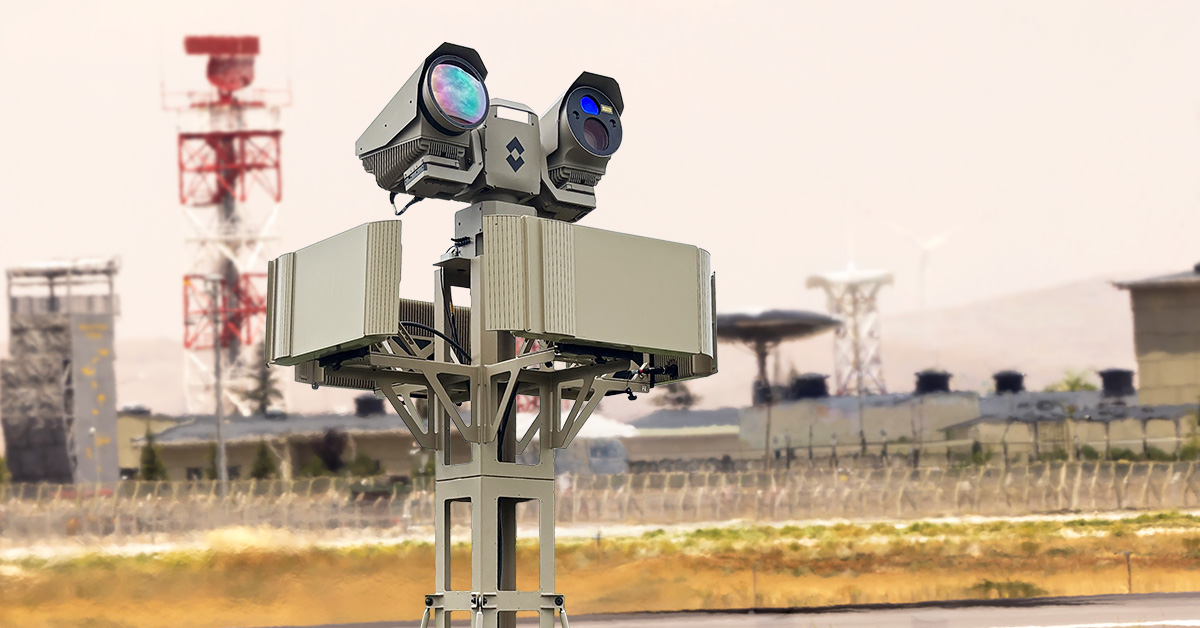

AeroVironment has selected Teledyne FLIR Defense to provide sensor systems for the US Air Force’s Titan MS counter-drone platform.
The order supports AeroVironment’s three-year, $500-million contract for Joint Interagency Task Force 401‘s Domestic Shield Program, which is equipping military installations and critical infrastructure with layered counter-unmanned aircraft capabilities.
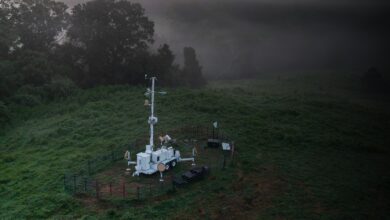
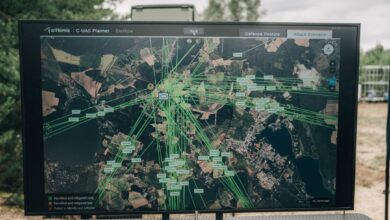
Under the agreement, Teledyne FLIR will supply its Argus XL counter-drone platform, which serves as the primary detection system within the Titan MS architecture. It combines radar, electro-optical, and thermal imaging sensors, along with command-and-control software.
Argus XL also supports integration with third-party radio frequency sensors and drone defeat technologies, allowing operators to monitor a wide range of aerial targets, including small and micro drones, under different weather conditions.
Teledyne FLIR said the platform provides continuous surveillance and data archiving while supporting hemispherical detection around protected sites.
“When countering drone threats, operators can’t defeat what they can’t find,” Teledyne senior vice president JihFen Lei said.
US Boosts Counter-Drone Systems
The latest Teledyne FLIR order reflects a broader effort by the US military to improve existing counter-drone systems by adding new sensors, software, and interception capabilities rather than replacing entire platforms.
In May, a live-fire demonstration at Fort Hood, Texas, showed that existing army turreted weapon stations could defeat drones in less than three seconds by combining Moog’s Reconfigurable Integrated-weapons Platform with Echodyne’s EchoShield radar and Picogrid’s Legion software.
During the same month, Perennial Autonomy secured a contract worth up to $500 million to deliver AI-enabled counter-drone platforms, including aerial interceptors and strike drones, for US military operations.
Earlier, in February, the US Army deployed Parsons’ DroneArmor along the southern border, combining AI, machine learning, and multi-sensor fusion to detect, track, and neutralize unauthorized drones.
The effort builds on the January operational deployment of the Athena Counter-Unmanned Aircraft System Integration Kit over Washington, DC, where it fuses data from multiple federal and military sensors into a unified air picture for counter-drone operations.