
The US Marine Corps (USMC) has received its 359th and final MV-22B Osprey, completing the program of record after the platform achieved initial operational capability in 2007.
The Marine Medium Tiltrotor Squadron 162 (VMM-162), based at Marine Corps Air Station New River in North Carolina, received the final aircraft.
Following the milestone, the USMC is eyeing ways to sustain and modernize the MV-22B fleet to keep it operational through 2055, including improving nacelle wiring to reduce maintenance hours, redesigning key parts to enhance safety and sustainability, and standardizing aircraft configurations.
“The delivery of the MV-22B has extended the reach and lethality of the United States Marine Air-Ground Task Force for 20 years, and it will continue to be a game-changer on the battlespace,” said Col. Robert Hurst, V-22 Joint Program Office Program Manager.
“We remain focused on efforts to enhance fleet readiness, capability and modernization of the MV-22B Osprey, the backbone of the Marine Corps for decades to come.”
MV-22B Osprey
Bell and Boeing developed the MV-22B Osprey, the Marine Corps variant of the V-22 tiltrotor aircraft.
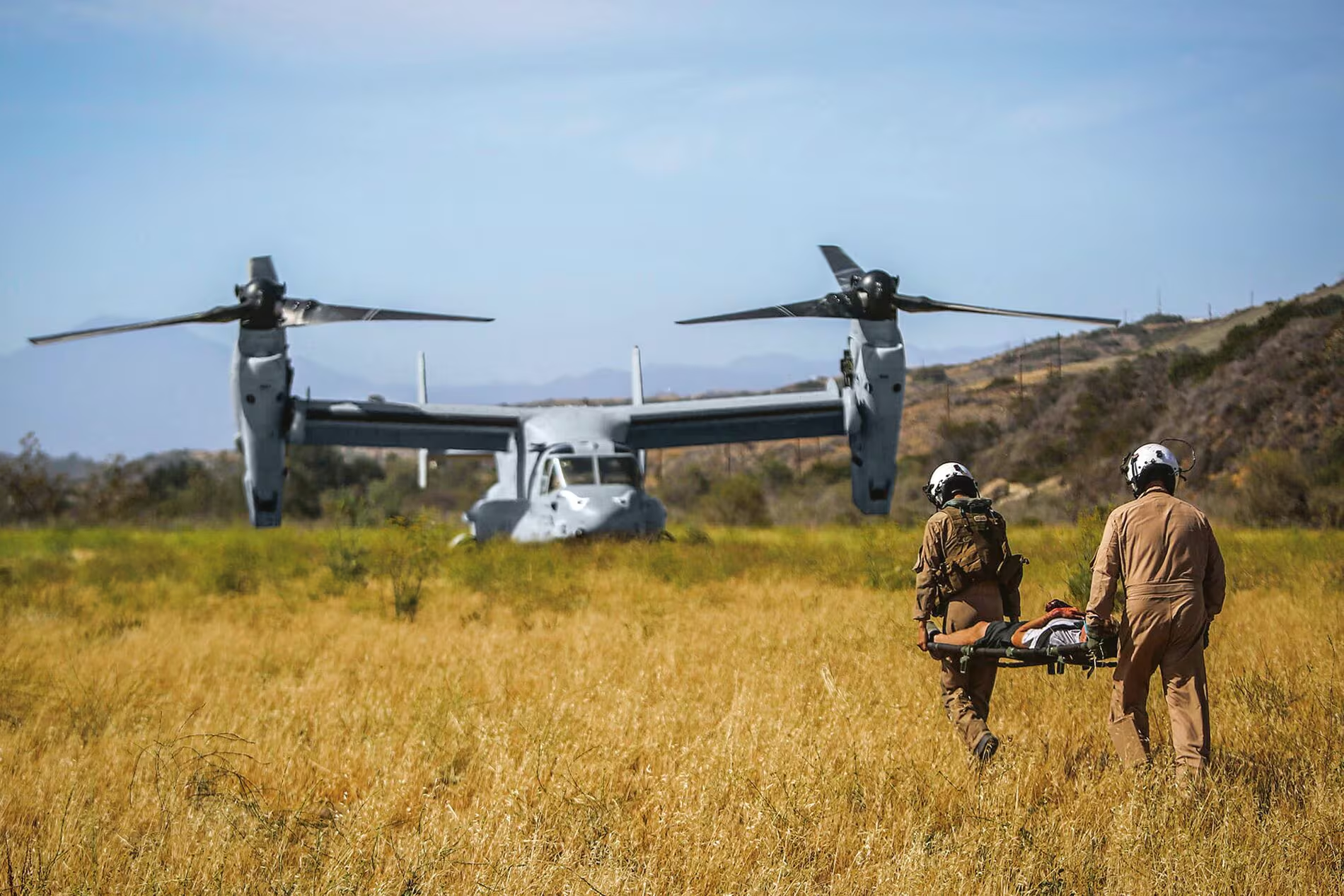
The platform was designed to take off and land like a helicopter and fly with the speed and range of a fixed-wing aircraft, enabling it to operate from amphibious ships and austere shore sites and perform a variety of missions, including combat operations, contested logistics, and medical evacuations from forward-deployed locations.
The Osprey has logged more than 686,500 hours across 114 operational deployments.
It now performs the vast majority of USMC rotary-wing assault support missions.
Troubled Past
During the milestone ceremony, the deputy commandant for Marine aviation acknowledged the Osprey’s troubled past, which has included fatal aviation accidents reportedly due to mechanical and safety issues, pilot error, or mission planning.
“There were moments when its future was genuinely in doubt. I think it is important that we acknowledge that history,” DefenseScoop cited Lt. Gen. William Swan as saying.
“Not because we want to dwell on the challenges – but because you cannot fully appreciate what has been accomplished without understanding how difficult the journey has been,” he said.
These include crashes off Japan’s coast, another in Northern Australia, and during NATO exercises in Norway.