
Sikorsky has confirmed it is pursuing a Next Generation Rotorcraft (NGRC) production line in Europe as it positions itself for NATO’s future helicopter competition.
The move would bolster the Lockheed Martin subsidiary’s bid against European rivals such as Airbus Helicopters and Leonardo, both of which already have extensive manufacturing footprints across the continent.
It would also simplify logistics, spare parts supply, upgrades, and maintenance for European operators throughout the fleet’s service life.
Sikorsky said it plans to partner with leading European aerospace companies and suppliers to establish a regional industrial base for the NGRC program, supporting technology transfer and local job creation.
“We are committed to strengthening our strategic partnerships, expanding industrial capacity and deepening our long-term presence in Europe,” Lockheed Martin chief executive for Europe Dennis Goege said.
“Local production supports a highly skilled regional workforce, reinforces Europe’s defence industrial base and enhances NATO readiness.”
Next Generation Rotorcraft Capability
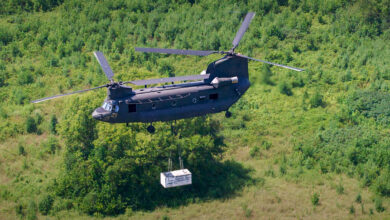
NATO’s NGRC program aims to develop a common medium multi-role helicopter to replace aging fleets of medium multi-role helicopters, including the UH-60 Black Hawk, NH90, AW101, and H225M, from the mid-2030s.
The program is in the concept development phase, with Airbus Helicopters, Leonardo, and Sikorsky conducting studies under contracts awarded by the NATO Support and Procurement Agency.
Five participating nations—France, Germany, Italy, the Netherlands, and the UK—aim to identify a single preferred design by the end of 2027, enabling development of the selected concept from 2030. Canada and Greece are also participating in the broader NGRC initiative.
NATO envisions the NGRC as an optionally unmanned medium-lift helicopter built around a modular open-systems architecture with a digital backbone and AI-enabled multi-sensor fusion.
The alliance has set a target unit price of no more than 35 million euros ($37 million), while the average flight cost should not exceed 10,000 euros ($11,438) per hour.
Requirements call for a maximum takeoff weight of 10,000 to 17,000 kilograms (22,046 to 37,478 pounds), the ability to carry 12 to 16 fully equipped troops, an internal payload of at least 2,500 kilograms (5,511 pounds) at 80 percent fuel, and an external lifting capacity of 4,000 kilograms (8,818 pounds).
The helicopter must also have a minimum range of 900 nautical miles (1,650 kilometers/1,025 miles), endurance of more than five hours — extendable to eight hours with auxiliary fuel tanks — and a cruising speed exceeding 220 knots (407 kilometers/253 miles per hour).
Sikorsky’s Offering
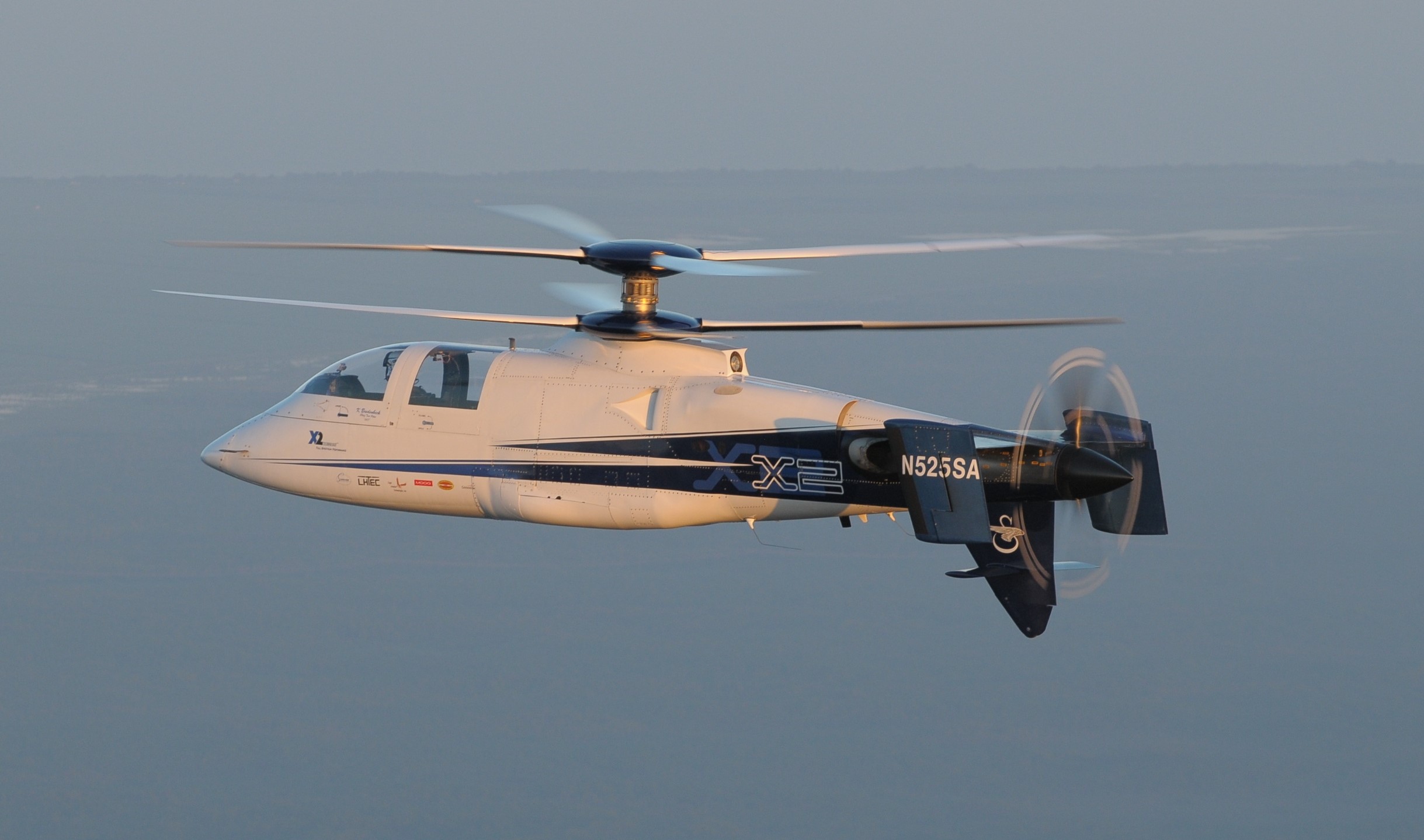
Sikorsky is offering a modified version of its X2 coaxial high-speed helicopter for the NGRC program.
Developed in 2005, Sikorsky’s X2 technology demonstrator features coaxial counter-rotating rotors and an integrated auxiliary propulsion system designed for attack, reconnaissance, and transport missions.
The aircraft incorporates fly-by-wire flight controls, reducing weight while improving handling, reliability, and damage tolerance.
During a 2010 flight test, the X2 reached a top speed of 250 knots (463 kilometers/288 miles per hour), around 15 percent faster than conventional helicopters.
Sikorsky says the X2’s advanced design helps reduce vibration and aerodynamic drag, addressing key limitations of conventional helicopters.