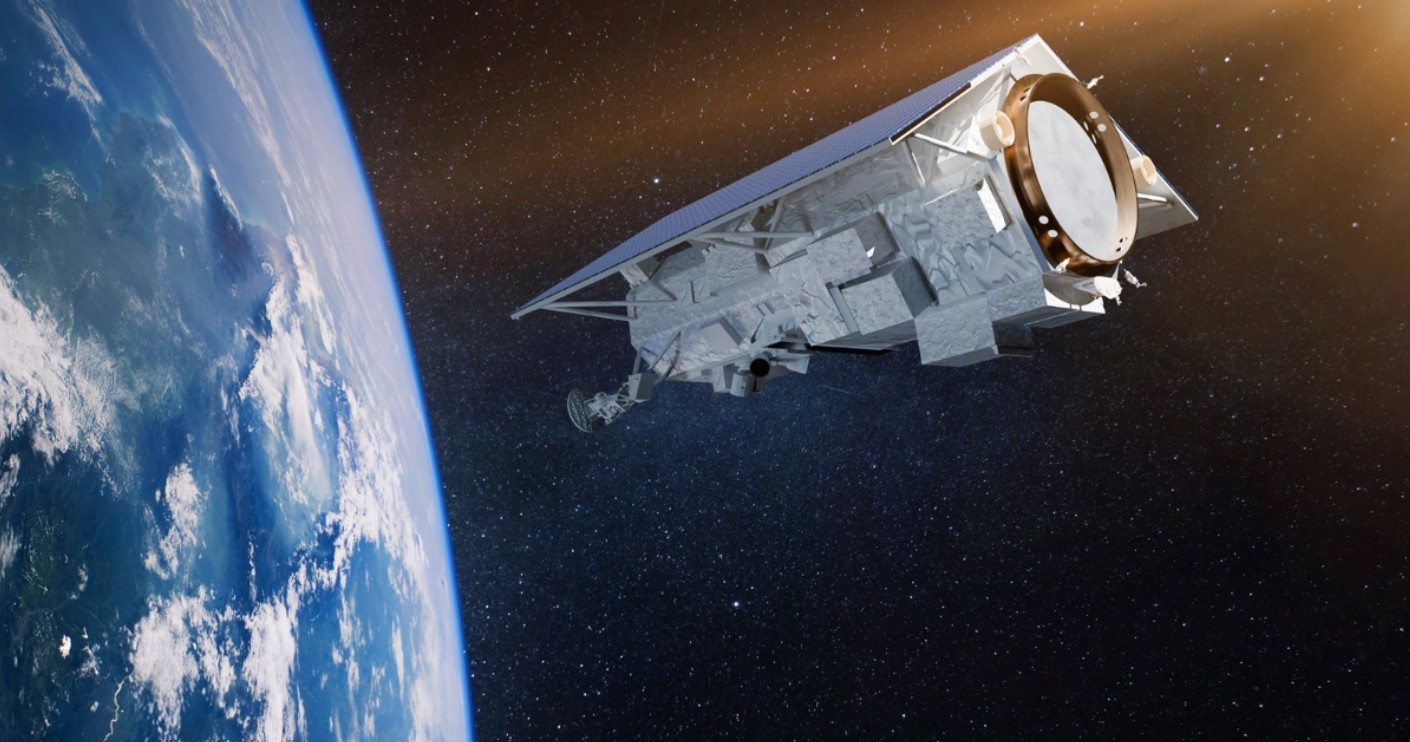

BAE Systems has signed an agreement with spatial intelligence firm Vantor to manufacture spacecraft for Vantor’s next-generation Vantage high-resolution imaging satellites.
Under the partnership, BAE Systems will produce the satellite buses based on its Evolve spacecraft platform and oversee spacecraft integration and testing.
Vantage is designed to deliver 20-centimeter (7.9-inch) resolution imagery while increasing collection capacity, reducing data delivery times, and enabling faster access to space-based intelligence.
The agreement builds on a long-standing partnership between the two companies, which previously collaborated on the QuickBird and WorldView satellite programs.
BAE and Vantor also said they will explore additional cooperation on future satellite constellation design and production for defense and intelligence applications.
“As demand accelerates for more responsive space-based intelligence, we’re investing in expanding our constellation capabilities to strengthen the spatial foundation that represents our living digital twin of Earth,” said Matt Jenkins, chief space systems officer at Vantor.
Vantage Satellites
The Vantage satellites combine high-resolution electro-optical imaging with precise geolocation capabilities, supporting applications ranging from operational planning and terrain analysis to infrastructure monitoring and environmental assessment.
They are also designed to support multi-sensor intelligence by improving the alignment of imagery with data collected from space- and ground-based sensors, enabling more accurate data fusion.
Each satellite will carry an eight-band multispectral sensor capable of collecting imagery across more than 1.5 million square kilometers (579,000 square miles) per day from a sun-synchronous orbit at altitudes up to 600 kilometers (373 miles).
The platform is designed to provide geolocation accuracy of less than 5 meters (16.4 feet) and a service life exceeding 10 years.
According to the company, the resulting datasets are intended to improve AI-enabled analysis, including object recognition, change detection, and pattern analysis.