Array Labs Secures $21M, Launches Defense Satellite Partnership With Mitsubishi


Silicon Valley-based Array Labs has raised $21 million in a funding round led by Mitsubishi Electric, as the two companies launch a partnership to develop satellite-based airborne and maritime tracking services for defense customers across the Asia-Pacific region.
Following Array Labs’ Series A financing completed in January, the latest funding round also included continued participation from existing investors Catapult Ventures, Kompas VC, and Y Combinator, providing additional backing for the company’s satellite tracking technology.
Under the partnership, Array Labs will combine its radar technology with Mitsubishi Electric’s expertise in satellite manufacturing and long-standing defense business in Japan to commercialize space-based tracking services capable of monitoring aircraft and ships across wide geographic areas.
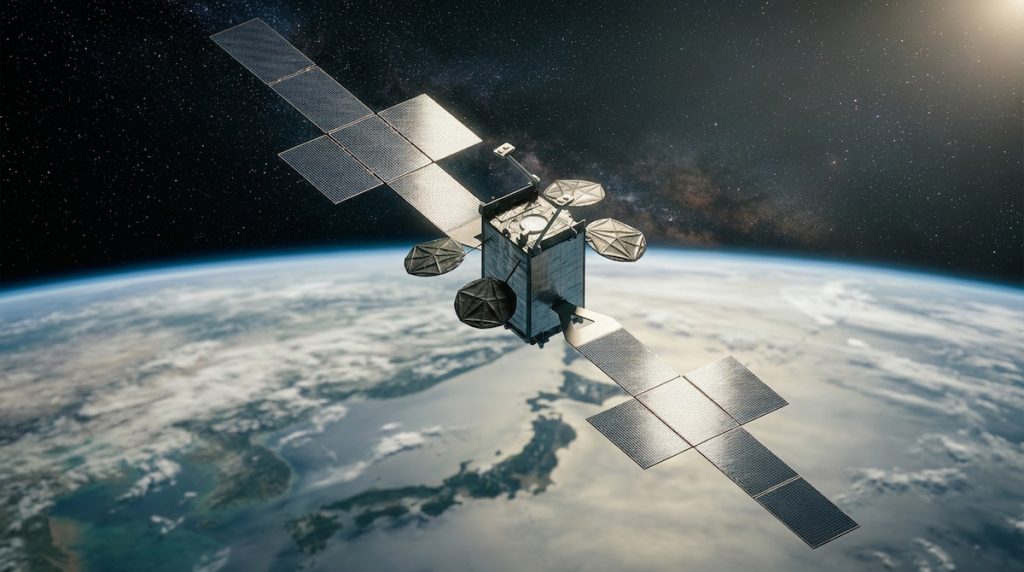
At the core of the system is Array Labs’ architecture of radar satellite constellations that operate together as a distributed sensor, enabling persistent monitoring of moving airborne and maritime targets for applications including border surveillance, maritime security, and military intelligence.
The architecture relies on multiple smaller satellites operating in formation, using advanced signal processing to combine their observations and increase monitoring frequency and geographic coverage.
Array Labs said it has already validated its radar technologies through research and development contracts with the US Defense Advanced Research Projects Agency, the US Navy, and the US Air Force.
Defense Space Partnerships
The partnership adds to Mitsubishi Electric’s expanding portfolio of military satellite programs.
In June, the Japanese company selected Canada’s MDA Space to provide the digital communications payload, antenna systems, and other key components for a new military satellite intended to improve the resilience of Japan against electronic interference.
Three months earlier, it signed an agreement with Lockheed Martin to develop an anti-jamming payload for Tokyo’s next-generation military communications satellite.
Under the agreement, Lockheed Martin will develop the payload, while Mitsubishi Electric will carry out final assembly, integration, and testing in Japan.