
Poland and Germany signed a defense agreement on Wednesday covering military mobility, infrastructure, cooperation in the Baltic Sea, cybersecurity and space — but its scope was trimmed fearing right-wing opposition and the prospect of a presidential veto.
It is the latest effort to ramp up security in NATO and EU member Poland, which borders Ukraine, Russia, and Moscow’s close ally Belarus, after major treaties with Europe’s two nuclear powers: France in May 2025, and the United Kingdom in May 2026.
The deal comes at a difficult moment for Europe’s efforts to coordinate its defenses, after France and Germany scrapped a major joint fighter jet project and said they would heavily revise a plan to develop a battle tank together.
Wednesday’s agreement is “another building block” added to the “new security architecture” of Europe, Polish defense minister Wladyslaw Kosiniak-Kamysz said at a press conference following the signing with his German counterpart.
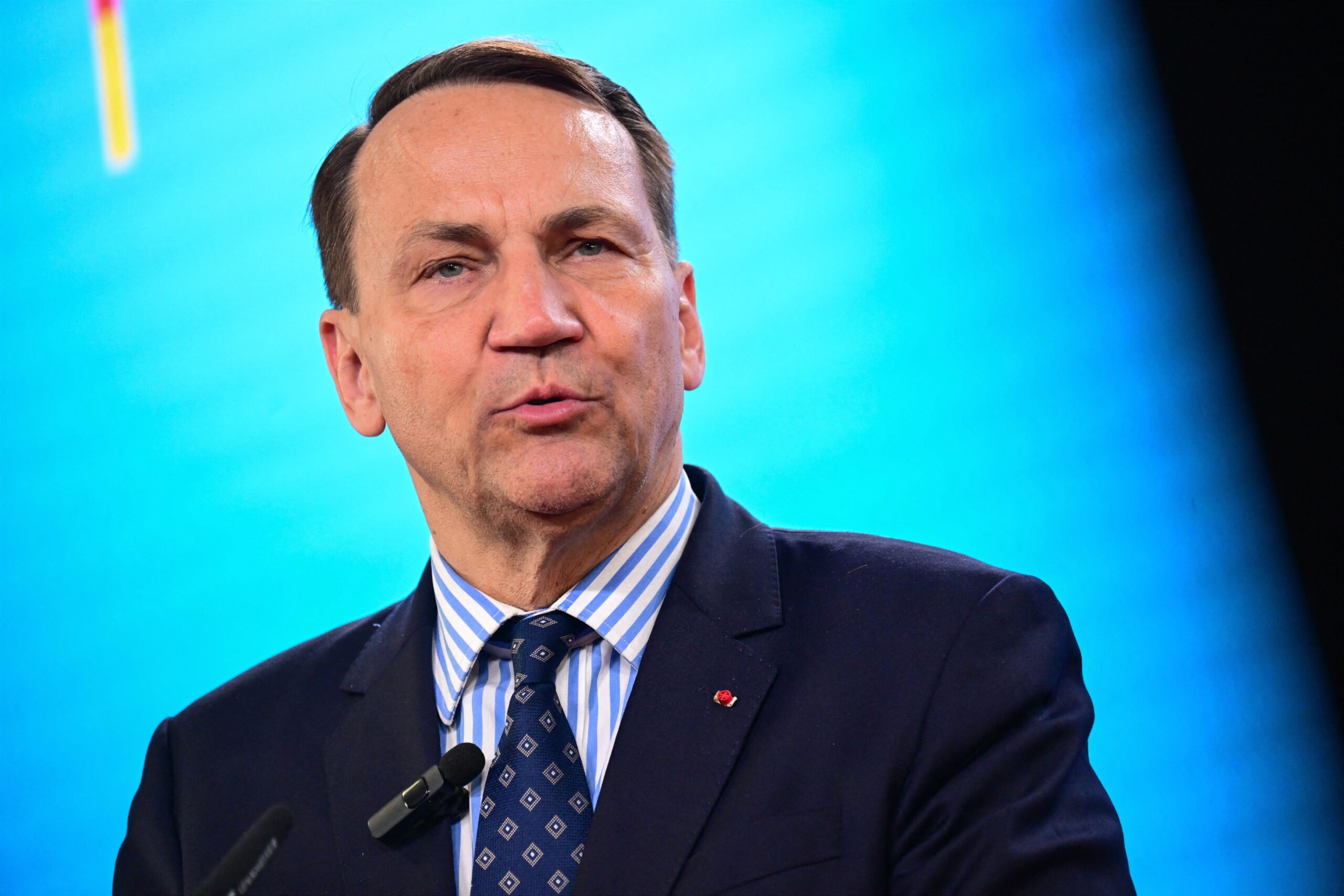
Also marking the occasion were the foreign ministers of the two countries — Radoslaw Sikorski and Johann Wadephul — who met on the same day in Berlin.
“Aware of the tragic history of the 20th century, we bear a particular responsibility towards our region and our continent – as allies within NATO and partners in the European Union,” the two ministers emphasised in a joint statement.
Wadephul and Sikorski notably denounced “Russia’s aggressive actions, particularly of a hybrid nature and in the field of disinformation,” whose aim is “to divide our societies, destroy public order, and undermine confidence in the state and its institutions.”
“Germany and Poland (now) form the backbone of European defense and NATO’s deterrence in the face of the Russian threat,” Wadephul said.
Warsaw and Berlin also plan to develop rail infrastructure, increase cultural exchanges, and return historical objects looted from Poland by Nazi Germany during the Second World War.
Sikorski reminded Germany of its “historical responsibility” towards the last surviving victims of Nazi crimes.
Poland in the past has called on its neighbour to pay compensation to the estimated 50,000 WWII survivors in the country.
“The Federal Republic of Germany should meet this challenge seriously and without delay,” Sikorski stressed.
Crowning a Historical Moment
Bilateral defense agreements have been multiplying in Europe since Russia’s full-scale invasion of Ukraine in 2022, especially in a context of uncertainty over the future of US military engagement.
According to the Polish defense ministry, the agreement with Berlin will update a framework signed in 2011 and will mainly cover military mobility, the development of logistical infrastructure, cooperation in the Baltic Sea, cybersecurity, and space.
It does not include any additional mutual security guarantees, which remain limited to NATO’s existing commitments under Article 5 of the North Atlantic Treaty, and those of the EU.
Polish media reports claimed there were plans for a more ambitious pact, but Tusk’s government opted for a reduced version, expecting opposition from nationalist president Karol Nawrocki and the conservative Law and Justice (PiS) party — for which Germany has served as an eternal bogeyman.
“We all know Law and Justice’s and the president’s obsession with anything to do with Germany, so of course he would veto it,” Sikorski told Polish media this month, referring to Nawrocki.
Nawrocki — a conservative ally of US President Donald Trump — has still not ratified the treaty signed with the UK.
The agreement sets the scene for enhanced coordination between Warsaw and Berlin — including within NATO.
Starting in July, German soldiers will help Poland strengthen its border with Russia’s Kaliningrad exclave as part of Warsaw’s “Eastern Shield” initiative.
Piotr Szymanski, a researcher at Warsaw’s Centre for Eastern Studies, said the pacts will be important given “NATO’s increased vigilance, including efforts to protect critical underwater infrastructure and monitor Russia’s so-called ‘shadow fleet'”.
With the upcoming NATO summit in Ankara in July, the Europeans intend to present a unified front, with the central question being the future of the American presence on the continent.
A reduction in US capabilities would mean a greater role for Poland and Germany, Poland’s deputy defense minister Pawel Zalewski has said.