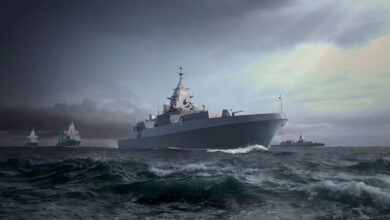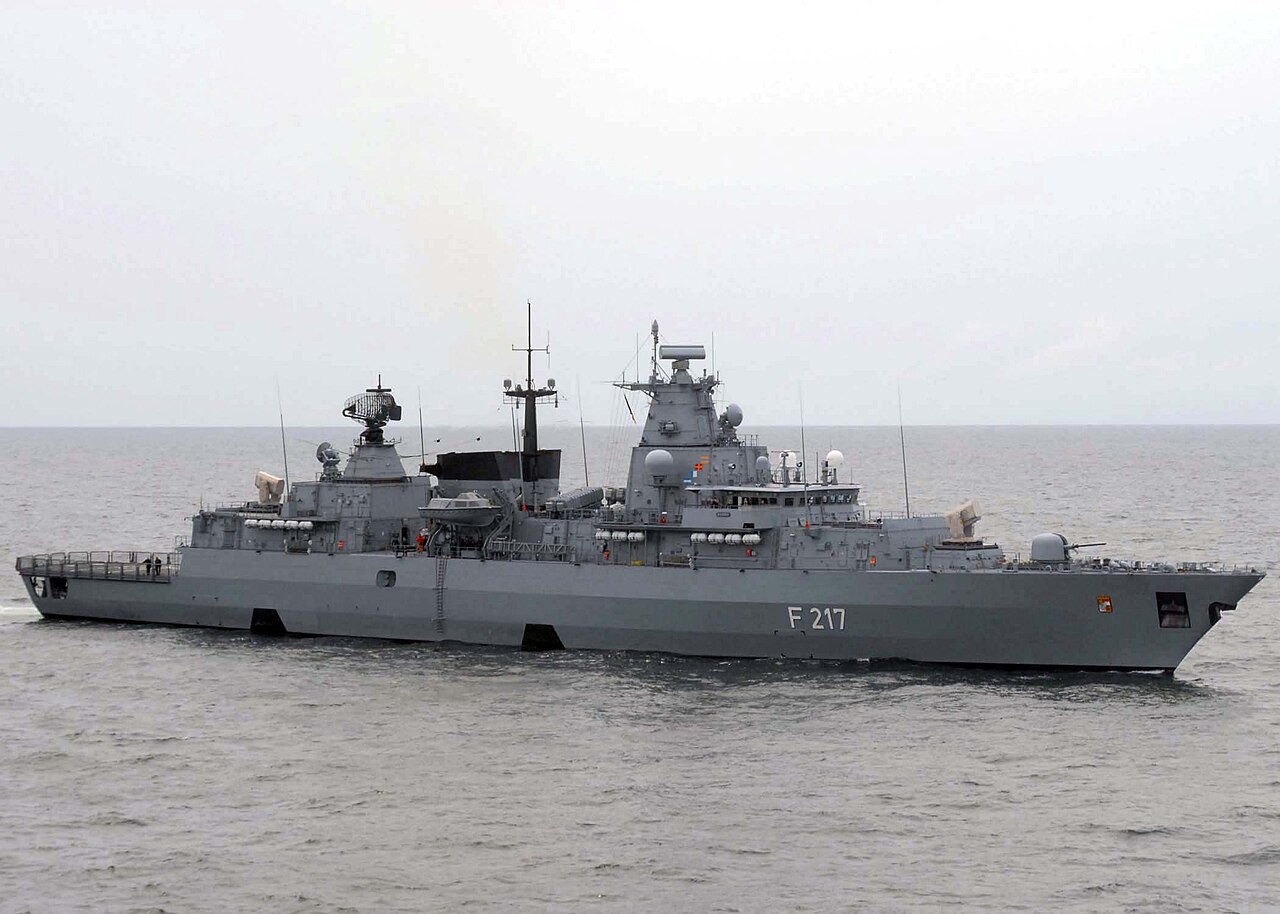
Rheinmetall has secured a contract worth several hundred million euros to modernize a German Navy F123-class frigate, ensuring its operational readiness until at least 2035 while adapting its capabilities to current operational requirements.
Under the service life extension program, the F123-class frigate Bayern’s key systems will undergo comprehensive modernization at Rheinmetall’s Neue Jadewerft shipyard in Wilhelmshaven through 2029.
The upgrade will include a new combat management system, an overhaul of critical onboard engineering, propulsion, and drive systems, and modernization of the frigate’s radar suite.
Its anti-submarine warfare capabilities will also be enhanced, bringing the vessel up to current technological standards and improving its effectiveness for future operations.
“We are now fully focused on delivering the project on schedule. The Neue Jadewerft shipyard has many years of experience in the modernization and maintenance of naval vessels – particularly frigates – and possesses extensive expertise in integrating complex maritime systems,” CEO of Rheinmetall’s Naval Systems division Tim Wagner said.
“Combined with our close cooperation with all project partners and our customer, these capabilities provide the foundation for delivering the ship to the German Navy on time and to the required quality standards.”
F123-Class Frigate
The German Navy’s Bayern is the third of four Brandenburg-class (F123) frigates and was commissioned in June 1996. Built by Thyssen Nordseewerke in Emden, the 138.8-meter (455.4-foot) vessel is primarily designed for anti-submarine warfare missions.
F123-class frigates displace about 4,900 tons and are powered by combined diesel or gas (CODOG) propulsion systems, enabling speeds of up to 29 knots (54 kilometers/34 miles per hour).
In recent years, the vessels have undergone modernization upgrades, including improvements to their radar, combat management, and fire-control systems to enhance operational effectiveness.
Bayern is currently undergoing the service life extension at Rheinmetall’s Neue Jadewerft shipyard, where major components are being removed before the frigate enters dry dock for the next phase of the program.