
AE Industrial Partners has completed its acquisition of L3Harris Technologies’ space propulsion, power, and electronics businesses, relaunching them as the independent company Rocketdyne.
The deal restores the Rocketdyne name more than a decade after the historic brand was absorbed into larger aerospace companies through a series of mergers. L3Harris will retain a minority stake and continue as a strategic partner.
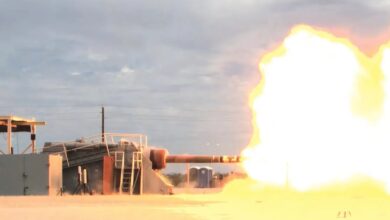
AE Industrial said it plans to invest in Rocketdyne’s core capabilities, including modernizing production of the RL10 rocket engine, expanding manufacturing of in-space propulsion thrusters, and advancing nuclear power and energy systems for future space missions.
It will also continue supplying propulsion, power, and electronics technologies for civil, commercial, and national security space programs.
“Rocketdyne will now have the agility to invest in and scale its core businesses, driving the next generation of space mobility, power, and electronics,” AE Industrial partner John Lusczakoski said.
The company will be led by Kristin Houston, formerly president of L3Harris’ Space Propulsion & Power Systems sector.
Defense Industry’s Wave of Acquisitions
AE Industrial’s purchase is the latest in a series of acquisitions reshaping the defense and space industrial base.
In July, CHAOS Industries acquired Atropos Group to combine autonomous aircraft with its radar, sensor, and counter-drone technologies, while expanding its US manufacturing footprint with in-house airframe production.
During the same month, Ondas completed its $875.8-million acquisition of DZYNE Technologies, adding long-endurance drones, counter-UAS systems, and autonomous strike capabilities under its newly formed Sentinel defense division.
Earlier, in June, Shield AI bought military simulation company Aechelon Technology, combining its Hivemind autonomous flight software with high-fidelity synthetic training and mission rehearsal technologies used across major US defense programs.
In May, Mach Industries acquired aerospace firm Exquadrum to bring solid rocket motor development, energetics, and propulsion capabilities in-house through a new division, Mach Energetics.