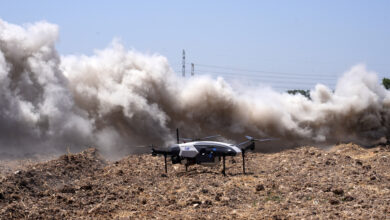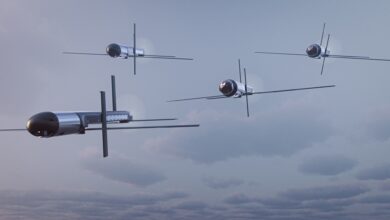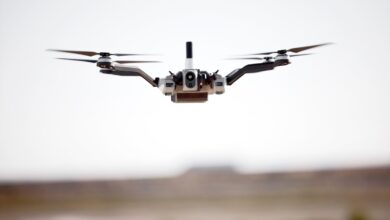
Exosens will triple its thermal camera production capacity in 2026 as demand grows for imaging systems used in drone and counter-drone applications.
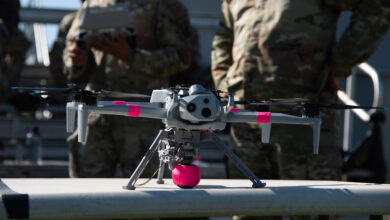
The French imaging technology company said its thermal cameras are designed to support detection, identification, tracking, and targeting across a range of defense missions. The systems are compact enough for drone payloads while providing the performance needed for autonomous missions and air defense operations.
Production increase also builds on its scalable manufacturing capabilities and strengthened supply chain.
“As autonomous systems continue to reshape modern defense operations, our customers increasingly require compact, cost-effective thermal imaging solutions that can be rapidly deployed into next-generation platforms,” Exosens CEO Jérôme Cerisier said.
Companies Upgrade Counter-Drone Systems
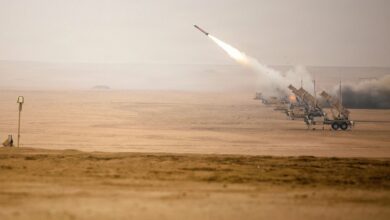
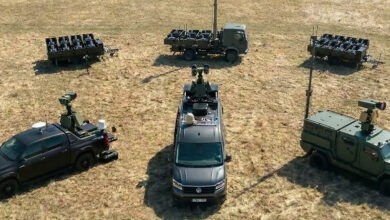
Defense companies have continued expanding the capabilities of counter-drone systems as militaries seek more effective ways to detect, identify, and defeat unmanned aerial threats.
In July, Thales and Destinus signed a strategic partnership to improve interoperability between Destinus’ Hornet interceptor family and Thales’ counter-UAS systems and radars.
The same month, Israel’s Innoviz Technologies and Givon Defense agreed to evaluate LiDAR-based precision localization technology that combines automative-grade sensing with defense applications to improve battlefield awareness during counter-drone operations.
Earlier, in June, Australia’s DroneShield partnered with Dutch firm Robin Radar Systems to integrate 3D radar into its counter-drone architecture. The addition is intended to expand wide-area airspace monitoring and improve the detection and tracking of small, low-flying drones in complex environments where other sensors may be less effective.