Helsing CA-1 Europa Combat Drone to Get HENSOLDT Missile Warning System


Helsing’s CA-1 Europa combat drone is set to receive HENSOLDT’s CAIRAS missile warning system under a strategic partnership announced in February.
HENSOLDT will deliver the first three CAIRAS (Compact Infrared Reconnaissance and Alert System) units for deployment aboard the artificial intelligence-powered drone, becoming the first announced platform to integrate the system.
The deployment also marks the first integration of HENSOLDT’s Airborne Missile Protection System (AMPS) on an uncrewed aerial vehicle, with CAIRAS serving as one of the suite’s components.
“With CAIRAS as part of the AMPS suite, we are demonstrating that HENSOLDT is thinking ahead for this new generation of aircraft from the outset, rather than retrofitting them with protection,” said Christina Canitz, Head of the Optronics Division at HENSOLDT.
CAIRAS
The CA-1 Europa integrates CAIRAS into the AMPS-MR self-protection suite, combining the CAIRAS missile warning system (“M”), the Kalætron radar warning system (“R”), and a countermeasure dispenser for deploying decoys.
CAIRAS uses dual-color infrared technology to passively detect and locate incoming missiles without emitting signals.
The system comprises a central processing unit and up to seven next-generation infrared sensors, providing 360-degree spherical coverage, a high detection rate, and a low false alarm rate.
It also enhances the CA-1 Europa’s situational awareness by processing infrared imagery into a real-time panoramic view.
CA-1 Europa
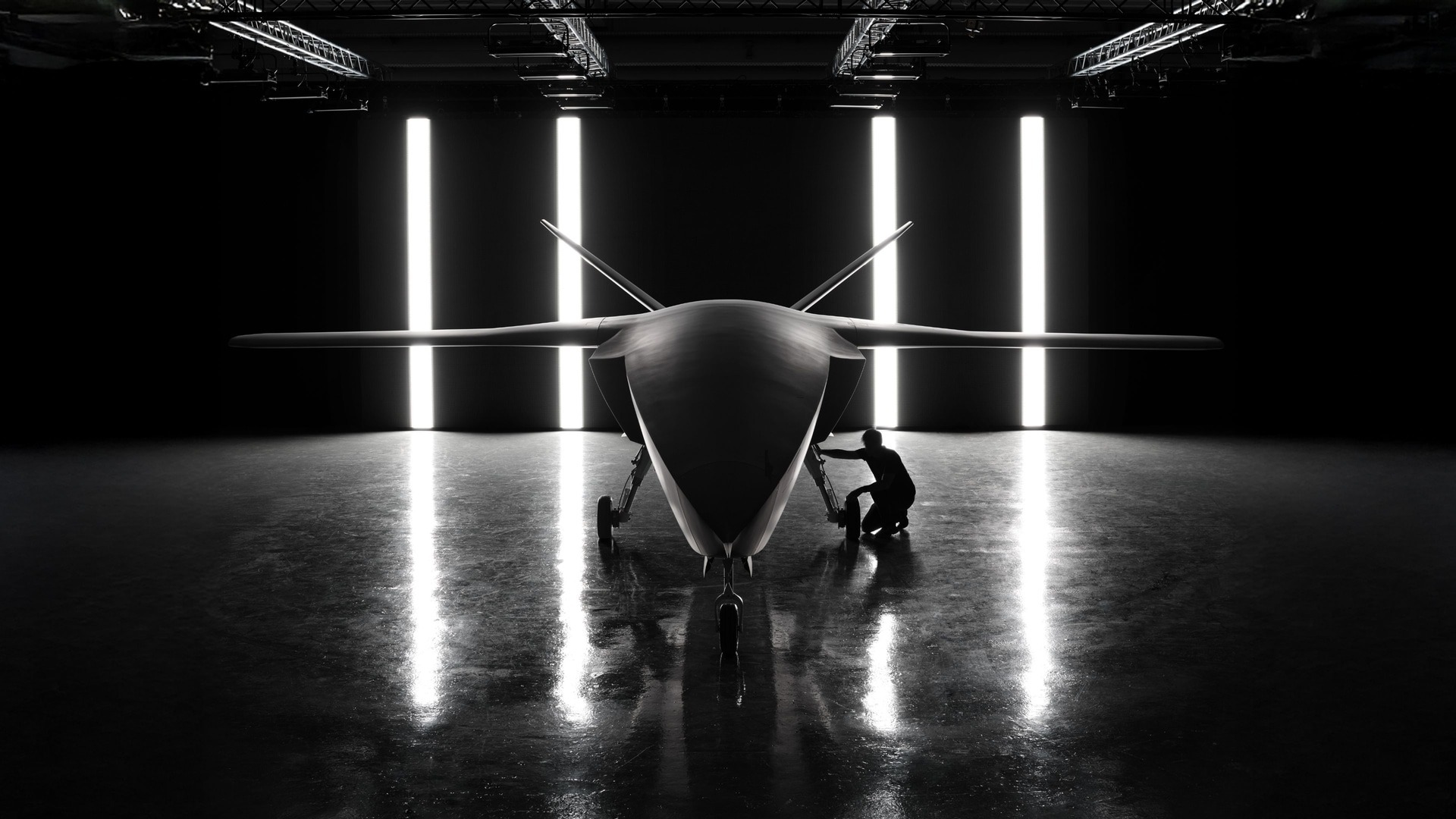
Helsing unveiled the CA-1 Europa’s full-size design study in September 2025, with its maiden flight anticipated by 2027.
Powered by artificial intelligence, the drone is envisioned to work independently, as part of a swarm, or as a “loyal wingman” alongside crewed fighter jets.
Designed for autonomous operations, the CA-1 Europa relies on CAIRAS to supply machine-readable threat data that enables automated responses.
Sensor data is fused through HENSOLDT’s MDOcore software, helping improve survivability in contested environments without revealing the aircraft’s position through active emissions.