A tank is more than a heavily armored vehicle. It is a mobile command node, a precision weapons platform, and a survivable combat system designed to operate in increasingly complex environments.
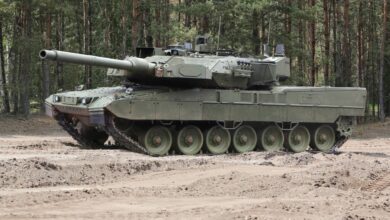
Few modern tanks embody this evolution better than the K2 Black Panther, South Korea’s next-generation main battle tank.
From its innovative suspension system to its digital battlefield capabilities, the Black Panther represents one of the most technologically advanced tanks in service today.
Here’s how it came to be, how it works, and why it has become a rising force in the global armored vehicle market.
At a Glance
| Category: | Details: |
| Type | Main battle tank |
| Role | Armored warfare, breakthrough operations, and battlefield dominance |
| Manufacturer | Hyundai Rotem |
| Country of Origin | South Korea |
| Crew | 3 (commander, gunner, driver) |
| Combat Weight | 56 tons |
| Speed | Paved road: 70 kilometers/44 miles per hour Off-road: 50 kilometers/31 miles per hour |
| Range | 450 kilometers/280 miles |
| Maximum Fording Depth | 4.1 meters/13.5 feet |
| Engine | 1,500 hp, diesel |
| Transmission | Automatic, 5 forward gears, 3 reverse gears |
| Firepower | Main Gun: 120mm 55 caliber smoothbore gun Ammunition Loading: automatic loading Ammunition: 40 rounds Secondary Armament: 12.7mm / 7.62mm machine gun |
| Operability | C4I-linked battlefield management system |
| Armor Protection | Composite and reactive armor |
| Active Protection | Soft-kill or hard-kill (optional) automatic extinguishing |
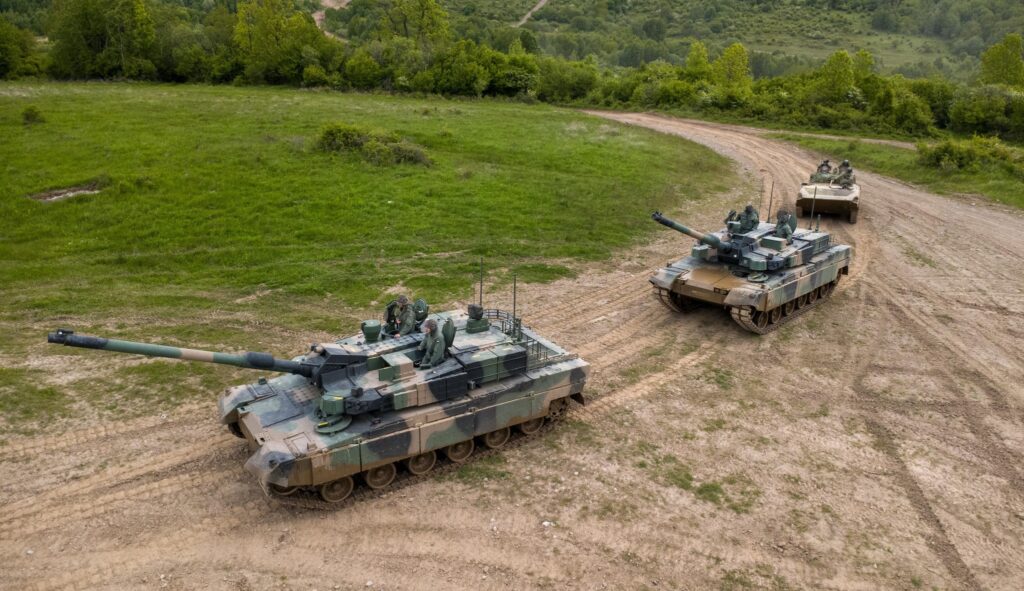
What Is the K2 Black Panther?
The K2 Black Panther is a fourth-generation main battle tank (MBT) developed by Hyundai Rotem for the Republic of Korea Army.
Designed to replace older tank fleets and provide South Korea with a modern armored warfare capability, the K2 combines a powerful main gun, advanced armor protection, digital networking systems, and high mobility.
The tank is optimized for operations across Korea’s mountainous terrain but is also capable of conducting conventional armored warfare in a variety of environments.
How the K2 Came to Be
During the 1990s, South Korea sought a successor to its K1 series tanks. While the K1 had proven effective, military planners wanted a more advanced platform capable of matching emerging armored threats and incorporating the latest battlefield technologies.
The result was the XK2 program, which focused on developing a domestically produced tank with improved protection, firepower, and mobility.
Led by Hyundai Rotem with support from South Korea’s defense industry, the program emphasized domestic technologies while integrating lessons learned from leading Western tank designs.
Development took longer than expected due to challenges involving engines, transmissions, and other advanced systems. Nevertheless, the K2 eventually entered service in 2014 and became the centerpiece of South Korea’s armored forces.
K2 Variants and Configurations
K2 Black Panther
The baseline production model serves as the Republic of Korea Army’s premier armored platform. It combines advanced sensors, digital networking, and a powerful 120mm gun capable of engaging targets at long ranges.
K2 Product Improvement Program
An upgraded configuration aimed at enhancing the K2’s survivability, mobility, and firepower.
Planned improvements include an active suspension system paired with terrain-scanning technology that can analyze the ground ahead and automatically optimize vehicle posture, as well as a hard-kill active protection system and additional non-explosive reactive armor.
The package could also introduce an electrothermal-chemical main gun, offering a substantial increase in lethality over the current 120mm weapon.
K2GF/K2PL
Developed for Poland, the K2PL is an enhanced variant tailored to European operational requirements. Planned improvements include upgraded transmissions, localized modifications, and compatibility with Polish military systems.
K2ME
A proposed export configuration tailored for Middle Eastern customers. It incorporates changes intended for hot-weather operations and an upgraded protection package.
How the K2 Works
Advanced Firepower
The K2 is armed with a 120mm smoothbore cannon equipped with an autoloader, allowing a three-person crew to maintain a high rate of fire. The system can engage armored vehicles, fortifications, and other battlefield targets at long distances.
Sophisticated Sensor Suite
Modern battlefield awareness is one of the K2’s defining features. Advanced sights, thermal imaging systems, and fire-control computers help crews detect, identify, and engage targets in day, night, and adverse weather conditions.
Hydropneumatic Suspension System
One of the tank’s most distinctive features is its in-arm suspension unit, which allows the vehicle to adjust its height and tilt. This capability improves mobility, enhances firing positions, and helps the tank navigate difficult terrain.
Digital Battlefield Integration
The K2 is designed to operate as part of a networked force, sharing information with other units and command systems to improve situational awareness and battlefield coordination.
Strengths
- Exceptional mobility: Its powerful engine and advanced suspension system provide excellent cross-country performance, particularly in challenging terrain.
- Advanced technology: The tank incorporates sophisticated electronics, automated systems, and digital networking features that rival those of leading Western MBTs.
- Reduced crew workload: The autoloader eliminates the need for a fourth crew member, allowing a three-person crew to operate the tank efficiently.
Limitations
- Maintenance complexity: The sophisticated systems that enhance capability also require specialized maintenance and support infrastructure.
- Limited combat experience: Unlike some Western and Russian tanks, the K2 has not yet accumulated extensive combat experience in active war zones.
Global Use and Export Success
The K2 serves as South Korea’s primary main battle tank and has become one of the country’s most successful defense exports.
Its most significant international breakthrough came when Poland selected the K2 as part of a major military modernization effort. The agreement included both direct deliveries and plans for local production, highlighting the tank’s growing appeal in Europe.
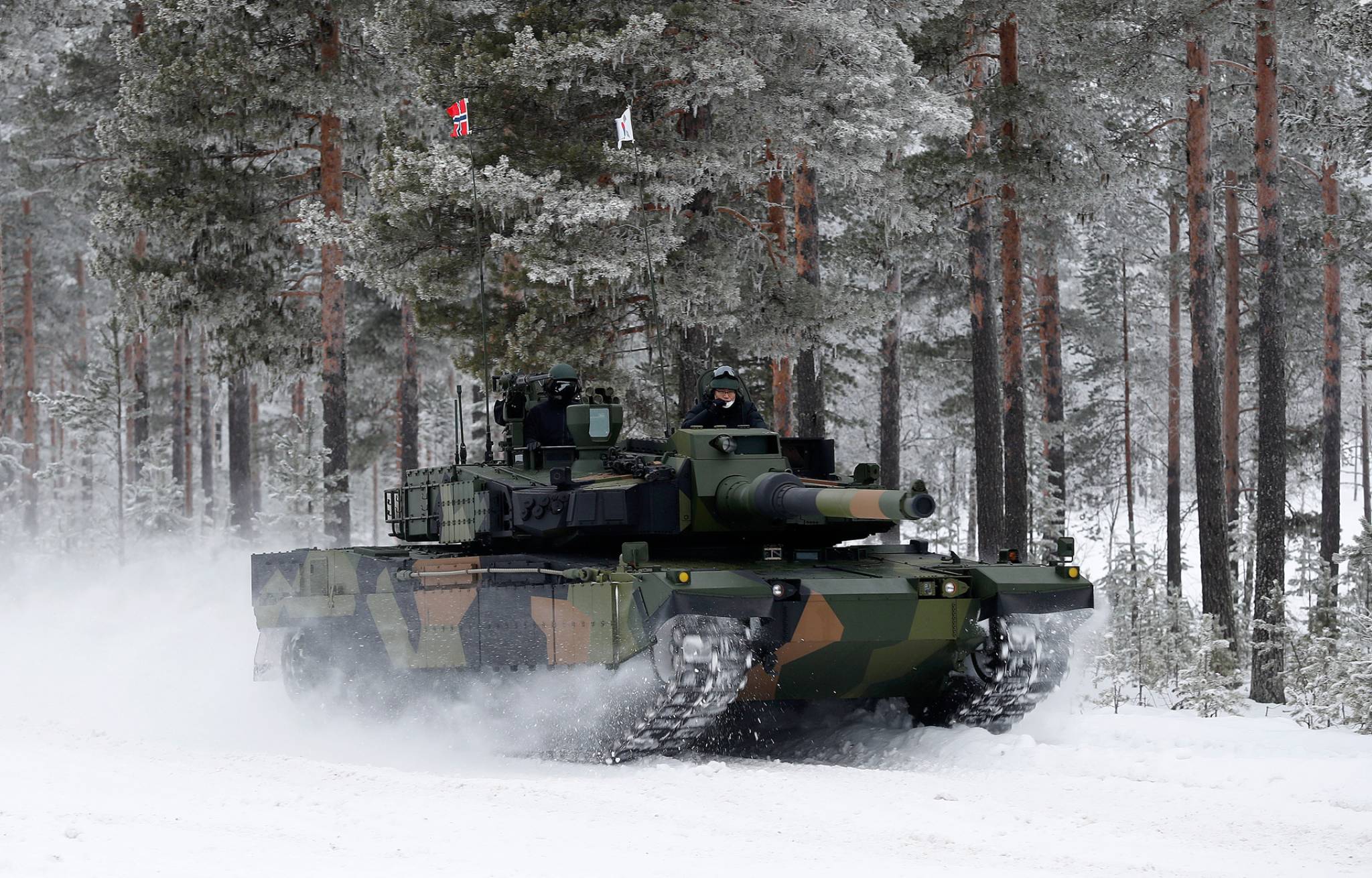
Norway also considered the tank, subjecting both the K2 and the Leopard 2A8 to extensive harsh-weather field trials in northern Norway in 2022. The Leopard was ultimately selected in February 2023 based on its survivability, NATO integration potential, and industrial partnership opportunities with Germany.
The K2 has also attracted interest from other nations, such as Peru, seeking modern armored capabilities without the lengthy development timelines associated with indigenous tank programs.
The tank’s growing profile has also brought increased security scrutiny, including an incident involving the alleged leakage of sensitive technical data related to the platform.
K2 Black Panther vs Major Competitors
| Tank | Country | Weight | Speed | Main Gun | Armor or Protection |
| K2 Black Panther | South Korea | 55 tons | 70 kilometers/44 miles per hour | 120 mm Hyundai WIA CN08 L/55 smoothbore gun; 12.7 mm / 7.62 mm machine gun (secondary) | Composite and reactive armor; CBR protection; smoke grenade launchers |
| M1A2 Abrams | US | 66 to 73 tons | 67 kilometers/42 miles per hour | 120 mm M256 smoothbore | Next Evolution amor; IED-jamming capabilities, Trophy Active Protection System |
| Leopard 2A7 | Germany | 64 to 67 tons | 68 kilometers/42 miles per hour | 120mm / L55 or L55A1 smooth-borecannon / 7.62mm machine gun (secondary) | Advanced modular composite armor with mine and ballistic protection |
| Leclerc | France | 57 tons | 71 kilometers/44 miles per hour | Giat 120 mm 52 caliber smoothbore gun; 12.7mm machine gun and a 7.62mm roof-mounted machine gun (secondary) | Modular composite armor, active protection systems |
| T-90M | Russia | 48 tons | 60 kilometers/37 miles per hour | 125 mm 2A46M-4 smoothbore gun; PKT 7.62mm coaxial machine and 12.7mm heavy machine gun (secondary) | Third-generation Relikt Explosive Reactive armor |
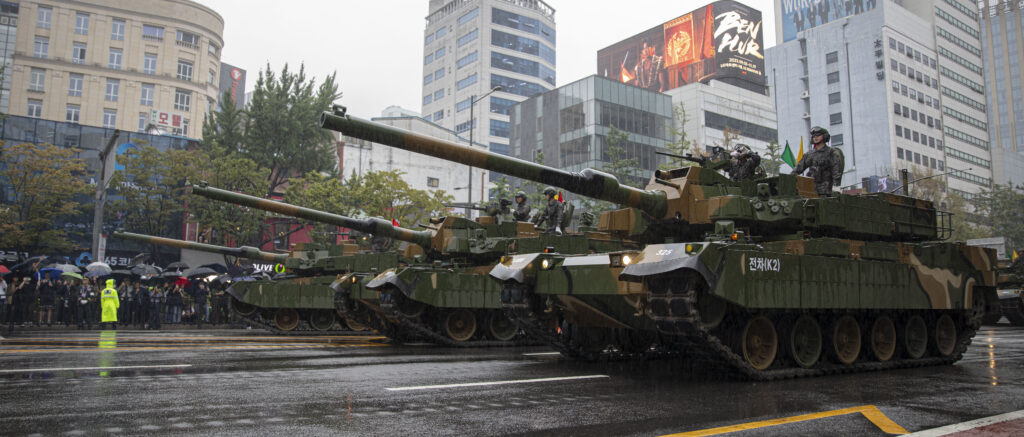
Future Outlook
The K2 Black Panther has evolved from a domestic South Korean program into a serious contender in the global main battle tank market.
Poland’s large-scale procurement and K2PL development program has given the platform its most significant international foothold to date. As South Korea expands its role as a major defense exporter, Hyundai Rotem is increasingly positioning the tank as a customizable platform adaptable to diverse operational requirements and industrial partnerships.
At the same time, however, the tank faces several challenges that will shape its future development.
The increasingly widespread use of drones, loitering munitions, and top-attack weapons has raised new questions about armored vehicle survivability, particularly for platforms like the K2 that have not yet seen combat in high-intensity, drone-saturated environments.
Future upgrades, including the optional hard-kill active protection system already planned under the Product Improvement Program, will be critical to demonstrating that the platform can operate effectively under the threat conditions now visible in Ukraine and other modern conflicts.
Cost considerations and competition from established platforms also remain important factors in future procurement decisions.
Looking ahead, its success will depend on how effectively future upgrades address lessons from modern conflicts.