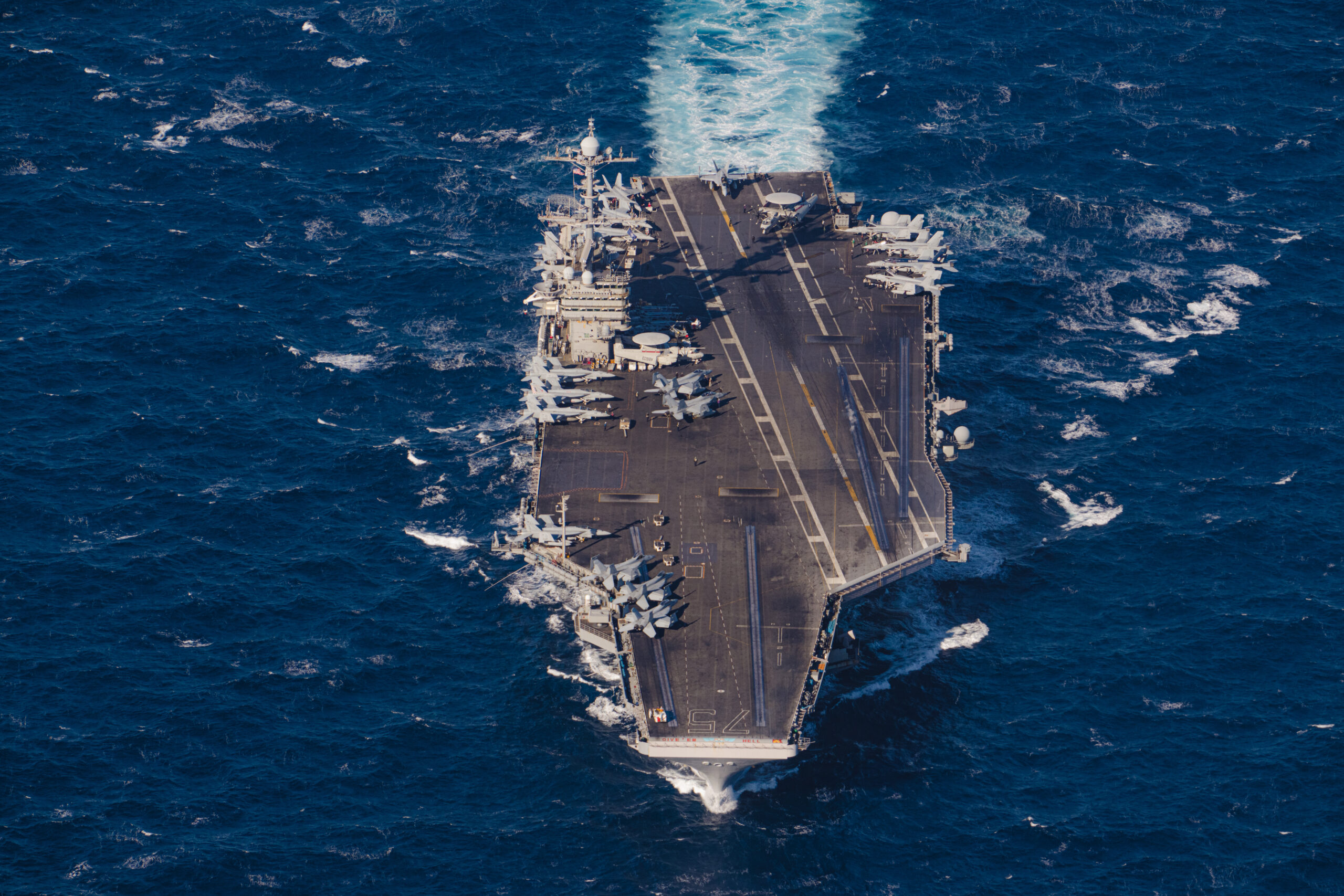
When a crisis erupts far from American shores, one of the first questions often asked is whether a carrier strike group is nearby.
For nearly five decades, the Nimitz-class has been the platform most often answering that call, serving as a floating airbase capable of bringing combat aircraft, surveillance assets, and military presence wherever they are needed.
Powered by nuclear reactors and designed for global operations, these carriers have become a cornerstone of US military strategy.
Here’s how they came to be, how they work, and why they remain among the most influential warships ever built.
At a Glance
| Category: | Glance: |
| Type | Nuclear-powered multi-mission aircraft carrier |
| Role | Mobile airbase supporting combat, deterrence, and maritime security missions |
| Builder | Huntington Ingalls Industries Newport News Shipbuilding |
| Crew | Ship: 3,200 Air Wing: 2,480 |
| Length | Overall: 1,092 feet (332.85 meters) Waterline: 1,040 feet (317 meters) |
| Beam | Overall: 252 feet (76.8 meters) Waterline: 134 feet (40.84 meters) |
| Draft | 37 feet (11.3 meters) |
| Flight Deck Width | 252 feet (76.8 meters) |
| Aviation | Full flight deck with island and hangar deck with 60 to 65 (or more) aircraft |
| Aircraft | F/A-18E/F Super Hornets, F/A-18 Hornets, E-2C Hawkeyes, EA-6B Prowlers, and SH-60F and HH-60H Seahawks |
| Displacement | 100,000 tons (full load) |
| Speed | 30+ knots (56 kilometers/35 miles per hour) |
| Armament | 2 to 3 Mk 29 launchers with eight RIM-7 Sea Sparrow missiles or RIM-162 Evolved Sea Sparrow missiles per launcher; 21 RIM-116 Rolling Airframe Missiles; Mk 15 Phalanx Close-In-Weapon System; Mk 38 machine gun systems |
| Propulsion | 2 x Westinghouse A4W nuclear reactors; 4 x steam turbines; 4 x shafts or propellers |
| Total Inventory | 10 |
| Unit Cost | $4.5 billion each (total ownership cost of $32.1 billion in FY 04 constant year dollars) |
What Is the Nimitz-Class Aircraft Carrier?
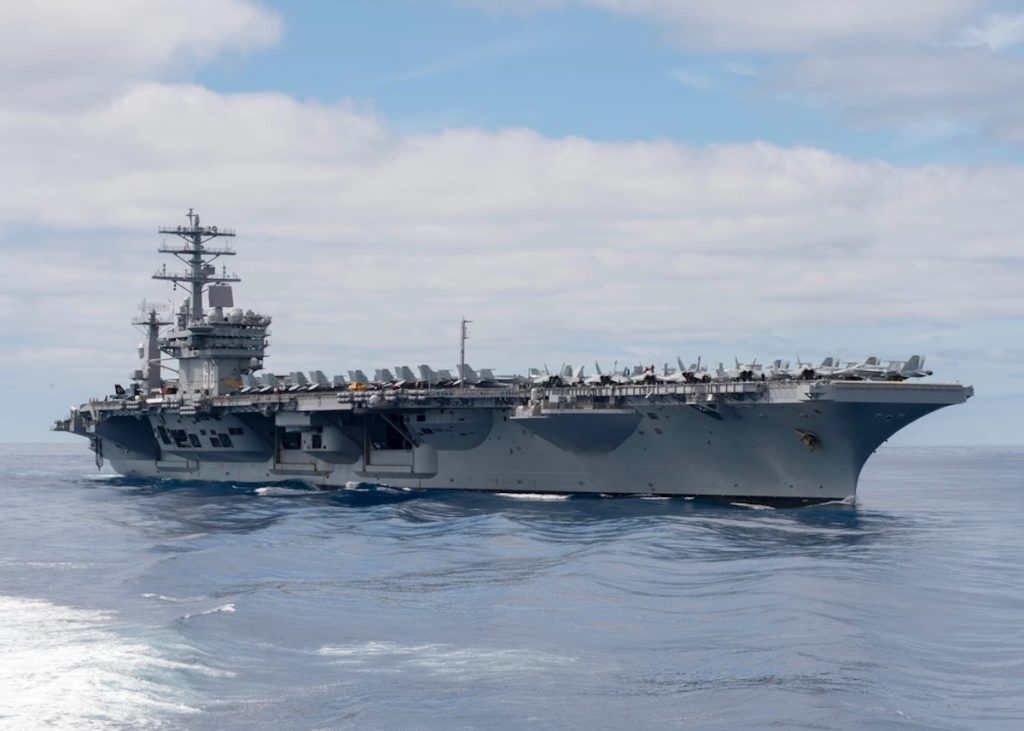
The Nimitz-class is a series of nuclear-powered aircraft carriers developed for the US Navy to serve as the centerpiece of carrier strike groups.
Built by Newport News Shipbuilding, these carriers are designed to project airpower globally through embarked fighter aircraft, electronic warfare platforms, helicopters, and support aircraft.
The primary mission is to conduct combat operations, maritime security missions, humanitarian assistance, and strategic deterrence.
Although they remain among the most capable warships in service, the Nimitz-class aircraft carriers are gradually being replaced by the next-generation Gerald R. Ford-class on a roughly one-for-one basis.
The transition is already underway, with the lead ship, USS Gerald R. Ford, in service and the future USS John F. Kennedy (CVN-79) progressing toward commissioning.
Recent schedule adjustments have even extended the service life of the lead carrier, USS Nimitz, to 2027, ensuring the navy maintains its required carrier force while newer Ford-class vessels enter the fleet.
Origin and Development
By the 1960s, the US Navy was searching for a successor to its conventionally powered aircraft carriers. Military planners wanted a vessel capable of supporting larger air wings while remaining at sea for extended periods without refueling.
Nuclear propulsion offered the answer, providing unprecedented endurance and reducing reliance on logistical support.
Construction of the lead ship, USS Nimitz (CVN-68), began in 1968. After entering service in 1975, it established a new standard for carrier operations, combining nuclear power with the ability to launch sustained air operations across the globe.
Over the following three decades, the navy commissioned nine additional ships, gradually refining the design as technology and operational requirements evolved.
Evolution of the Nimitz-Class Ships
- Early Nimitz (CVN-68 to CVN-70): The first ships established the class’s core architecture, including its nuclear propulsion system, flight deck layout, and carrier strike group operating concept.
- Improved Nimitz (CVN-71 to CVN-76): Later vessels incorporated advances in combat systems, electronics, survivability, and aviation support capabilities, reflecting evolving naval warfare requirements.
- USS George H. W. Bush (CVN-77): The final ship of the class introduced several design refinements and technologies intended for the succeeding Ford class, including reduced radar signature features, updated communications systems, and flight deck improvements.
How the Nimitz Class Works
Key Features
Nuclear Propulsion
The Nimitz-class aircraft carrier is powered by two nuclear reactors, allowing the carriers to operate for decades between refueling overhauls. This gives them exceptional endurance and reduces reliance on fuel logistics during extended deployments.
Large Flight Deck and Air Wing Capacity
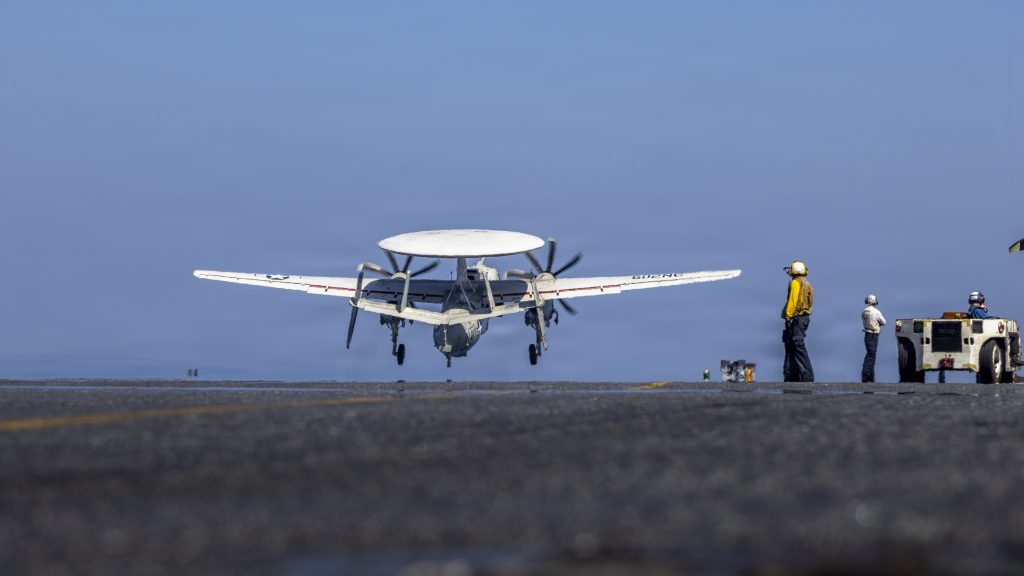
The carriers are designed to launch and recover a wide range of aircraft, from fighters such as the F/A-18E/F Super Hornet, which conduct air superiority and strike missions, to E-2D Hawkeye aircraft that provide airborne early warning and battle management.
Their air wings also include helicopters for search-and-rescue, logistics, and anti-submarine warfare, enabling the carrier to sustain a broad range of operations far from shore.
Extensive Command and Control Capabilities
Advanced communications, sensors, and battle-management systems enable the Nimitz-class to function as the nerve center of a carrier strike group. Through networks such as Link 16 and the Cooperative Engagement Capability, the carrier can fuse and distribute battlefield information across multiple platforms, supporting coordinated operations over vast distances.
Strengths
- Global power projection: A Nimitz-class carrier can deploy combat aircraft almost anywhere in the world without requiring host-nation basing rights.
- Exceptional endurance: Nuclear propulsion allows the carrier to operate for decades between reactor refueling overhauls, dramatically extending deployment flexibility.
- Multi-mission capability: Beyond combat operations, the carriers support humanitarian assistance, disaster relief, maritime security, and diplomatic missions.
Limitations
- Aging platform and modernization constraints: Most carriers entered service decades ago, and integrating new technologies into legacy designs can be more difficult than incorporating them into newer platforms.
- Dependence on escort and support vessels: The Nimitz-class is designed to operate as part of a carrier strike group rather than independently. Its effectiveness relies on a network of destroyers, cruisers, submarines, logistics ships, and aircraft that provide protection, intelligence, and sustainment.
- Growing vulnerability to advanced threats: Modern anti-ship ballistic and long-range cruise missiles, submarines, and drone systems have increased the risks facing large surface combatants.
Global Use and Operational History
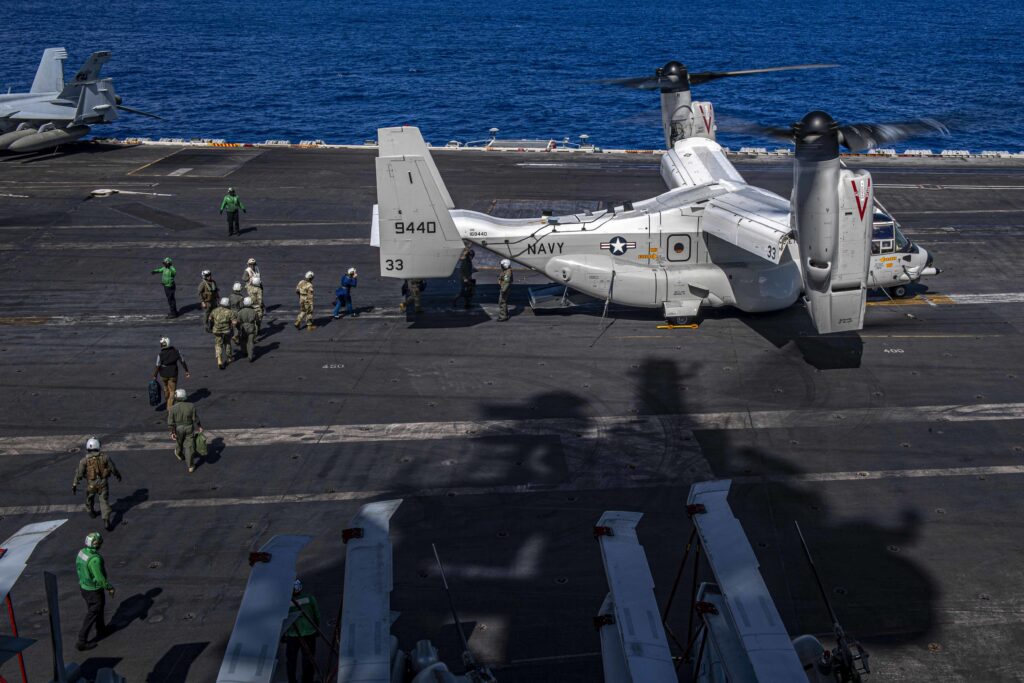
Nimitz-class carriers have formed the backbone of US naval power projection. Their ability to deploy large air wings without relying on foreign bases has allowed the US to respond rapidly to emerging conflicts while maintaining a persistent military presence in key regions.
- Operations Desert Shield and Desert Storm (1990–1991): Nimitz-class carriers helped build combat power in the Persian Gulf ahead of the coalition campaign to expel Iraqi forces from Kuwait.
- Operations Enduring Freedom and Iraqi Freedom (2001–2011): Following the September 11 attacks, Nimitz-class carriers played a central role in operations in Afghanistan, where the absence of nearby US bases initially made carrier aviation particularly important. The class later supported combat operations in Iraq, providing strike aircraft, intelligence-gathering capabilities, and command-and-control support throughout the campaigns.
- Indo-Pacific and Maritime Deterrence Missions: In recent decades, Nimitz-class carriers have frequently operated in the Western Pacific, Mediterranean Sea, and Middle East as part of broader deterrence efforts.
Future Outlook
Several carriers are expected to continue serving into the 2030s and beyond, even as the navy gradually transitions to newer platforms.
Ongoing upgrades to radar systems, communications equipment, aircraft support infrastructure, and defensive systems are helping maintain operational relevance.
Though gradually being replaced, the carrier remains a central pillar of US naval power. How effectively it operates in an era of drones and long-range precision weapons will help shape perceptions of the aircraft carrier’s future role in warfare.