The NATO Support and Procurement Agency (NSPA) has awarded Diehl Defence a framework contract for its Vulcano 155mm guided artillery ammunition.
Designed to enhance the long-range strike capabilities of NATO members and partner nations, the contract is expected to see deliveries begin in 2027.
Under NATO’s Ammunition Support Partnership, participating countries will be able to consolidate requirements, giving manufacturers a clearer view of aggregated demand.
“This landmark contract underscores our unwavering commitment to modernising ammunition stockpiles and strengthening collective defence through multinational cooperation,” NSPA General Manager Stacy Cummings said.
“By ensuring a secure supply chain, Allies can deliver critical precision strike capabilities faster and at greater scale.”
The contract follows Vulcano’s selection as one of the candidates for the US Army’s Extended Range Artillery Projectile program, which aims to develop a next-generation 155mm munition capable of significantly extending the range and effectiveness of the service’s artillery systems.
Alongside Vulcano, projectiles from BAE Systems and General Atomics are also being evaluated under the program, with initial operational capability expected in fiscal year 2030.
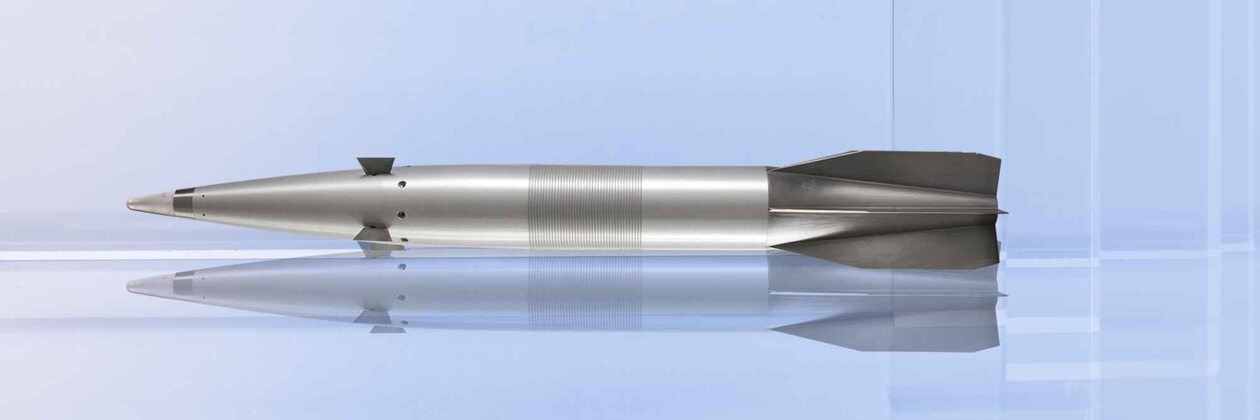
Vulcano Guided Projectile
The Vulcano is a family of sub-caliber guided artillery ammunition co-developed by Leonardo and Diehl Defence for engaging stationary and moving targets at extended ranges.
Already in service with the armed forces of Germany and Italy, the Vulcano can strike targets up to 70 kilometers (43.5 miles) away with an accuracy of within 5 meters (16.4 feet).
The shell combines advanced aerodynamics with GPS guidance and can be fitted with either a radio frequency programmable fuse or a semi-active laser seeker to engage laser-designated targets.
Its insensitive munition is designed to withstand extreme temperatures, shock, and adjacent detonating munitions.
The ammunition can also be programmed to strike targets at angles of up to 90 degrees, reducing its visibility to enemy air defense systems during the terminal phase of flight.