
The US Defense Innovation Unit has launched a competition to identify modular electronic warfare and sensing systems for deployment aboard crewed and uncrewed surface vessels.
The Specular MIST Prize Challenge is being organized with the Department of the Navy Rapid Capabilities Office and Naval Information Warfare Center Pacific.
It carries a total prize pool of $5 million and could lead to prototype agreements, additional testing, or future procurement contracts.
The program focuses on containerized and modular payloads that can be installed on different maritime platforms without extensive modifications.
Under the initiative, systems are expected to support training, electronic attack, and surveillance missions, including operations in contested environments where communications and sensors may be disrupted.
Solutions must be compact enough for unmanned surface vessels; resistant to heat, vibration, and maritime conditions; and capable of remote control.
Companies have until July 22, 2026, to submit proposals.
The challenge will move to live demonstrations at sea in September before winners are announced on October 30.
Three Technology Areas
Companies may submit proposals under three lines of effort.
The first seeks threat radar simulators for maritime training.
These systems would reproduce complex radar signals from moving vessels, allowing US Navy units to train against realistic electronic threats without relying on expensive or limited-range equipment.
The payloads must support remote operation and account for vessel movement to maintain accurate antenna pointing.
The second category covers active electronic attack.
Proposed systems must autonomously detect multiple radio-frequency signals and respond with adaptive, real-time jamming, without requiring continuous operator input.
The objective is to equip unmanned vessels with electronic warfare capabilities to operate alongside larger naval formations.
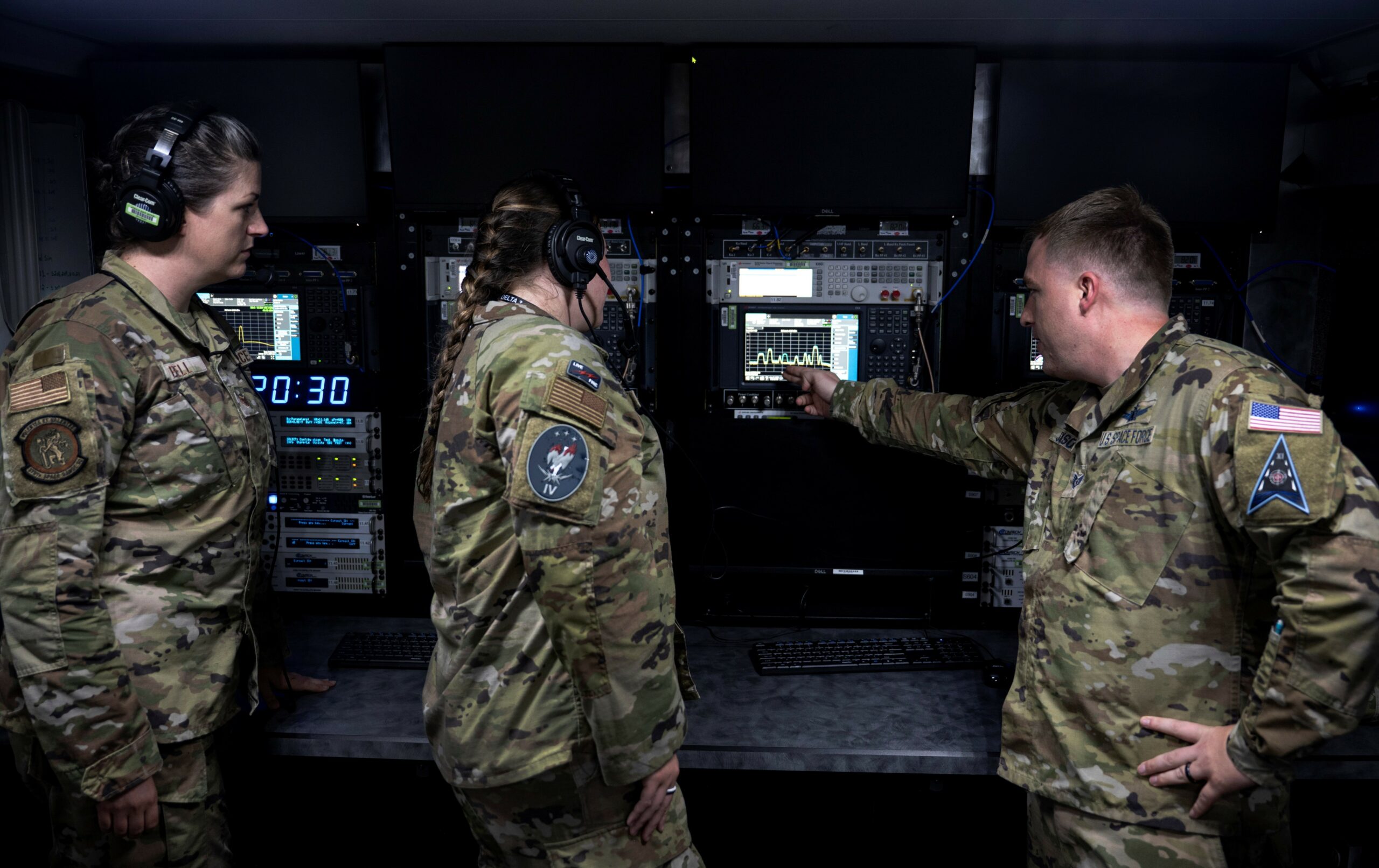
The third area focuses on passive electronic surveillance. These systems would monitor and process the electromagnetic environment without transmitting signals themselves.
They must also be capable of running government-provided software and protecting collected data during storage and transmission.
For all three areas, applicants must explain how their systems could be produced at different scales.
The government is requesting estimates for batches of one to 300 units, beginning six months after the challenge is completed.