It doesn’t patrol the skies or move across oceans. It doesn’t need to. Instead, it remains fixed, silent, and ready beneath the ground — built for a mission measured in minutes but defined by decades.
The LGM-30G Minuteman III anchors the land-based leg of the US nuclear triad, designed to deliver a rapid, intercontinental response through hardened, continuously alert launch systems tied into a secure command-and-control network.
Here’s how the Minuteman III became the backbone of strategic deterrence, and why it still matters today.
At a Glance
| Category: | Details: |
| Type | Intercontinental ballistic missile (ICBM) |
| Role | Nuclear deterrence or strategic strike for the US nuclear triad |
| Manufacturer | Boeing (modern sustainment and integration) |
| Launch Method | Underground hardened missile silos |
| Propulsion | Three-stage solid-fuel rocket |
| Range | 13,000+ kilometers (8,078+ miles) |
| Speed | Approximately Mach 23 (28,000+ kilometers/17,500+ miles per hour) at reentry |
| Guidance System | Inertial guidance with updated navigation systems |
| Warhead Capability | Nuclear warheads (originally MIRV-capable; carries a single warhead under current arms control agreements) |
| Launch Weight | Around 36,000 kilograms (79,400 pounds) |
| Length | 18.2 meters (59.7 feet) |
| Diameter | 1.67 meters (5.5 feet) |
| Planned Successor | LGM-35 Sentinel |
What Is the Minuteman III?
The LGM-30G Minuteman III is a land-based intercontinental ballistic missile operated by the US Air Force, serving as the country’s silo-based strategic deterrent within its broader mix of nuclear forces.
Deployed in hardened underground silos, the Minuteman III is designed for rapid launch, long-range strike capability, and high survivability under attack conditions.
Origins and Development
The Minuteman program began during the Cold War. The US sought a faster, more survivable nuclear deterrent as a response to the rapid expansion of Soviet intercontinental ballistic missile capabilities.
Key milestones:
- October 1962: LGM-30A Minuteman I enters operational service, becoming the first solid-fuel intercontinental ballistic missile in the US arsenal.
- September 1965: LGM-30F Minuteman II achieves initial operational capability
- April 1970: LGM-30G Minuteman III reaches initial operational capability, becoming the first US ICBM equipped with multiple independently targetable reentry vehicles
- 1993 to 2009: A series of life-extension programs, including the Guidance Replacement Program and Propulsion Replacement Program, modernized key systems and extended service life
- 2010s to present: The Minuteman III remains on continuous alert as the US’s only deployed land-based ICBM, pending replacement by the Sentinel program.
The program marked a major shift toward solid-fuel propulsion, enabling faster launch readiness and improved reliability compared to earlier designs.

How the Minuteman III Works
The Minuteman III is built for one core mission: survive, respond, and deliver under extreme conditions.
Key Features
Solid-Fuel Design for Immediate Readiness
Unlike earlier liquid-fueled ballistic missiles that required lengthy, vulnerable fueling procedures before launch, the LGM-30G Minuteman III uses a three-stage solid-fuel rocket motor, allowing it to remain on constant alert for rapid response.
This significantly reduced launch preparation time and improved survivability during high-tension Cold War scenarios where reaction speed was critical.
Hardened Silo-Based Deterrence
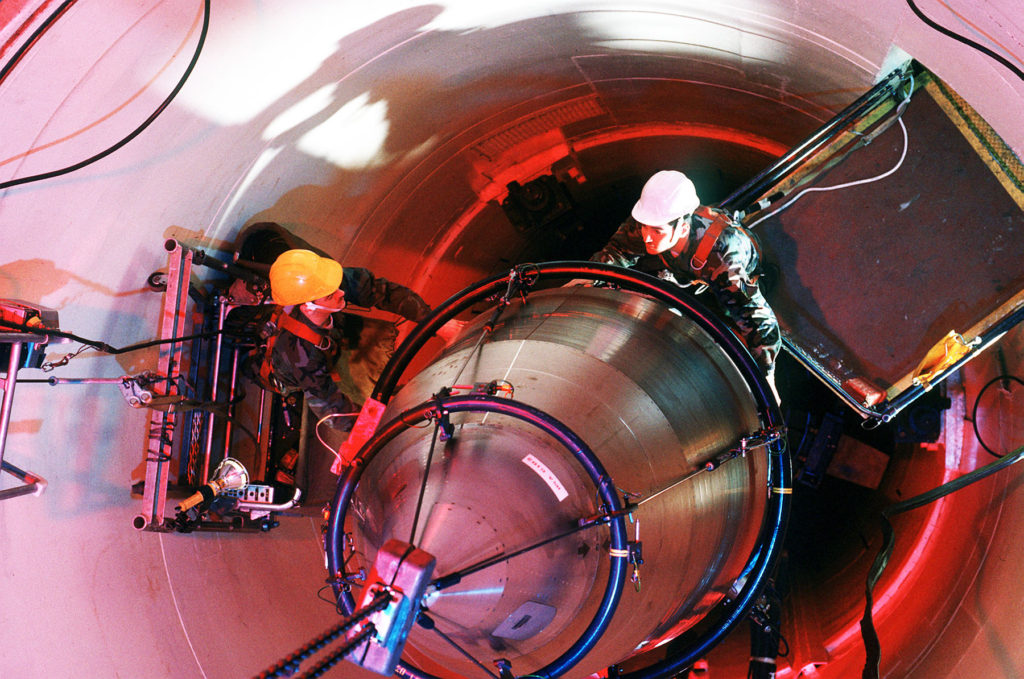
The Minuteman III was designed around hardened underground silos intended to withstand extreme blast pressures and maintain launch capability under nuclear attack conditions.
Distributed across multiple US states, the silo network complicated enemy targeting calculations and reinforced the credibility of America’s second-strike nuclear deterrent.
MIRV Capability and Strategic Reach
One of the missile’s most consequential advancements was its ability to carry multiple independently targetable reentry vehicles (MIRVs), enabling a single missile to threaten several separate targets across intercontinental distances.
Under current arms control agreements, the Minuteman III now carries a single warhead, though the underlying capability shaped the broader trajectory of nuclear deterrence strategy.
Combined with its inertial guidance system, the platform gave the United States a more flexible and survivable strategic strike capability during the nuclear arms race.
Integrated Nuclear Command Architecture
The Minuteman III became deeply embedded within the US nuclear command-and-control structure, enabling launch crews, communications networks, and strategic warning systems to operate within a highly coordinated deterrence framework.
This integration remains central to the land-based leg of the US nuclear triad today.
Strengths
- The nuclear triad’s fastest-response leg: Because of its constant-alert posture and solid-fuel propulsion, it remains one of the fastest nuclear response systems available. Unlike bomber aircraft that require flight preparation or submarines that may be operating remotely, silo-based ICBMs can be launched within minutes if ordered.
- Persistent strategic deterrence: The Minuteman III’s greatest strength is not battlefield use, but deterrence itself. Its dispersed silo network forces potential adversaries to account for hundreds of hardened launch sites simultaneously, increasing the complexity and risk of any theoretical first-strike scenario.
Limitations
Despite extensive modernization efforts, the LGM-30G Minuteman III still relies on infrastructure and core architecture originally developed during the Cold War.
Maintenance has become increasingly expensive and technically demanding, while the missile’s fixed underground deployment makes its launch locations permanently known and less flexible.
The platform was also designed for a very different strategic environment than the one emerging today. Advancements in missile defense, cyber warfare, and the modernization of strategic arsenals have intensified pressure for a next-generation replacement with stronger survivability, digital resilience, and long-term sustainment potential.
Operational Role and Global Significance
The Minuteman III is deployed across three US Air Force missile wings located in Montana, North Dakota, and Wyoming, each controlling dozens of hardened silos spread across vast rural areas.
Operated continuously on alert status, these missiles form a persistent strategic deterrent, ensuring the United States maintains a guaranteed second-strike capability.
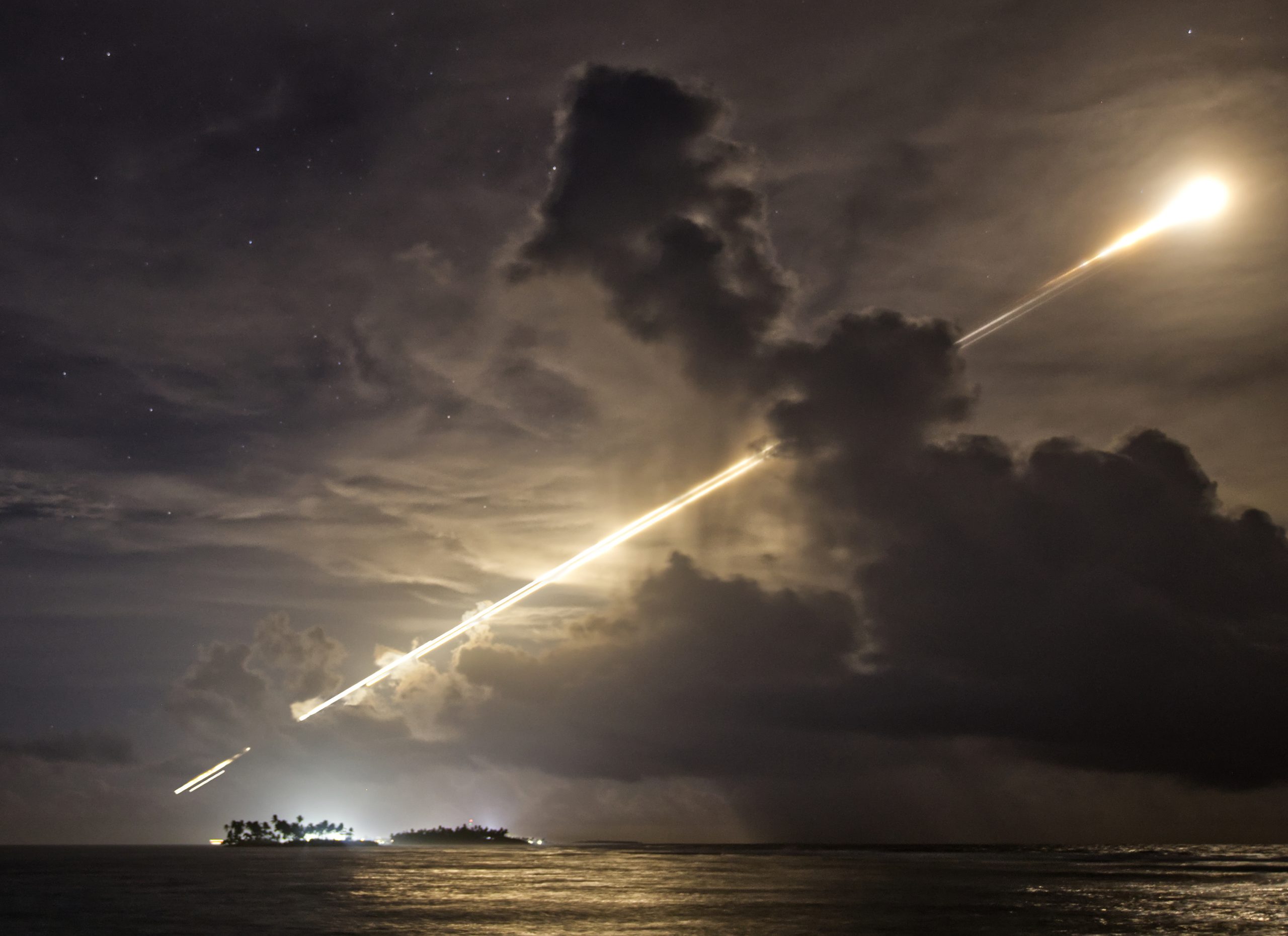
Test launches from sites such as Vandenberg Space Force Base regularly validate system reliability and readiness without carrying live warheads.
Future Outlook
The Minuteman III is approaching the end of its extended service life, with replacement already underway through the LGM-35A Sentinel program.
Key transition priorities include:
- Replacement of aging silos and command infrastructure
- Modernization of nuclear command-and-control systems
- Improved accuracy, cybersecurity, and survivability features
- Gradual phase-out of Minuteman III over the coming decades
Despite its age, the system remains a critical pillar of US nuclear deterrence until full Sentinel deployment is achieved.
For more than half a century, the Minuteman III has underwritten the credibility of American deterrence from fixed positions beneath the plains. Its replacement is coming, but until it does, the ground-based leg of the triad stays exactly where it has always been.