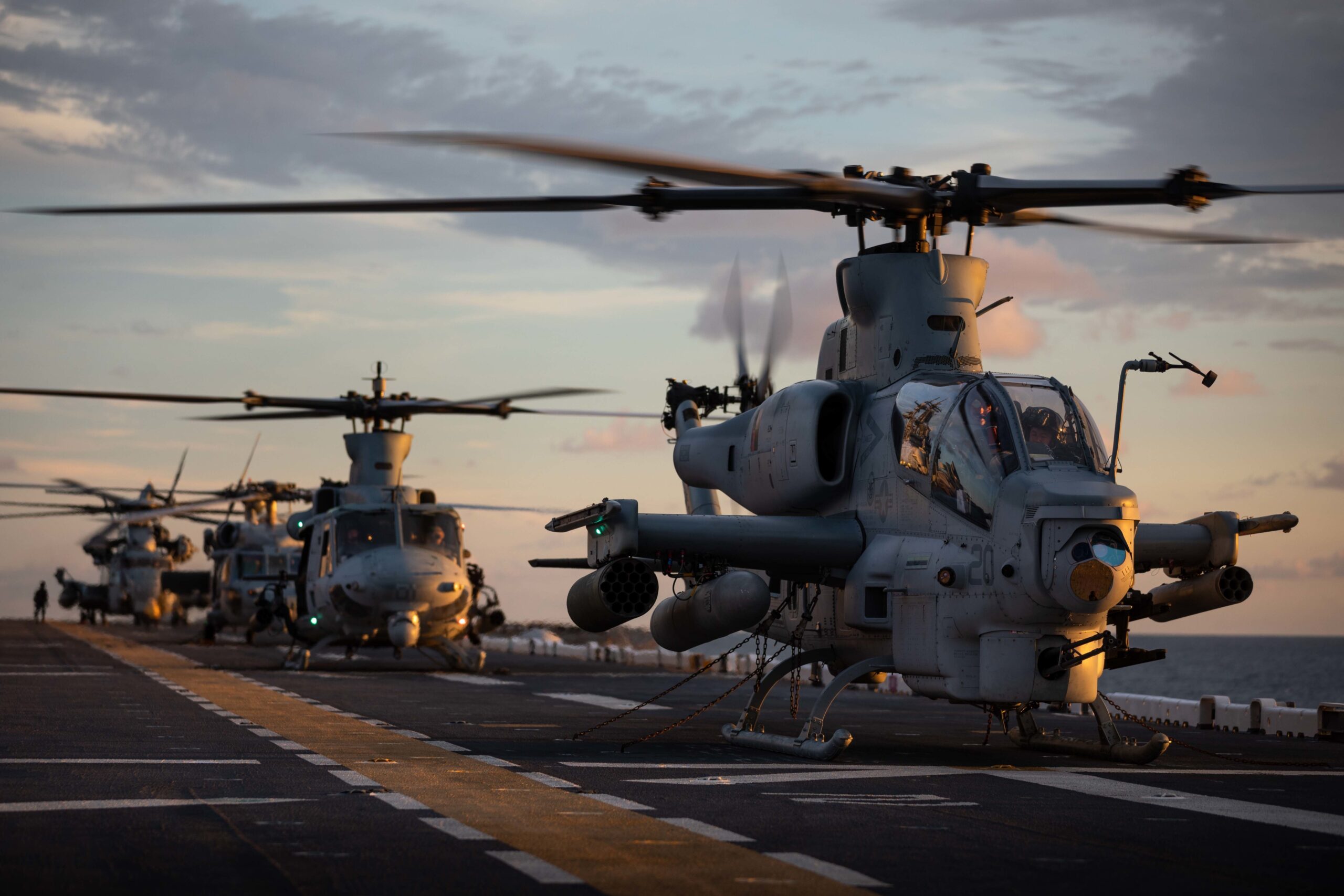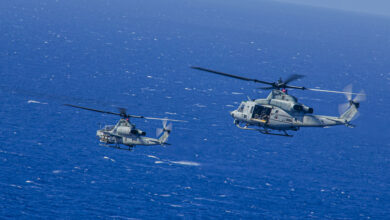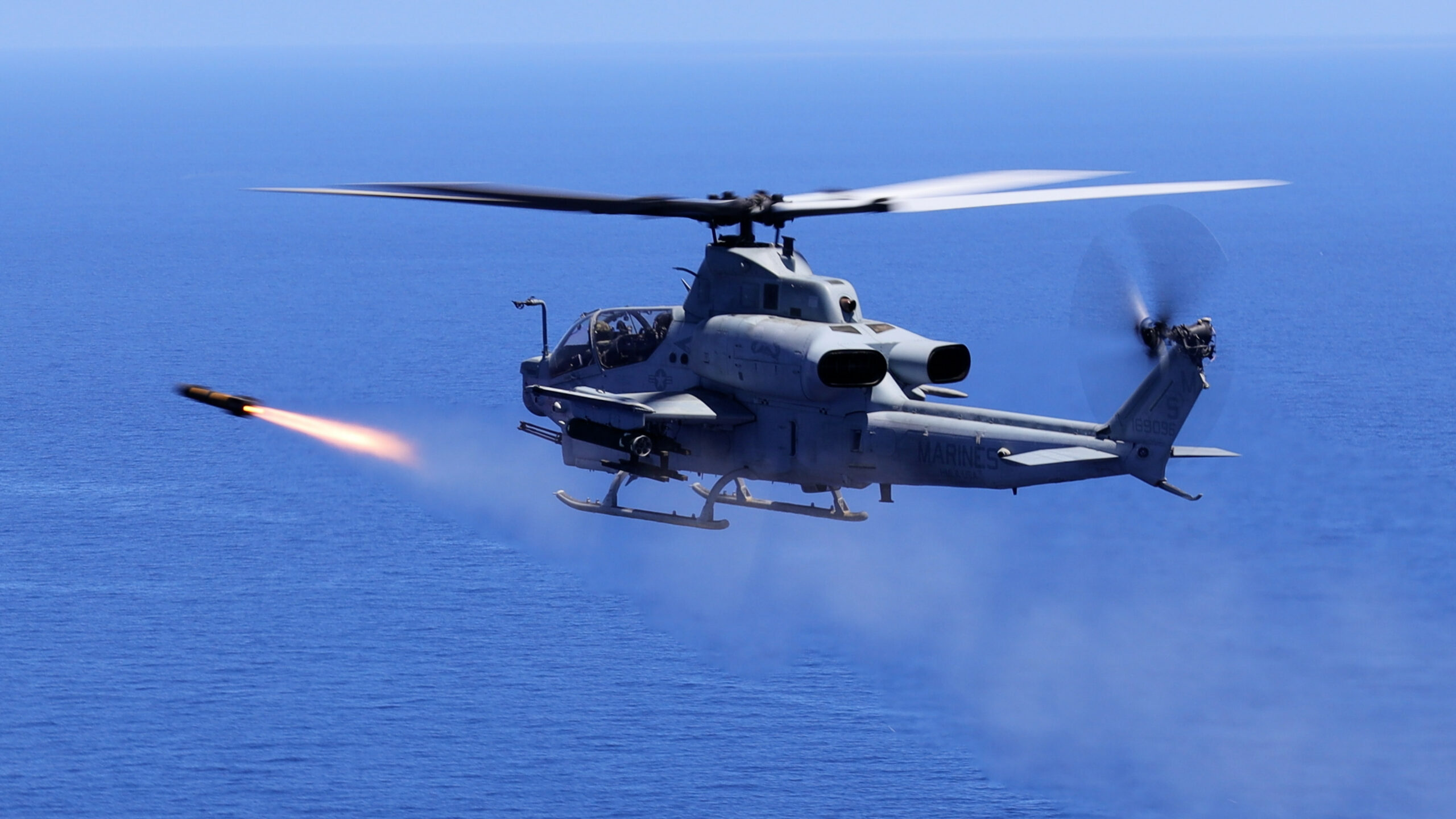
The ship pitches in open water as the call comes in. Within minutes, an AH-1Z Viper is airborne, launched not from a runway but from a flight deck, already oriented toward a target that a land-based platform couldn’t reach in time.
That is the Viper’s defining edge: it was built for the sea as much as the land, designed to operate where expeditionary warfare begins.
To understand how this helicopter became one of the most advanced attack aircraft in US service, let’s look at its origins, design evolution, and operational role.
At a Glance
| Category: | Details: |
| Type | Attack helicopter and close air support platform |
| Role | Close air support, armed reconnaissance, anti-armor warfare, escort, anti-air warfare, and fire support coordination |
| Manufacturer | Bell Textron |
| Crew | 2 (pilot and co-pilot/gunner) |
| Maximum Speed | 200 knots (230 miles/371 kilometers per hour) |
| Combat Radius | 131 nautical miles (151 miles/242 kilometers) |
| Service Ceiling | 20,000+ feet (6,100+ meters) |
| Engine and Engine Power | 2 x General Electric T700-GE-401C turboshaft engines with 1,800 shp each |
| Rotor System | Four-bladed composite main rotor |
| Length | 58.3 feet (17.75 meters) |
| Height | 14.4 feet (4.37 meters) |
| Rotor Diameter | 48 feet (14.6 meters) |
| Maximum Takeoff Weight | 18,500 pounds (8,390 kilograms) |
| Weapons Capability | AGM-114 Hellfire, AIM-9 Sidewinder, Hydra 70 rockets, 20mm M197 cannon |
| Fire Control | AN/AAQ-30 Target Sight System with electro-optical and infrared targeting |
| Operational Environment | Expeditionary, joint, amphibious, and maritime combat operations |
What Is the AH-1Z Viper?
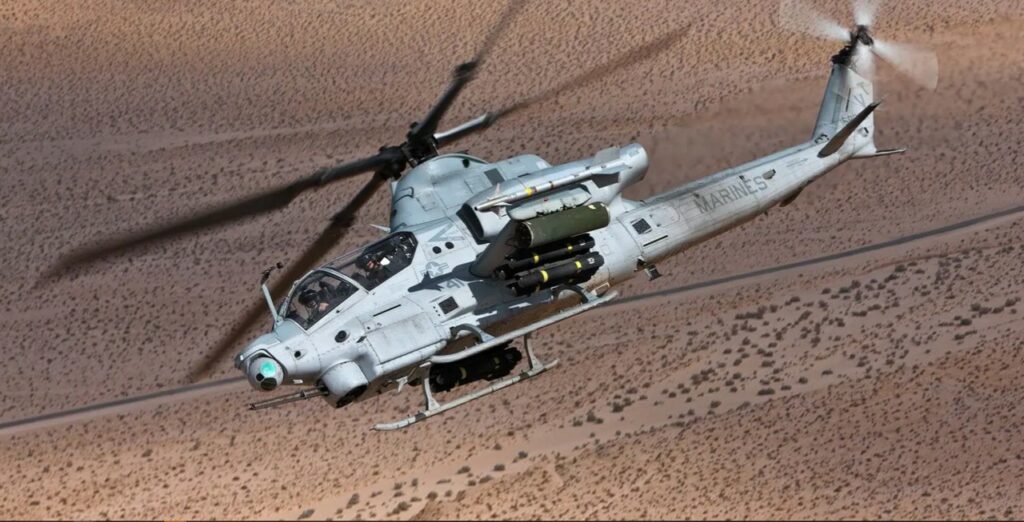
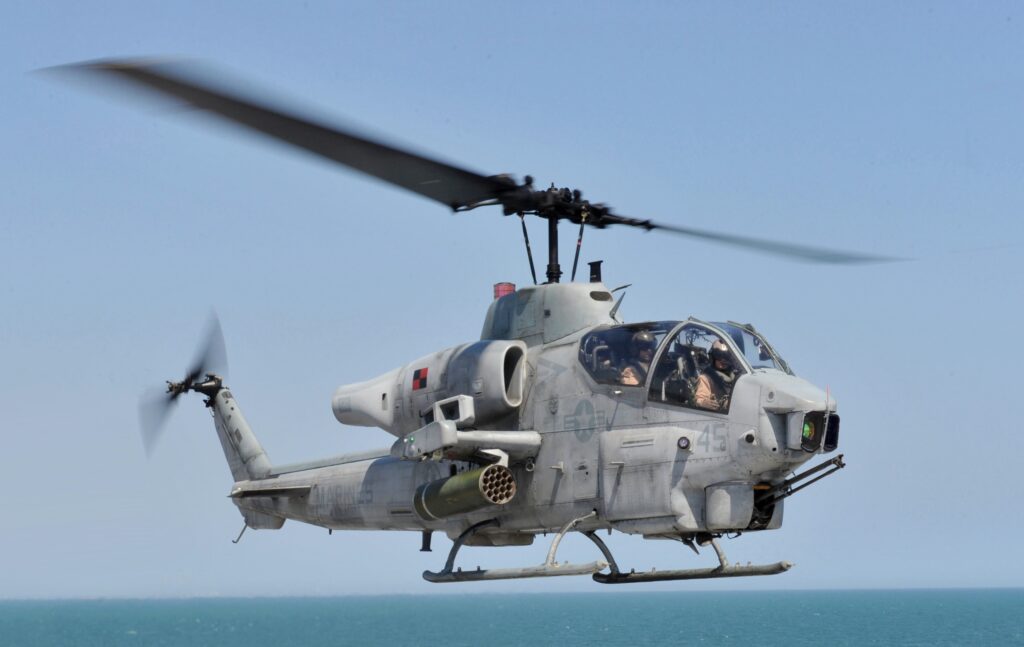
The Bell AH-1Z Viper is a twin-engine, tandem-seat, multirole attack helicopter built to deliver precision firepower across the most demanding combat environments.
Operated primarily by the US Marine Corps, the aircraft is designed for close air support, armed reconnaissance, escort operations, and strike missions over both land and sea.
The Viper was introduced to replace aging Cobra variants with a faster, more survivable, and digitally integrated platform capable of operating alongside modern expeditionary forces.
Origins and Development
The AH-1Z Viper traces its lineage back to the original AH-1 Cobra introduced during the Vietnam War. As battlefield requirements evolved, the need for better sensors, survivability, and weapons integration led to incremental upgrades.
Bell Textron took the helm of the H-1 modernization program that produced the modern combat helicopter, which first flew in December 2000 and reached initial operational capability with the US Marine Corps in 2011.
Unlike earlier Cobras, the AH-1Z features a fully integrated mission combat suite, a four-bladed composite rotor system, and upgraded targeting and sensor capabilities, all housed within a corrosion-resistant airframe specifically engineered for sustained shipboard deployment.
The Viper Ecosystem
While the AH-1Z itself is the primary production model, it exists within a broader ecosystem:
AH-1W Super Cobra
This is the Viper’s direct predecessor, which introduced the twin-engine configuration that significantly improved survivability and combat endurance over earlier Cobra models.
Designed for expeditionary Marine operations, it provided close air support, anti-armor capability, and escort functions, but relied on older avionics, two-bladed rotor systems, and less integrated sensor architecture compared to later variants.
Z-Based Export Configurations
The Viper platform has also been adapted for allied operators through export-specific configurations tailored to regional operational requirements.
These variants can include customized communications suites, weapons integration packages, mission software adjustments, and interoperability modifications designed to align with NATO or partner nation defense architectures while retaining the aircraft’s core attack and reconnaissance capabilities.
How the AH-1Z Viper Works
Key Features
- Sensors and targeting: The AH-1Z integrates advanced electro-optical and infrared systems, allowing it to detect and engage targets in day/night and degraded visibility conditions. Its targeting suite enables coordination with ground forces and other aircraft in real time.
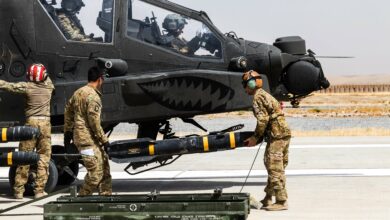
- Weapons systems: The helicopter can carry a mix of air-to-ground missiles, air-to-air missiles, rockets, and a 20mm cannon. This modular loadout allows it to adapt to different mission profiles quickly.
- Digital avionics and networking: One of its defining strengths is its fully integrated glass cockpit and digital communications systems. This enables battlefield networking with other aircraft, ships, and ground units for coordinated strikes.
The Viper’s Strengths
- High survivability with composite rotor blades and reduced radar signature
- Powerful twin-engine configuration for shipborne operations
- Strong multirole flexibility (attack, escort, reconnaissance)
- Advanced sensor fusion and targeting accuracy
The Viper’s Limitations
- Limited payload compared to larger attack helicopters
- High maintenance demands due to advanced systems
- Range and endurance constrained in extended land operations without refueling support
Global Use and Operational Role
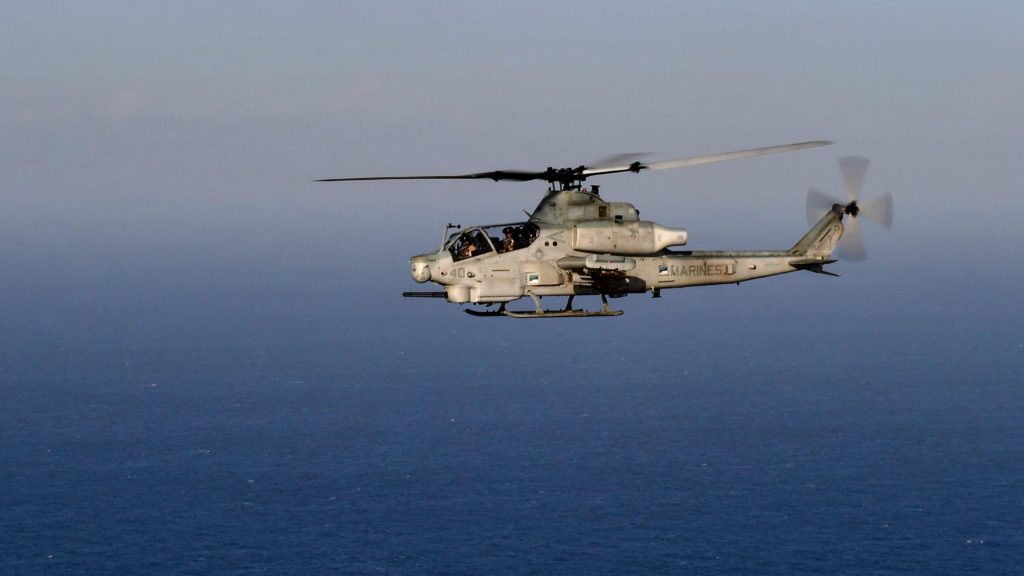
The AH-1Z Viper is primarily operated by the US Marine Corps Aviation component and is closely tied to amphibious assault doctrine. It is deployed from land bases and naval vessels, supporting expeditionary operations worldwide.
However, export sales and interest have also been secured, particularly in Nigeria, the Czech Republic, Slovakia, and Ukraine.
Allied interest in the platform reflects its relevance in expeditionary warfare, though its export footprint remains limited compared to other rotary-wing aircraft.
Future Outlook
The AH-1Z is expected to remain in service for decades, supported by incremental upgrades in sensors, communications, and weapons integration, such as precision attack and long-range munitions.
However, it will increasingly operate in a more networked battlespace, working alongside unmanned systems and next-generation aviation platforms.
As warfare becomes more data-driven, the Viper’s role is shifting from a standalone attack helicopter to a connected strike node in a larger combat ecosystem.