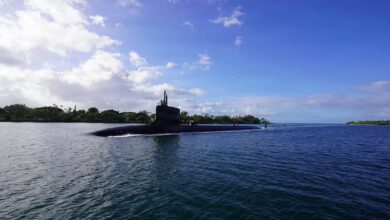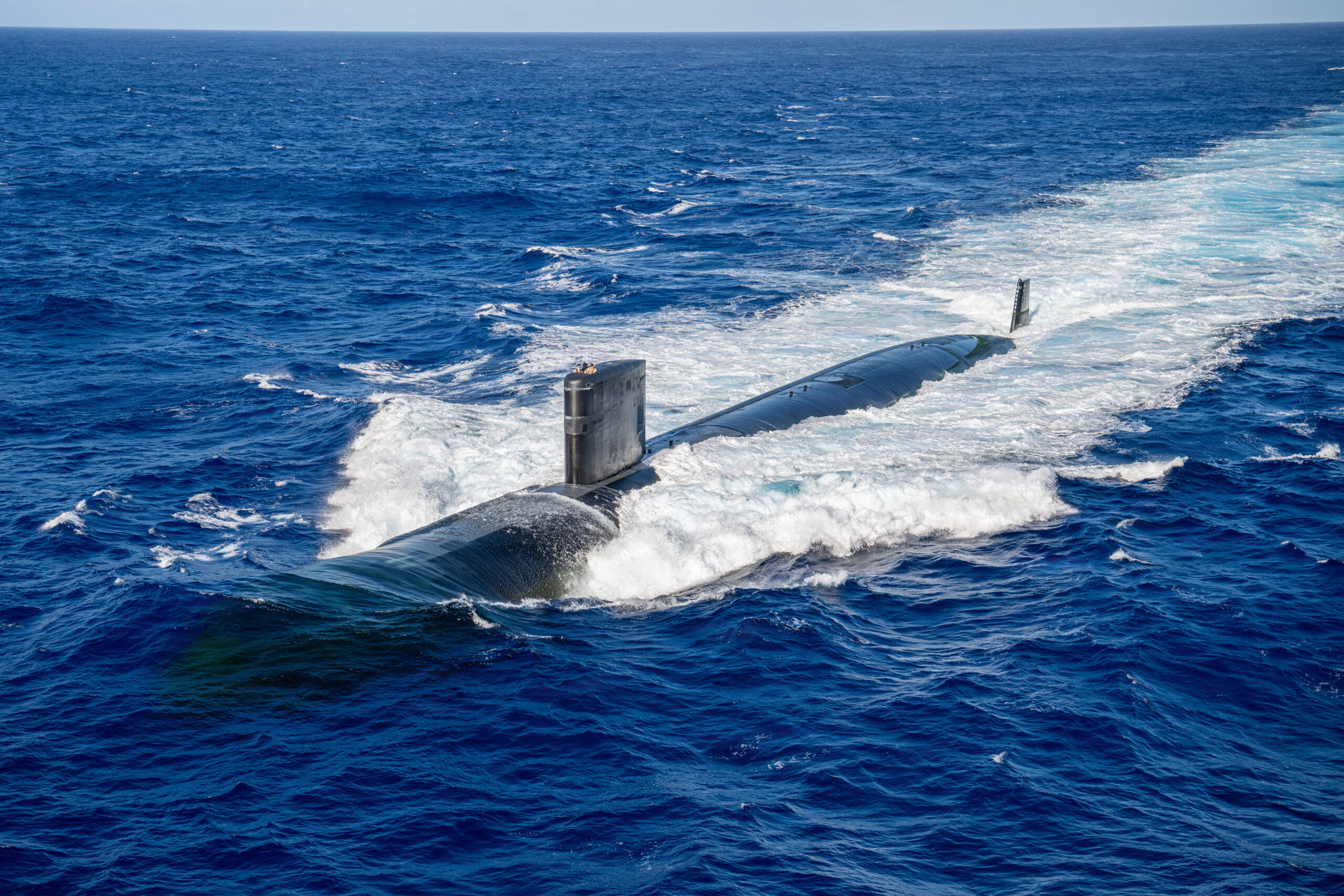
Fast, heavily armed, and built for endurance, the Los Angeles-class submarine emerged as the US Navy’s answer to a rapidly expanding Soviet undersea threat during the Cold War.
Decades later, these nuclear-powered attack submarines continue to patrol some of the world’s most contested waters — tracking adversaries, gathering intelligence, and projecting power without ever being seen.
This guide explores what the Los Angeles-class submarine is, the technologies that define its operations, and what the future holds for one of the most influential submarine classes ever built.
At a Glance
| Category: | Details: |
| Type | Nuclear-powered fast attack submarine (SSN) |
| Role | ASW, ASuW, ISR, strike warfare, escort operations |
| Manufacturer | General Dynamics Electric Boat, Newport News Shipbuilding |
| Total Built | 62; Approximately 24 in commission |
| Propulsion | S6G nuclear reactor with steam turbines |
| Speed | Over 30 knots submerged (35 miles/56 kilometers per hour) |
| Length | Approximately 360 feet (110 meters) |
| Beam | 33 feet (10 meters) |
| Crew | Around 130 personnel |
| Armament | Mk 48 torpedoes, Tomahawk cruise missiles, Harpoon missiles, mines |
| Diving Capability | Deep-ocean operational profile |
| Successor | Virginia-class submarine |
What Is the Los Angeles-Class Submarine?
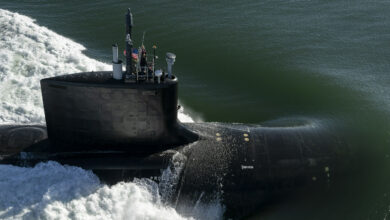
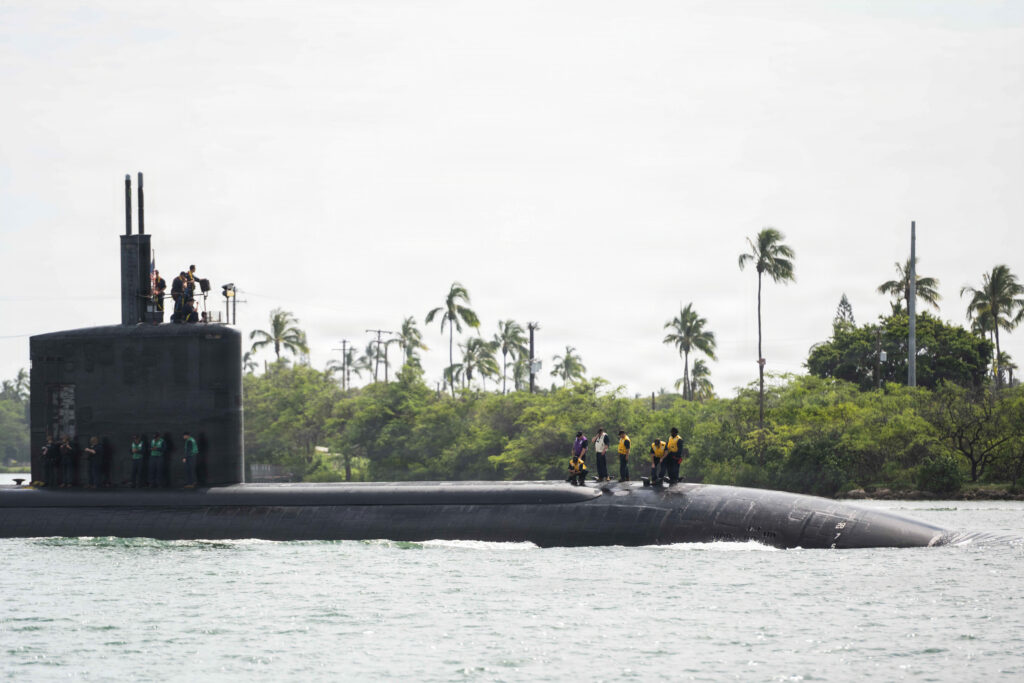
The Los Angeles-class submarine is a nuclear-powered fast attack submarine (SSN) developed for the US Navy.
Designed primarily for anti-submarine warfare, anti-surface warfare, intelligence gathering, and strike missions, the class became the backbone of the US Navy’s undersea fleet for decades.
This is the largest class of nuclear-powered attack submarines constructed for the United States, with 62 boats built between the 1970s and 1990s. However, only 24 are actively serving in the fleet as newer platforms such as the Virginia-class submarine are gradually replacing them.
How the Los Angeles-Class Came to Be
The submarine was developed during the height of the Cold War, when the Soviet Union dramatically expanded its submarine fleet and naval reach.
The US Navy needed a faster, quieter, and more capable attack submarine that could escort carrier strike groups, hunt Soviet ballistic missile submarines, and operate globally for extended periods.
The program was led by General Dynamics Electric Boat, with additional construction by Newport News Shipbuilding. The design evolved from lessons learned through earlier nuclear submarines, particularly the Sturgeon-class.
The first boat in the class, USS Los Angeles (SSN-688), entered service in 1976 and established the template for a new generation of high-speed attack submarines optimized for deep-ocean operations.
Variants of the Los Angeles-Class
Although commonly grouped under one name, the class evolved through several major configurations.
Original 688 Configuration
Early submarines were optimized primarily for blue-water Cold War missions against Soviet submarines. These boats emphasized speed and deep-water performance but lacked some later stealth and strike enhancements.
688I Improved Variant
The 688 Improved or 688I boats introduced major survivability and combat upgrades. These included:
- Improved quieting technologies
- Advanced sonar systems
- Reinforced sail planes for Arctic operations
- Better fire-control systems
- Enhanced electronics and combat processing
The 688I configuration significantly improved survivability in contested undersea environments and expanded operational flexibility.
Vertical Launch System (VLS) Boats
Many later submarines incorporated vertical launch systems capable of firing Tomahawk cruise missiles. This transformed the submarine from primarily a hunter-killer platform into a precision land-attack asset capable of striking targets hundreds of miles inland.
How the Los Angeles-Class Works
Nuclear Propulsion and Endurance
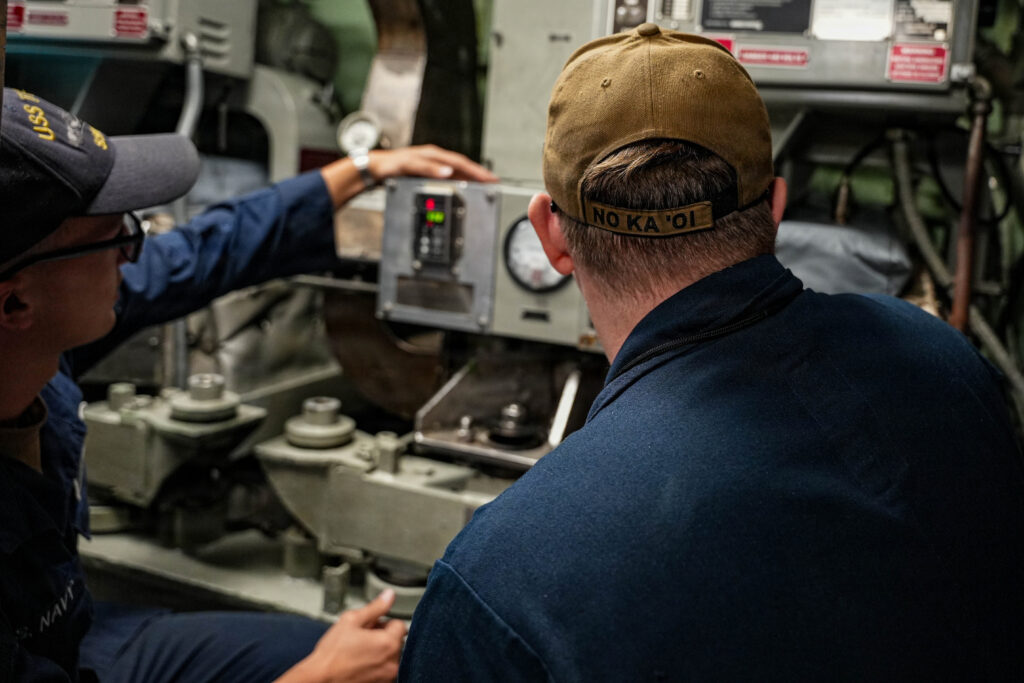
At the heart of the submarine is an S6G nuclear reactor that powers steam turbines, driving a single shaft and propeller.
Unlike diesel-electric submarines, the reactor allows the submarine to remain submerged for months without refueling, limited mainly by food supplies and crew endurance.
Stealth and Acoustic Warfare
The submarine’s survivability depends heavily on remaining undetected. Acoustic-damping systems, sound-isolated machinery, specialized hull coatings, and quiet propulsion technologies reduce detectable underwater noise signatures.
Advanced sonar arrays allow crews to detect and classify contacts at long range while remaining difficult to locate themselves.
Weapons and Strike Capability
The Los Angeles-class carries a mix of heavyweight torpedoes and cruise missiles designed for multiple combat scenarios.
Key Weapons Systems
- Mk 48 heavyweight torpedoes for anti-ship and anti-submarine warfare
- Tomahawk land-attack missiles for precision strikes
- Harpoon anti-ship missiles
- Naval mines for area denial missions
Strengths
- High speed and mobility: The submarine was designed for rapid response and fast pursuit operations, allowing it to track adversary submarines across vast ocean distances.
- Multi-mission flexibility: Over time, the class evolved into a versatile platform capable of ISR, strike warfare, escort duties, and special operations support.
- Proven combat value: The class has participated in multiple real-world operations, including intelligence missions during the Cold War and Tomahawk strike campaigns in the Middle East.
Limitations
- Aging hulls and maintenance burden: Many boats are now decades old, increasing maintenance demands and operational costs.
- Reduced optimization for littoral warfare: The submarines were originally designed for deep-ocean Cold War operations rather than the shallow, congested coastal environments emphasized in modern naval strategy.
Global Use and Operational Deployments
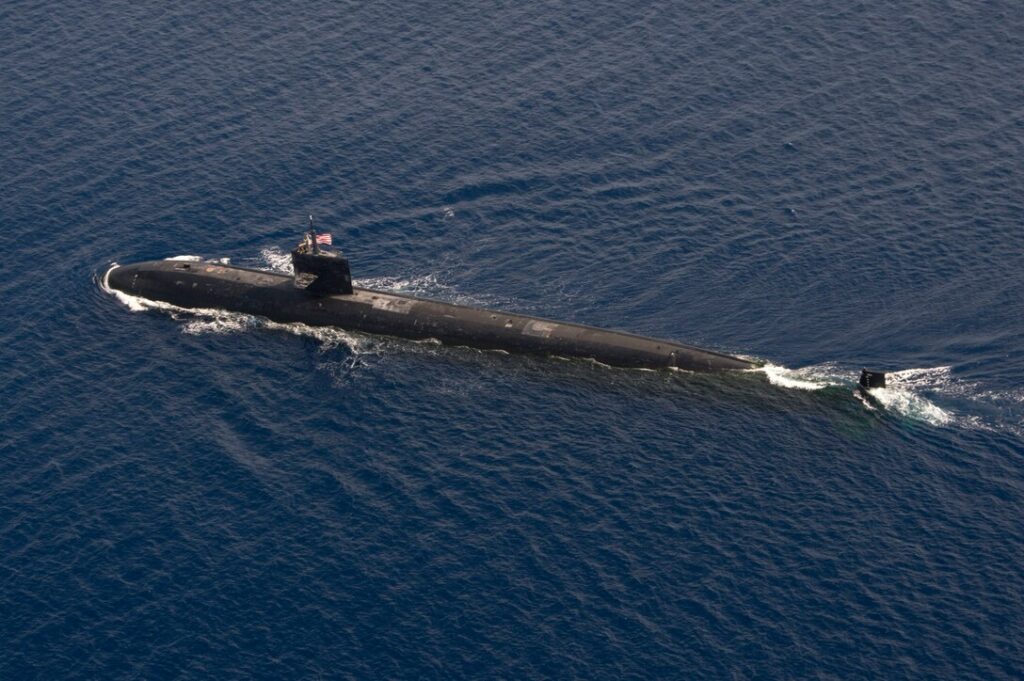
As geopolitical priorities shifted, Los Angeles-class boats transitioned from tracking Soviet submarines in the North Atlantic to supporting expeditionary operations, counterterrorism campaigns, and modern deterrence missions across the Atlantic, Pacific, Arctic, Mediterranean, and Middle Eastern theaters.
- Cold War Atlantic and Pacific patrols: Conducted surveillance and tracking operations against Soviet submarines while protecting U.S. carrier strike groups and sea lines of communication.
- Mediterranean Sea operations: Supported NATO maritime security missions and maintained a persistent undersea presence during periods of regional instability.
- Middle East deployments: Launched Tomahawk cruise missile strikes and provided intelligence support during operations in Iraq and other regional contingencies.
- Arctic missions and patrols: USS Santa Fe participated in Operation ICE CAMP Boarfish.
- Indo-Pacific missions: USS Greenville Submarine Squadron 11 recently returned to homeport after supporting deterrence operations, freedom of navigation efforts, and other “high tempo undersea missions.”
Future Outlook
As the US Navy transitions to the Virginia-class submarine, the remaining Los Angeles-class submarines are gradually being retired from service.
However, the pace of Virginia-class production has struggled to keep up with Los Angeles-class retirements, contributing to a shrinking attack submarine fleet at a time when growing competition with China is increasing demand for undersea warfare capabilities.
Despite this transition, the Los Angeles class leaves a lasting legacy, having helped define modern attack submarine doctrine and demonstrated how stealth, endurance, intelligence gathering, and precision strike capabilities can shape naval operations beneath the surface.