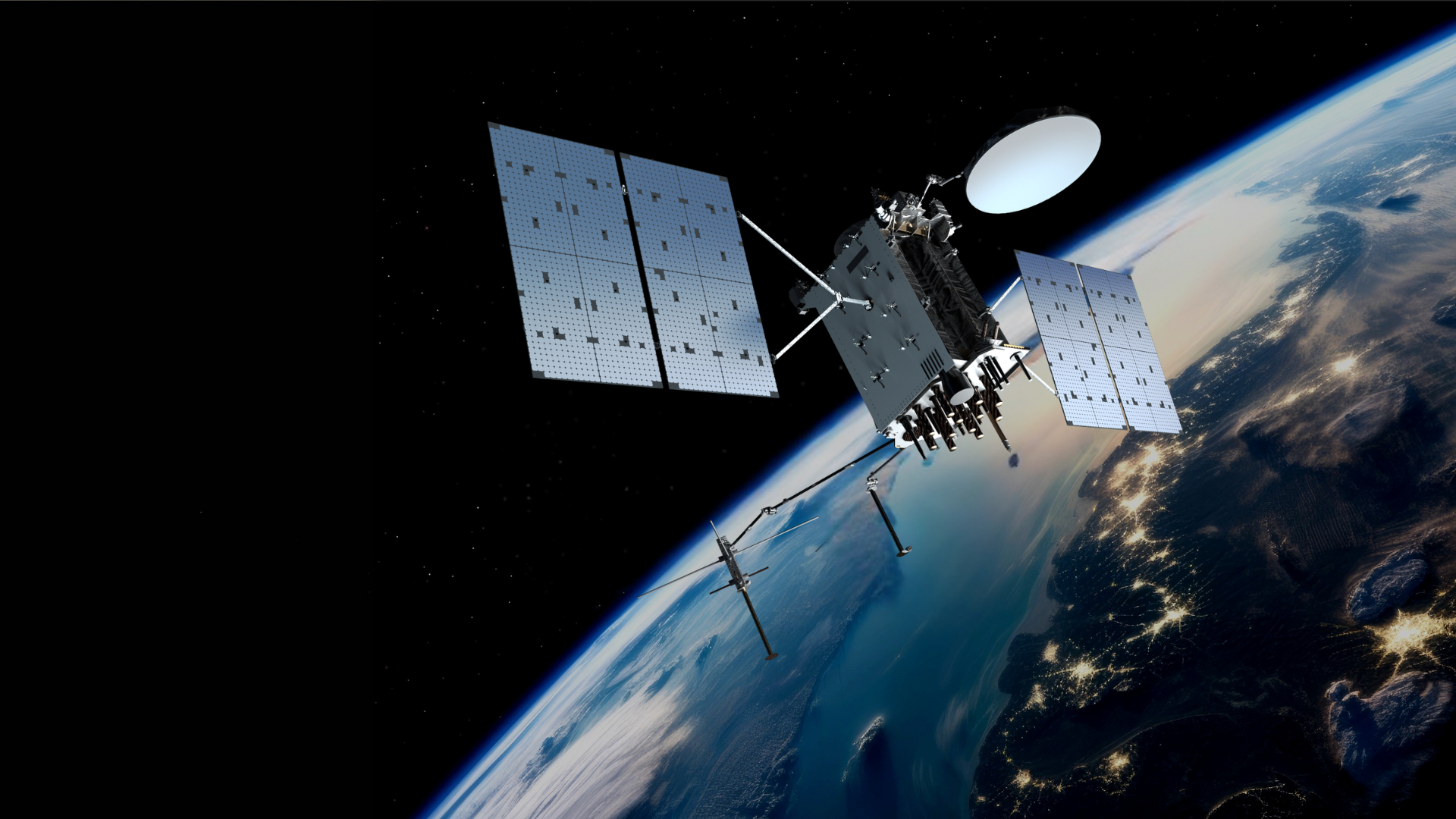

Lockheed Martin has secured a $514-million US Space Force contract to build two additional Global Positioning System (GPS) IIIF satellites, expanding its role in the modernization of the military’s critical positioning, navigation, and timing constellation.
The award covers GPS IIIF Space Vehicles (SV) 23 and 24, bringing Lockheed Martin’s total GPS IIIF production commitment to 14 spacecraft.
GPS IIIF is the latest evolution of the GPS constellation. Among the most significant upgrades is the Regional Military Protection feature, which Lockheed Martin said offers a 63-fold increase in anti-jam capability for military forces operating in contested environments.
The satellites will expand the number of spacecraft capable of broadcasting M-Code, the encrypted military GPS signal designed to provide secure navigation services for US and allied forces. It also introduces a digital navigation payload to improve positioning accuracy and signal reliability.
Christina Mancinelli, vice president of global communications and navigation at Lockheed Martin, said the contract supports continued modernization of the constellation to ensure military users have access to reliable navigation capabilities.
Production of the new satellites is underway at Lockheed Martin’s facilities in the Denver area.
Lockheed Martin’s Role in GPS IIIF
Lockheed Martin has been at the center of the GPS III and GPS IIIF programs for many years.
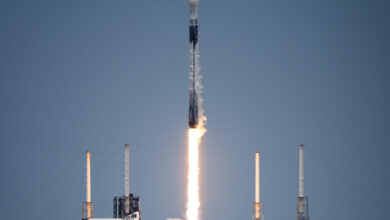
The company noted that all GPS III satellites it built have now reached orbit, including GPS III SV 09 and SV 10, which launched in January and April under accelerated schedules.
In May, the company announced that SV 11 had completed the “core mate” phase, a major milestone that integrates key satellite components and marks the transition to full assembly and testing.
Earlier, in April, Lockheed Martin received a $105-million US Space Force contract to sustain and upgrade the GPS ground control network, including support for GPS IIIF launch and early orbit operations.
The program builds on earlier progress, including the successful critical design review of the GPS IIIF digital navigation payload completed in 2020.