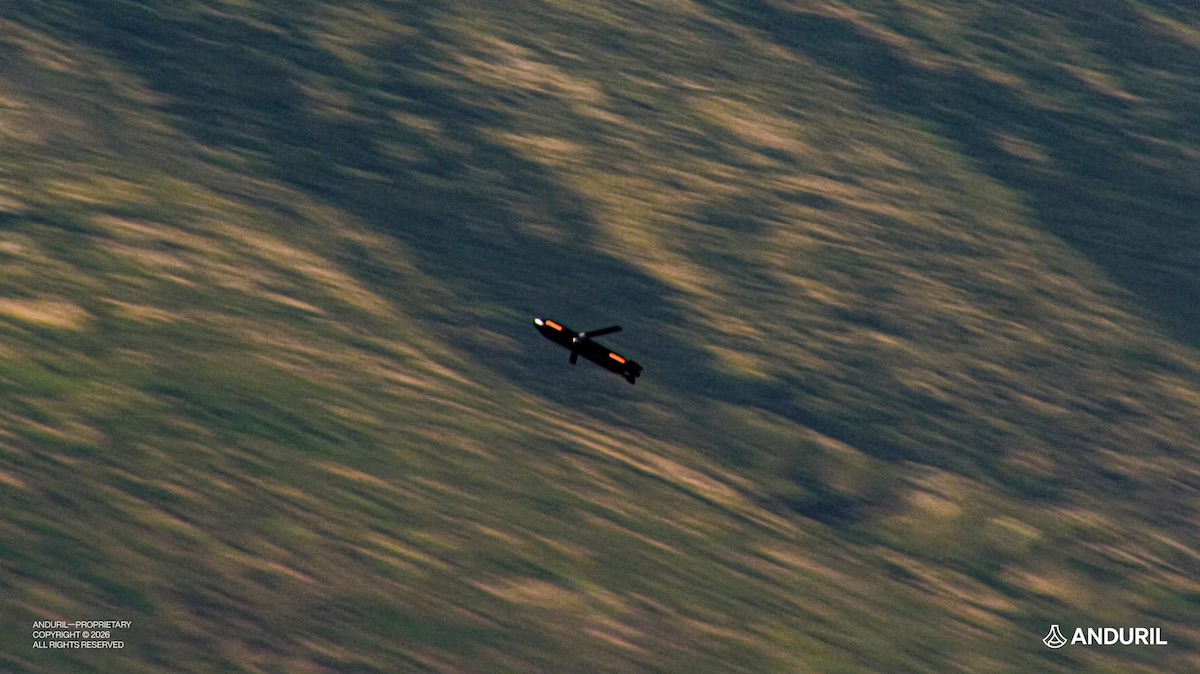

The US is set to acquire thousands of Barracuda-500 cruise missiles for stand-off strike missions under a framework agreement with Anduril.
The deal covers a two-phase approach for the annual procurement and delivery of the air-launched vehicles for seven years, as well as the accelerated large-scale production of the pallet- and lug-launched missile variants.
Deliveries are slated to start by 2027.
The framework agreement follows around two months after the Pentagon inked a similar deal with Anduril for the low-cost, surface-launched Barracuda-500M cruise missiles.
Anduril designed the Barracuda series for hyper-scale production, with all Barracuda-500 variants sharing more than 90 percent of their components and using modular, open-architecture designs.
FAMM Program
The latest framework agreement supports the US Air Force’s Family of Affordable Mass Missiles (FAMM) program, which seeks to develop affordable, producible, and modular long-range strike weapons intended to overwhelm enemy defenses.
FAMM has different variants depending on launch method, such as FAMM-L for lug-launched munitions from fighter aircraft and FAMM-P for palletized munitions from airlifters.
Three companies were selected for multi-year mass production: Anduril for its Barracuda-500 missiles, CoAspire for its Rapidly Adaptable Affordable Cruise Missiles, and Zone 5 Technologies for its AGM-188 Rusty Daggers.
The Pentagon aims to procure up to 8,000 FAMM vehicles annually.
Barracuda-500
The Barracuda-500 has technical similarities to the Barracuda-500M, sharing the same range of more than 500 nautical miles (575 miles/926 kilometers) and speed of 190 to 500 knots (352 to 926 kilometers/219 to 575 miles per hour).
It can be deployed from a cargo pallet in transport aircraft such as a C-130 or C-17 and can also be externally carried and launched from tactical fighters.
Under contracts for both FAMM-P and FAMM-L, Anduril has completed multiple flight tests of the pallet-launched Barracuda-500M since 2024, demonstrating the missile’s performance and modular design.
The lug-launched variant is expected to begin ground and flight testing later this year.