
The US Department of Defense and the US Air Force plan a major expansion in the production of the Long-Range Anti-Ship Missile (LRASM) and the Joint Air-to-Surface Standoff Missile (JASSM), with the latter recently employed in US strikes against targets in Iran.
The expansion is expected to support the procurement of up to 11,200 JASSM and LRASM missiles in multiple configurations and variants across JASSM Lots 27-33 and LRASM Lots 13-19 over the next five to seven years, averaging well over 1,000 missiles annually.
By comparison, the US Air Force’s fiscal year 2025 budget — the first under a multiyear procurement contract — funded the acquisition of 450 JASSMs and 115 LRASMs.
For fiscal year 2026, the budget request sought funding for an additional 389 JASSMs and 118 LRASMs through a combination of the base defense budget and reconciliation funding approved by Congress.
Combat Use
According to an April 21 report by the Center for Strategic and International Studies, the US military employed more than 1,000 JASSMs — primarily the AGM-158B JASSM-ER — against Iranian targets, making it the most extensively used offensive munition of the campaign, ahead of the Tomahawk cruise missile.
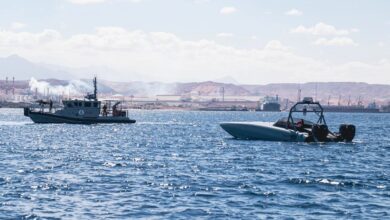
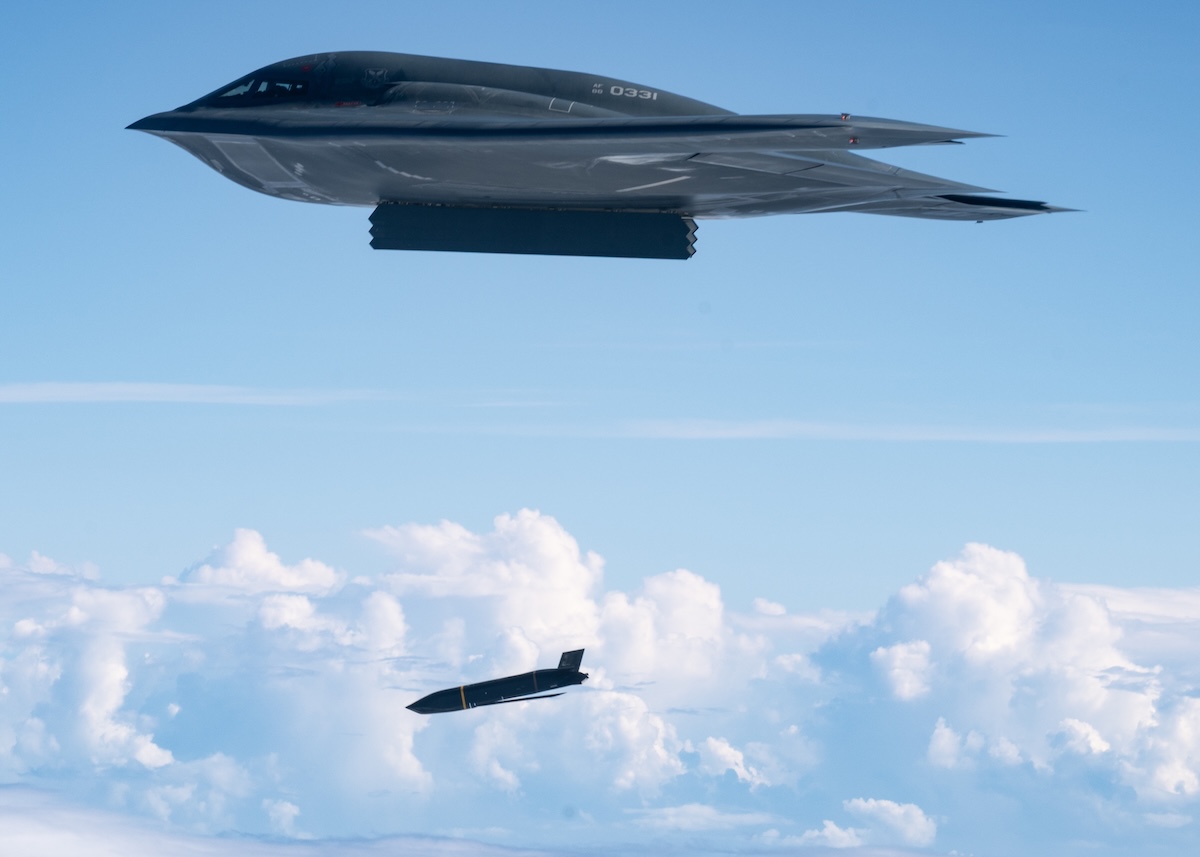
While the Pentagon has not publicly disclosed any operational use of the LRASM during the Iran campaign, the missile remains central to US Indo-Pacific planning. In June, the US Air Force demonstrated the weapon’s integration with the B-2 Spirit bomber during Exercise Valiant Shield 2026 in a live-fire strike against a decommissioned vessel.
Air Force budget documents indicate annual production capacity could reach 860 JASSMs and 240 LRASMs in 2026. Meeting the new procurement objective, however, would likely require annual production to increase well beyond those levels.
Common Origin
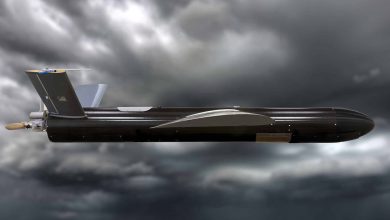
The LRASM (AGM-158C) is derived from the extended-range JASSM-ER (AGM-158B), with the two missiles sharing a common stealthy airframe, Williams F107 turbofan engine, wings, tail assembly, fuel system, and many avionics and manufacturing processes.
Both are low-observable, long-range cruise missiles with a range exceeding 200 nautical miles (230 miles/370 kilometers), capable of carrying a 1,000-pound (450-kilogram) penetrating blast-fragmentation warhead, and are produced on the same manufacturing line.
They differ primarily in their intended targets and guidance systems. The JASSM is designed to strike fixed land targets using GPS-aided inertial navigation and an imaging infrared seeker.
The LRASM, in contrast, incorporates passive radio-frequency sensors, an imaging infrared seeker, a two-way datalink, and onboard autonomy to detect and engage moving warships in GPS-denied or heavily jammed environments.