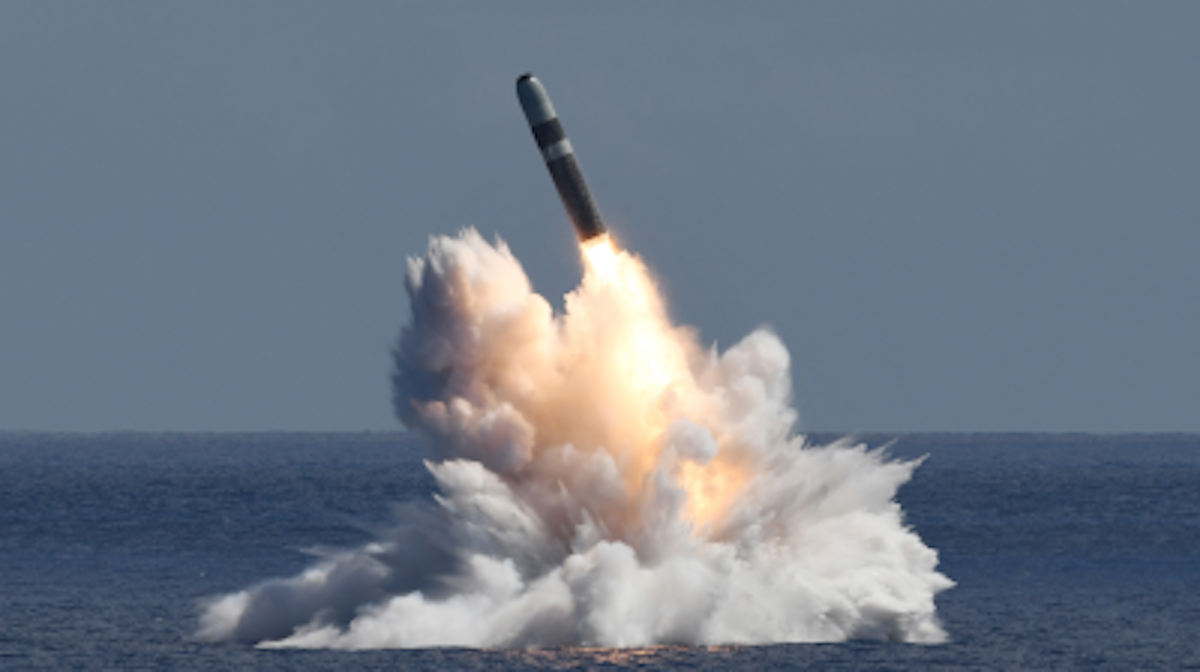

Lockheed Martin is set to continue the design and development of the US Navy’s Trident II D5 life extension 2 (D5LE2) program.
The Trident II D5 is a submarine-launched ballistic missile (SLBM) that forms the sea-based backbone of the US nuclear triad. It was originally developed in the 1980s, first deployed in 1990, and completed modernization in 2017.
The SLBM is undergoing its second life extension to extend its effectiveness beyond the 2040s under an $850-million contract modification that the Pentagon first announced in April, according to Lockheed’s statement published this month.
“This award marks another important step along the way as we continue delivering a credible and resilient deterrent for the American forces and allies,” said Eric Scherff, VP of Lockheed Martin’s Fleet Ballistic Missile Program.
Trident II D5
The 130,000-pound (58,967-kilogram) Trident II D5 ballistic missile can achieve ranges of 4,000 nautical miles (4,603 miles/7,408 kilometers) and speeds reportedly exceeding Mach 20 (24,696 kilometers/15,345 miles per hour).
The missiles are currently deployed aboard the US Navy’s Ohio-class and the Royal Navy’s Vanguard-class submarines, both of which are nearing the end of their service lives and are scheduled for retirement.
The service life extension will allow the Trident II D5 to remain in service aboard the US Navy’s Columbia-class and the Royal Navy’s Dreadnought-class submarines.