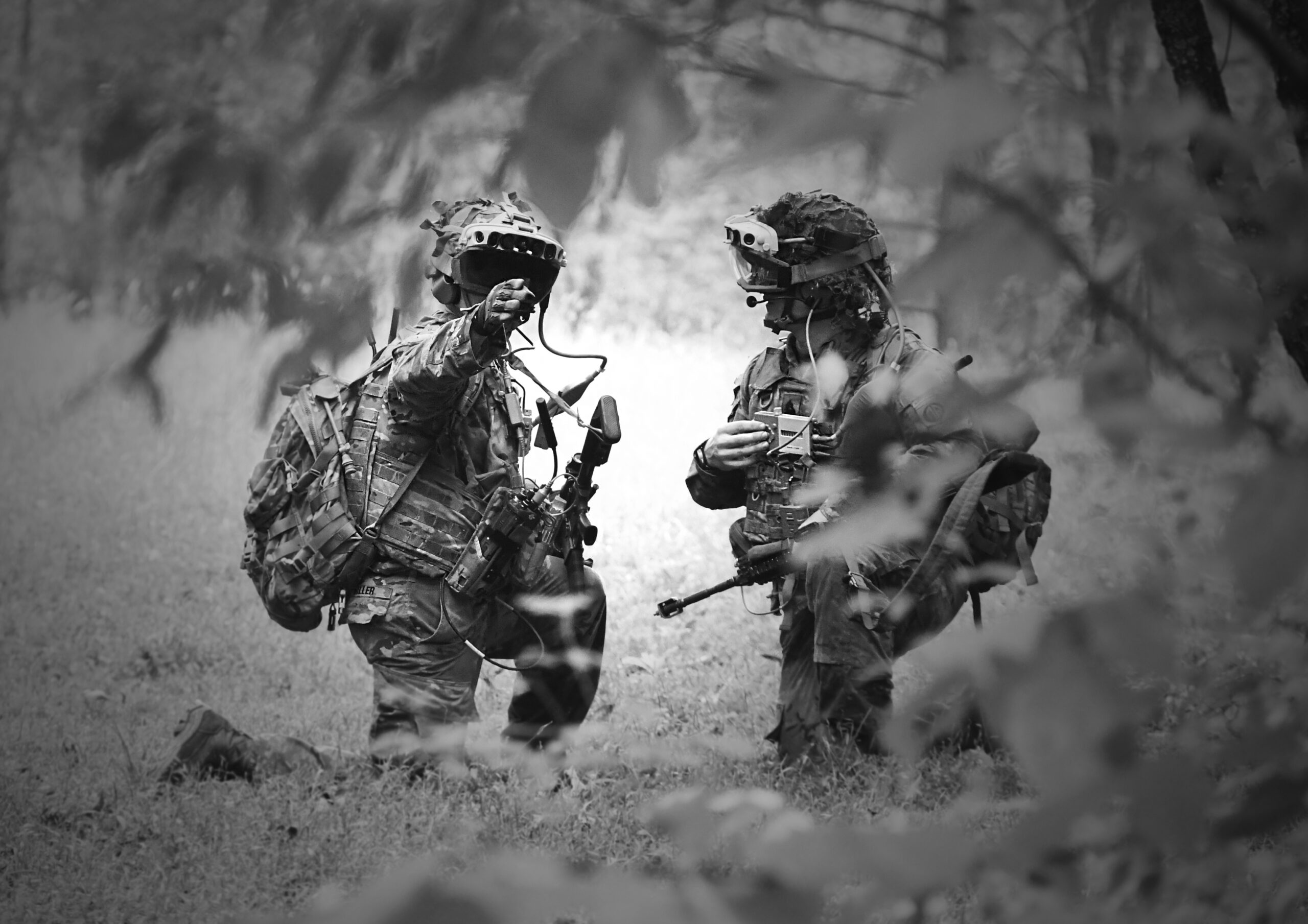
The US Army has decided not to field thousands of Integrated Visual Augmentation System (IVAS) goggles after investing about $1.8 billion in the program, according to a Government Accountability Office (GAO) report.
The Microsoft-made IVAS augmented reality goggles underwent three iterations — 1.0, 1.1, and 1.2 — between 2018 and 2025 to address common soldier complaints of disorientation, dizziness, and headaches.
But after nearly $2 billion was spent on the program, around 10,000 produced units of the first two versions were ultimately deemed unsuitable for operational use and will be placed in storage.
Meanwhile, around 400 units of version 1.2 headsets will be directed to inform a separate but similar prototyping effort led by Anduril.
Version 1.2
Version 1.2 prototypes first emerged in 2023 and underwent further enhancements in 2024 to address soldier comfort and performance in low-light conditions.
The goggles were used during training exercises at Fort Drum, New York, in 2024 and during US-Mexico border patrol operations in 2025.
However, US Army spokesperson Ellen Lovett informed Task & Purpose in June 2026 that the headsets were “unaffordable to produce at scale.”
Instead, the goggles will be used to shape the design of the Soldier Borne Mission Command (SBMC) project, following a $159-million US Army contract Anduril secured in September 2025 to prototype a new helmet-mounted mixed reality system.
SBMC
The SBMC program is led by Anduril, with participation from several industry partners, including Rivet, Elbit America, and L3Harris Technologies.
Anduril will integrate its artificial intelligence-powered Lattice software — which links data from different sensors, weapons, and autonomous systems into a single, unified command-and-control interface — into the goggles to enhance situational awareness and decision-making on the battlefield.