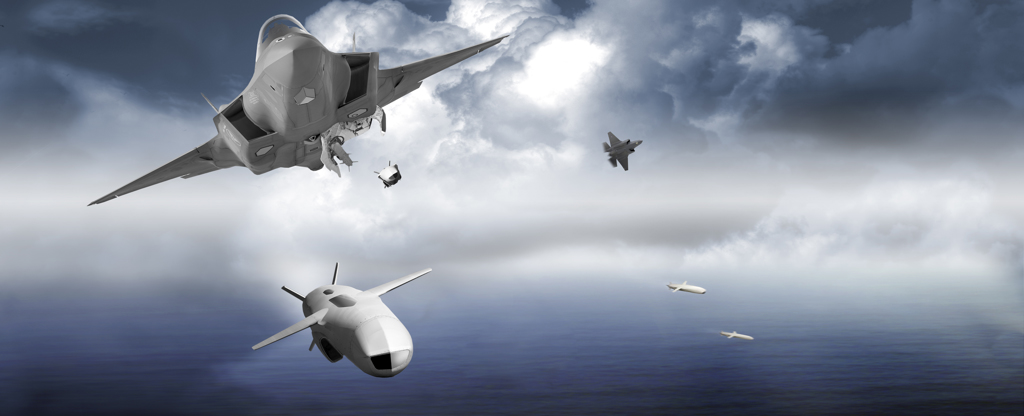

Canada has awarded Kongsberg Defence & Aerospace an approximately 800-million Canadian dollar ($564 million) contract to procure Joint Strike Missiles (JSMs) for its future fleet of F-35 fighter jets.
Kongsberg first announced the contract on June 30, with Canadian Prime Minister Mark Carney formally unveiling the acquisition during the 2026 NATO Summit in Ankara, Turkey.
The JSM procurement was one of several defense initiatives announced by Carney at the summit, alongside plans for Arctic military satellite communications and a new procurement strategy for Light Utility Vehicles.
The deal makes Canada the sixth customer for the air-to-ground cruise missile, which is already in service with or on order for Norway, Japan, Australia, the US, and Germany.
Canada signed a 19-billion Canadian dollar ($13 billion) contract in 2023 to acquire 88 F-35A fighter jets, with deliveries beginning in 2026 and the fleet expected to achieve full operational capability by 2034.
“We are pleased to welcome Canada as the sixth country to select the JSM,” Kongsberg CEO Eirik Lie said.
“The acquisition of the Joint Strike Missile can fundamentally improve the operational range and effectiveness of Canada’s fighter fleet. In addition to delivering world-class defence technology, Kongsberg is committed to contributing to industrial growth in the country.”
Joint Strike Missile
Developed by Kongsberg Defence & Aerospace, the JSM is a long-range, precision-guided cruise missile designed for air-launched strikes against land and maritime targets.
Based on the company’s Naval Strike Missile, it was adapted for integration with modern fighter aircraft, particularly the F-35 Lightning II.
The 13-foot (4-meter) missile is specifically engineered to fit inside the F-35’s internal weapons bay, preserving the aircraft’s low-observable (stealth) characteristics.
Weighing approximately 917 pounds (416 kilograms) and carrying a 260-pound (118-kilogram) warhead, the JSM has a range of up to 217 miles (350 kilometers) and flies at high subsonic speeds.
It combines an inertial navigation system, terrain-reference navigation, an imaging infrared seeker, and a two-way data link, enabling it to operate effectively in GPS-denied environments.