
Some targets are designed never to be reached, like Iran’s Fordow fuel-enrichment plant buried under layers of reinforced concrete and rock.
But when faced with the most powerful non-nuclear bomb in the US arsenal, the fight is almost always won by the GBU-57. This heavyweight munition was designed to punch its way through deep, hardened defenses to hit targets engineered to survive traditional airstrikes.
So how does the bomb reach targets buried far below the surface? Here’s a closer look at the weapon and its capabilities.
What Is the GBU-57?
The GBU-57, commonly known as the Massive Ordnance Penetrator or MOP, is a precision-guided, bunker-busting bomb designed to destroy bunkers, command centers, and weapons facilities hidden underground.
Unlike general-purpose bombs that maximize surface blast effects, the GBU-57 prioritizes penetration before detonation to increase the odds of accurately engaging its high-value targets.
At a Glance
| Category: | Details: |
| Type | Massive Ordnance Penetrator (bunker-buster bomb) |
| Country of Origin | United States |
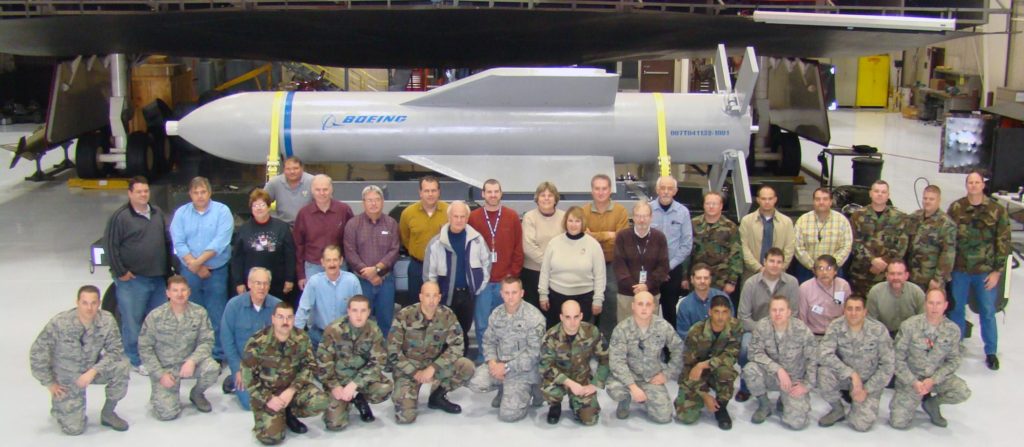
| Manufacturer | Boeing |
| Role | Penetration and destruction of hardened underground facilities |
| Weight | ~30,000 pounds (13,600 kilograms) |
| Length | 20.5 feet (6.25 meters) |
| Diameter | 31.5 inches (80 centimeters) |
| Warhead | High explosive, reinforced for penetration |
| Guidance System | GPS/INS (Inertial Navigation System) |
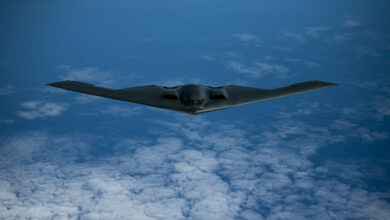
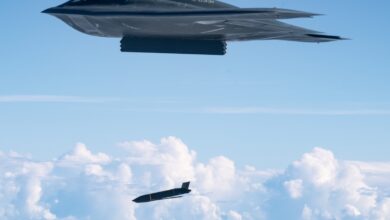
| Delivery Platform | B-2 Spirit |
| Key Feature | Designed to penetrate up to 200 feet (61 meters) of reinforced concrete or multiple layers of hardened soil |
Origins and Development
The GBU-57 was developed in response to a shifting strategic reality: weapons of mass destruction programs were increasingly being concealed, beyond the reach of conventional air-delivered munitions.
Earlier systems, such as the GBU-28 and GBU-37, proved effective in their time but were ultimately insufficient against the scale and resilience of these facilities.
Key milestones:
- 2004: Boeing and the US Air Force started the development of the GBU-57.
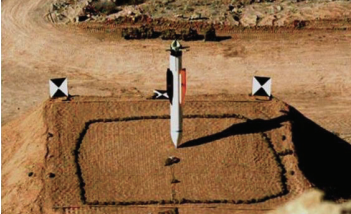
- 2008: The first flight tests were held at the White Sands Missile Range in New Mexico.
- 2009: Boeing integrated the penetrator with the B-2 Spirit.
- 2010: The program fully transitioned under the Air Force leadership.
- 2011: The GBU-57 reached operational capability with ongoing upgrades to enhance accuracy, penetration, and guidance systems.
How It Works
Designed for Deep Strikes
The key feature that sets GBU-57 apart is that it detonates only after reaching deep internal structures.
It relies on a hardened steel casing and immense weight to generate the kinetic force needed for deep penetration. After being released from a high-altitude bomber, it accelerates toward the target, guided by GPS to ensure accuracy.
Its specialized fuzing system allows the bomb to explode only after penetration is complete. Integrated void-sensing technology detects shifts in material density, delaying detonation until the weapon reaches an internal cavity or chamber.
This combination allows it to defeat targets that would otherwise require multiple strikes or alternative methods.
Strengths of the GBU-57
The primary strength of the GBU-57 is its ability to destroy deeply buried and heavily fortified targets that are resistant to standard munitions.
Its precision guidance reduces the number of strikes required, while its sheer size delivers significant destructive power in a single deployment. This makes it a critical tool for strategic missions involving hardened infrastructure.
Limitations of the GBU-57
The GBU-57’s size and weight limit it to the B-2 Spirit. It is not suitable for tactical or close-support missions and is designed for high-value, pre-planned targets.
Additionally, while highly effective, penetration can vary considerably depending on geology and the strength of structural reinforcement.
Extremely dense materials or heavily reinforced concrete layers may reduce the penetration depth below expectations, while complex underground layouts with multiple chambers can challenge or disrupt the fuze’s intended function.
Operational Role
In practice, the MOP has been tied to high-end strategic strike planning.
It’s first reported combat use during US operations against Iranian nuclear facilities such as Fordow and Natanz, where it was employed to defeat heavily protected infrastructure that conventional munitions could not reliably damage.
Rather than serving as a routine battlefield weapon, the GBU-57 is reserved for rare, high-value scenarios, typically against hardened command nodes, critical nuclear infrastructure, and other strategic assets shielded against airpower.
Future Outlook
As adversaries continue to invest in underground infrastructure, the relevance of weapons like the GBU-57 is likely to grow.
Future developments may focus on enhanced guidance, improved penetration materials, and integration with next-generation bombers.
While specialized, the GBU-57 fills a critical niche in modern warfare, ensuring that even the most protected targets remain vulnerable to precision strike capabilities.