The First Island Chain: A Guide to Asia-Pacific’s Most Contested Geographic Boundary

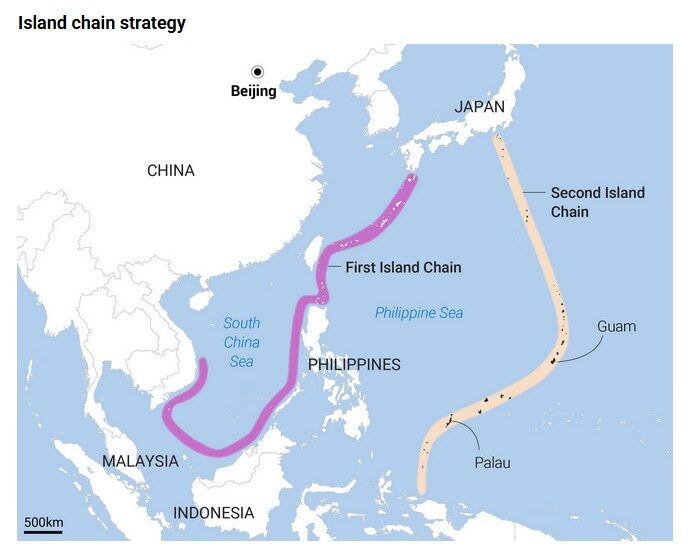
Stretching from Japan down through Taiwan and the Philippines before curving toward the South China Sea, the First Island Chain is one of the most important geographic concepts in modern military strategy.
It looks like a long arc of islands just off the coast of mainland China, but in defense planning, it serves as a natural barrier shaping naval power, air operations, missile strategy, and regional deterrence across the Indo-Pacific.
This guide explores how geography, military power, and regional deterrence intersect along the First Island Chain.
Mapping Out the First Island Chain
Understanding the Geography
The First Island Chain generally stretches from the main islands of Japan through Okinawa and the Ryukyu island chain, across Taiwan, and down through the northern Philippines, particularly Luzon and nearby islands facing the South China Sea, before extending toward parts of maritime Southeast Asia near the Malay Peninsula and Borneo.
These islands form a narrow corridor between the East China Sea, South China Sea, and the wider Pacific Ocean. Because many of the region’s waterways are relatively confined, military planners see the chain as a critical chokepoint for naval movement.
Early Strategic Importance
Even before the modern era, imperial powers recognized the value of the island arc. During the age of naval empires, Japan, China, and later Western colonial powers viewed the region as critical for sea control and defense.
In World War II, the island chain became a major battleground between the United States and Japan. American “island-hopping” campaigns across the Pacific aimed to seize strategically important islands that could host airfields, logistics hubs, and naval bases.
Control of islands such as Okinawa dramatically affected military reach and operational momentum.
Why the First Island Chain Matters Militarily
Naval Strategy
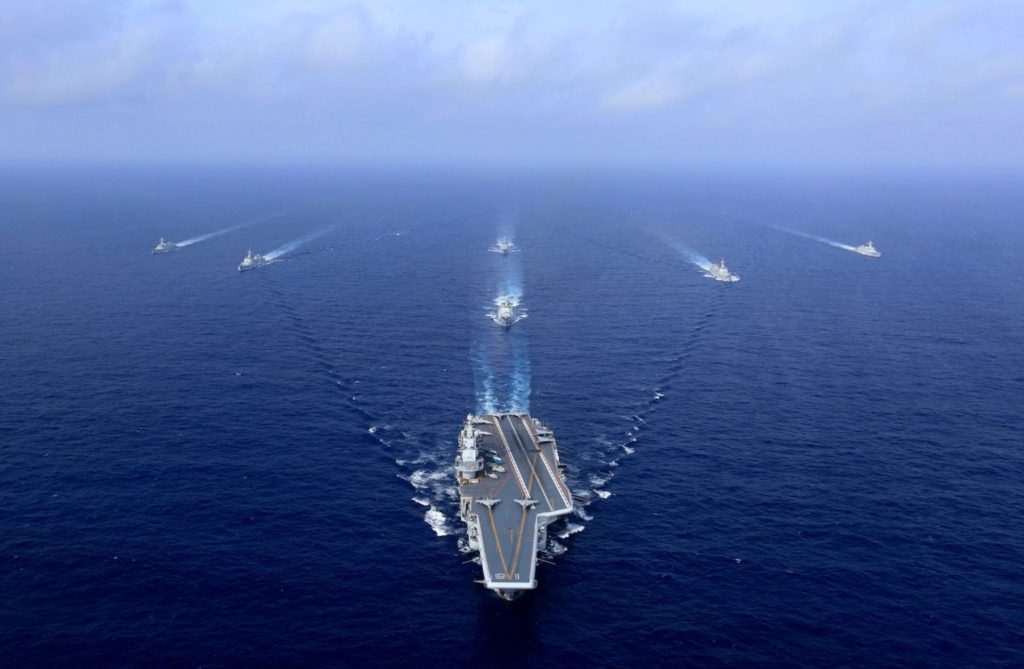
The chain plays a major role in sea control and power projection. Warships moving through the region must pass through key straits and passages that can be monitored by allied forces, submarines, aircraft, and surveillance systems.
The most significant of these is the Luzon Strait, the deep-water gap between Taiwan and the northern Philippines.
It is the primary route through which Chinese submarines must transit to reach the open Pacific, making it a focal point for US and allied undersea surveillance, anti-submarine warfare operations, and strategic planning.
Whoever controls — or can deny — the Luzon Strait holds significant leverage over Chinese naval power projection.
Air and Missile Defense
Many islands within the chain host military bases, radar systems, missile defenses, and airfields. These positions allow forces to detect threats early and extend operational reach across the Indo-Pacific.
The presence of US and allied forces in places such as Okinawa and the Philippines also supports rapid response operations during regional crises.
Taiwan’s Strategic Importance
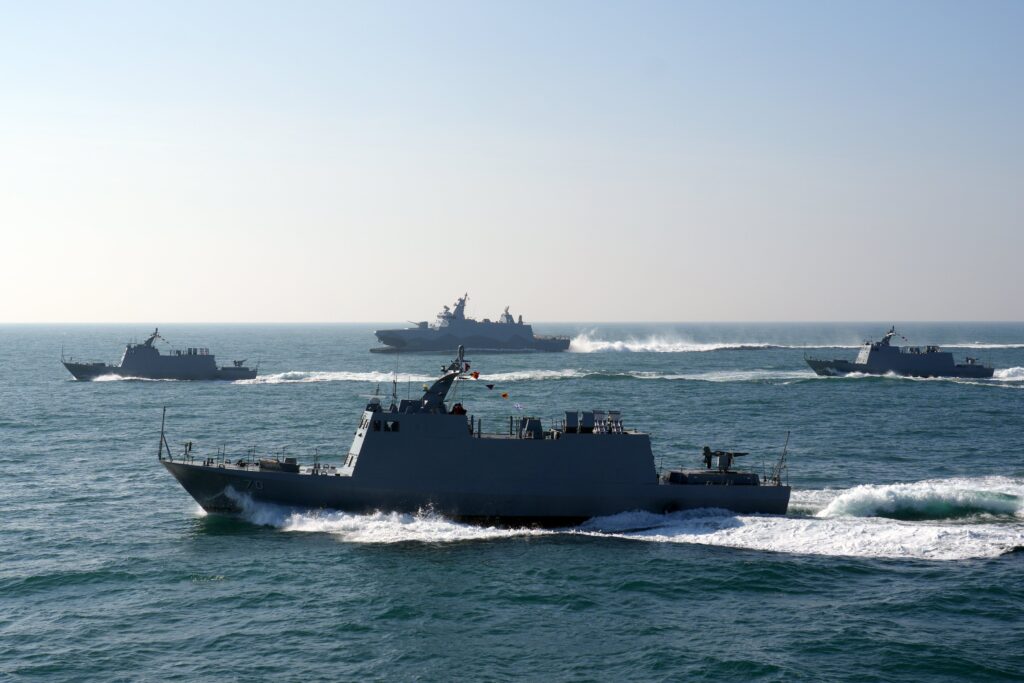
Taiwan occupies one of the most strategically sensitive positions in the First Island Chain. Control over the island could significantly alter the military balance in the western Pacific by affecting access routes for naval and air forces.
As a result, Taiwan has become a central focus in discussions about regional deterrence and military planning.
US versus China: Views on the First Island Chain
For the United States, the island chain has long been viewed as a forward defensive perimeter. It is a network of allied territories, military bases, and maritime chokepoints that helps contain adversary naval movement and support regional deterrence.
During the Cold War, Washington saw the chain as a way to monitor Soviet and Chinese military activity while maintaining access to the western Pacific.
China, meanwhile, traditionally viewed the First Island Chain as a geographic constraint limiting its access to the broader Pacific Ocean.
Because Chinese naval forces must pass through narrow waterways near Japan, Taiwan, and the Philippines, Beijing has often seen the chain as vulnerable to surveillance, blockade, or military pressure from rival powers.
These competing views continue to shape military planning today.
The US focuses on maintaining presence and alliance networks along the chain, while China increasingly seeks the ability to operate beyond it through naval modernization, long-range missile systems, and expanded maritime reach.
To understand why the First Island Chain matters to China, it helps to know what lies beyond it. The Second Island Chain extends further into the Pacific, running from Japan’s Bonin Islands through Guam and the Mariana Islands down to Palau.
For Chinese military planners, operating beyond the First Island Chain, and eventually the second, represents the difference between a coastal defense force and a true blue-water navy capable of projecting power across the western Pacific.
The First Island Chain is not just a barrier to be monitored; from Beijing’s perspective, it is a barrier to be overcome.
Recent Developments
Today, the First Island Chain has become an increasingly active zone of military buildup, alliance coordination, and strategic competition between the United States and China.
The US and its allies have expanded joint exercises, missile deployments, and regional defense agreements across the Indo-Pacific.
Two multilateral frameworks have become central to that effort. AUKUS (the security partnership between the US, UK, and Australia) is investing in nuclear-powered submarine capability that would give allied forces a persistent undersea presence across the Indo-Pacific, directly relevant to controlling the chain’s key chokepoints.
The Quad, bringing together the US, Japan, Australia, and India, has deepened coordination on maritime domain awareness, technology sharing, and regional security — effectively expanding the coalition of powers with a stake in keeping the First Island Chain accessible to allied forces.
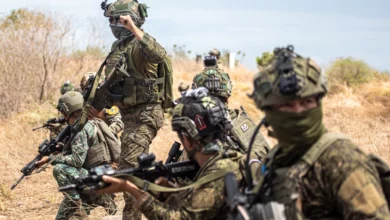
Exercises such as Balikatan in the Philippines have focused on coastal defense, anti-ship warfare, and rapid-response operations near key maritime chokepoints and Taiwan.