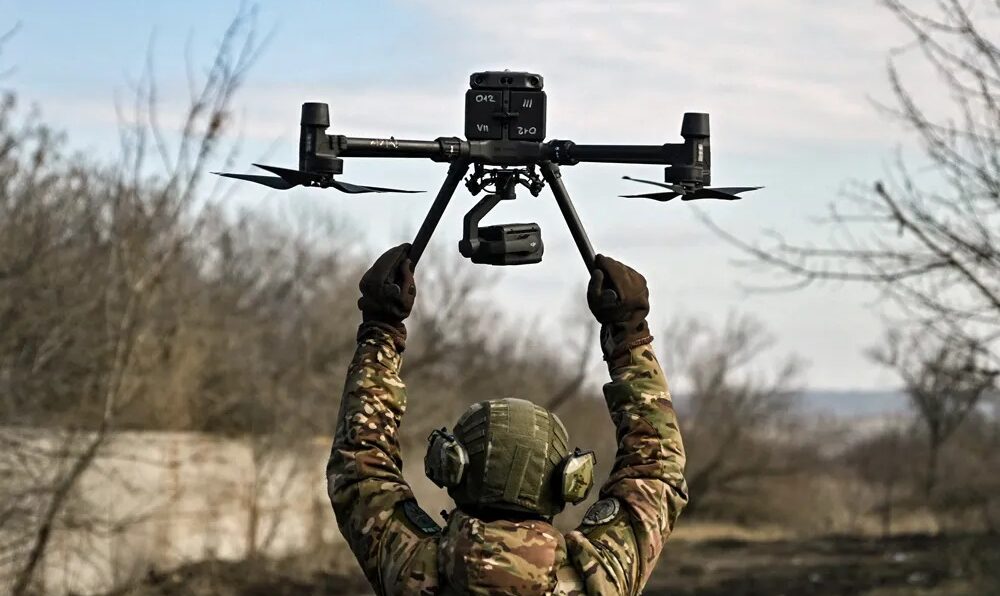

The US Army plans to establish at least two domestic test ranges that will replicate the electronic warfare conditions encountered on battlefields in Ukraine, CBS reported.
Speaking to the broadcaster, US Army Secretary Dan Driscoll said the facilities will help drone manufacturers, counter-drone developers, and soldiers evaluate systems under conditions that include signal jamming and contested communications.
The initiative is intended to allow troops to train alongside industry partners while giving developers direct feedback from operational users.
According to Driscoll, the US Army is also evaluating an overseas range for more advanced testing activities, potentially including hypersonic systems.
Locations for the planned facilities have not yet been disclosed.
Army officials have also pointed to the conflict as evidence that future air defense networks will need to counter large numbers of low-cost aerial threats.
While systems such as Patriot and Terminal High Altitude Area Defense remain essential against high-end targets, officials argued that the military also requires more affordable interceptors that can be produced and fielded at scale.
Lessons From Ukraine’s Battlefield
Drawing on years of experience countering Russia’s use of Iranian-designed Shahed loitering munitions, Ukrainian teams have increasingly shared operational expertise with foreign partners and supported counter-drone activities abroad.
In March, several Gulf states turned to Ukrainian specialists for support in countering one-way attack drones amid rising regional tensions.
The deployments came after Iran launched retaliatory strikes against US-linked sites across the Gulf following coordinated US and Israeli attacks on targets in the Islamic Republic.
Earlier this year, the French Army unveiled a range of new systems developed in direct response to operational observations from Kyiv, including fiber-optic-guided drones, mobile fire-support solutions, and vehicle protection measures to counter drone attacks.
French officials said the projects reflect the importance of rapid innovation, low-cost systems, and the ability to quickly adapt battlefield technologies to operational needs.
Last year, NATO incorporated lessons from Ukraine into Joint Project Optic Windmill, its largest air-defense exercise, including scenarios involving drone and missile threats similar to those seen on the battlefield.