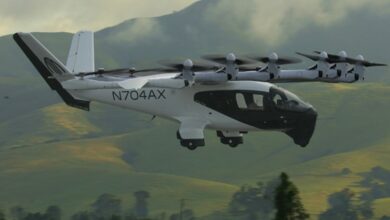
The US Air Force has awarded contracts covering both the aircraft and autonomy software for its Collaborative Combat Aircraft (CCA) program, advancing efforts to field semi-autonomous combat drones designed to operate alongside crewed fighters.
General Atomics and Anduril received engineering, manufacturing, and production contracts for their respective YFQ-42A and YFQ-44A platforms under the program’s first increment.
The service aims to field more than 150 operational CCA aircraft by the end of the decade, with the long-term objective of building a fleet of 1,000 aircraft.
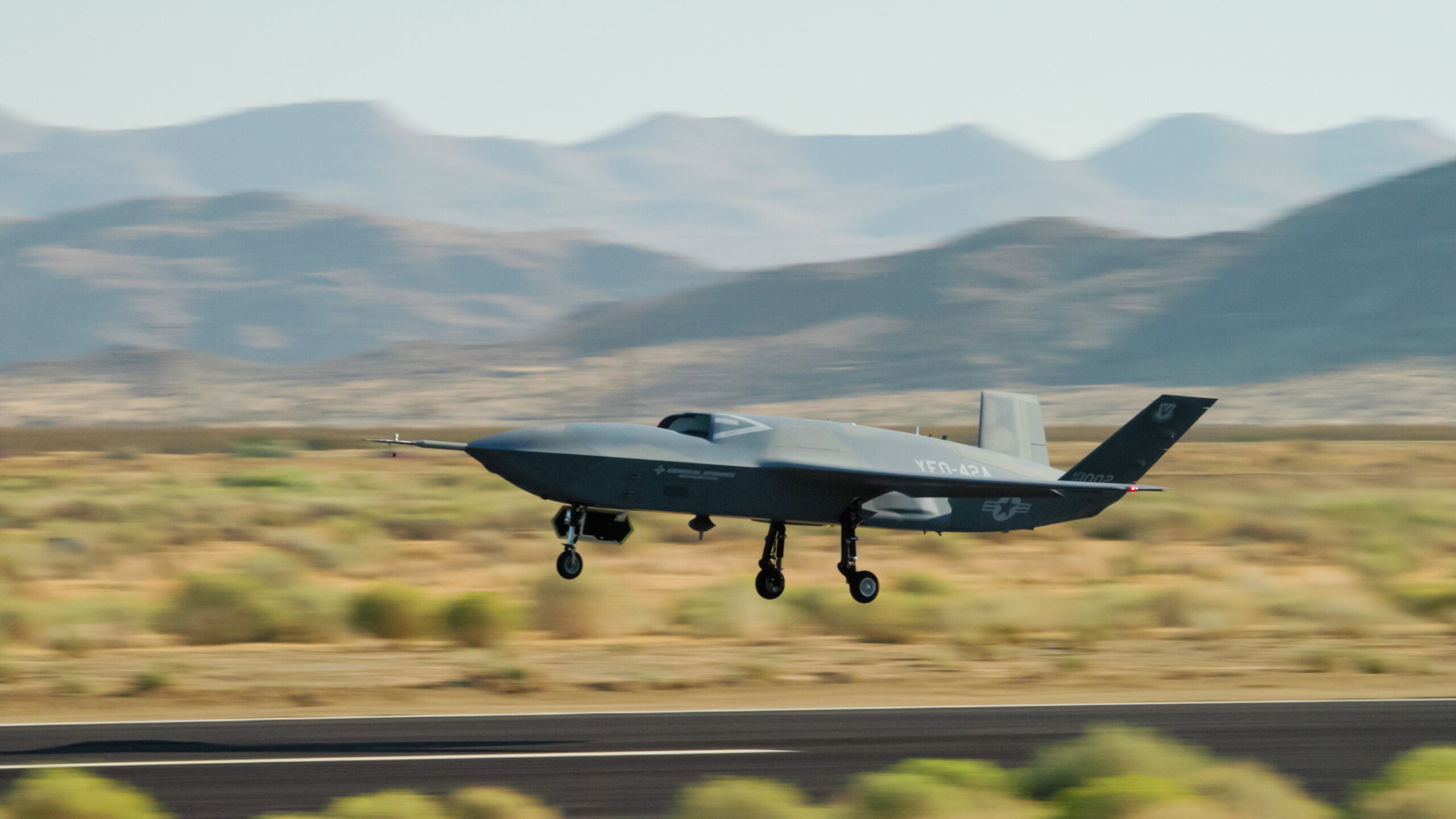
Developed by General Atomics, the YFQ-42A is an uncrewed fighter aircraft designed to operate alongside crewed aircraft.
Derived from technologies tested on the XQ-67A autonomous jet demonstrator, the platform is intended to conduct missions such as air-to-air combat, ground attack, and intelligence gathering.
Meanwhile, the YFQ-44A is a semi-autonomous combat aircraft developed by Anduril to provide additional combat mass in contested environments.
It can operate from short, austere airfields, carry external air-to-air munitions, and support various autonomy software packages through its open-architecture design.
Mission Autonomy Software
The US Air Force also established a six-year contract framework for mission autonomy software, creating a competitive pool that includes Anduril, General Atomics, Lockheed Martin, Northrop Grumman, RTX Collins Aerospace, and Shield AI.
From that group, Anduril, RTX Collins Aerospace, and Shield AI were selected for an accelerated development effort to deliver operational autonomy software.
The companies will compete through two successive six-month evaluation phases, after which the air force plans to select a primary autonomy software provider by 2027.
Under the approach, autonomy software is developed separately from the aircraft and can be updated or transferred across various CCA platforms.
This is enabled by the US Air Force’s government-owned Autonomy Government Reference Architecture, an open-systems framework that allows software from different vendors to operate across multiple aircraft types.