
Shield AI and GE Aerospace have completed a critical propulsion milestone for the X-BAT aircraft, bringing the platform closer to flight testing later this year.
The companies announced they successfully integrated and tested the Axisymmetric Vectoring Exhaust Nozzle (AVEN) with GE Aerospace’s F110-GE-129E engine, completing engine light-off and functional testing at GE Aerospace’s facility in Peebles, Ohio.
This milestone verifies that the thrust-vectoring system, engine, and control hardware work together as intended, clearing the way for ground testing and eventual vertical flight demonstrations.
Shield AI said this marks the first fully integrated test campaign combining the AVEN hardware, controls, and engine systems since the technology was originally demonstrated on an F-16 during a US thrust-vectoring program in the 1990s.
For the X-BAT program, the hardware was refurbished and adapted for a different mission profile that requires rapid nozzle movement to maintain stability during vertical takeoff and landing.
“Taking hardware with a flight-proven track record and adapting it for that mission has let us move through development at an incredible pace instead of starting from zero,” Shield AI senior vice president Armor Harris said.
X-BAT
Shield AI’s X-BAT combines jet performance with autonomous decision-making, using artificial intelligence to coordinate flight and mission execution without GPS or continuous human control.
Designed to generate scalable combat mass in contested environments, the aircraft can take off and land on short or damaged runways where conventional jets cannot operate.
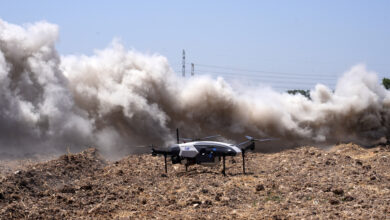
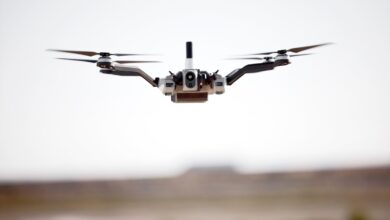
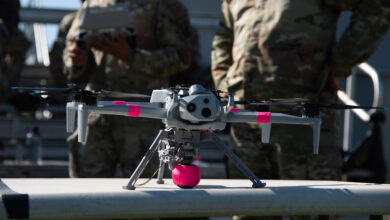
The platform is the latest addition to Shield AI’s autonomous aircraft portfolio, building on its operational V-BAT vertical takeoff and landing drones already fielded by the US military.
Earlier, in November 2025, GE Aerospace partnered with Shield AI to develop the X-BAT’s propulsion system.