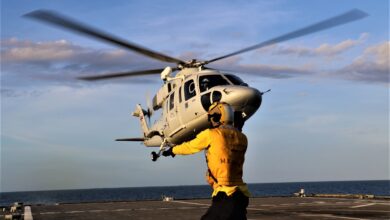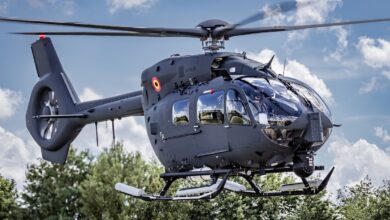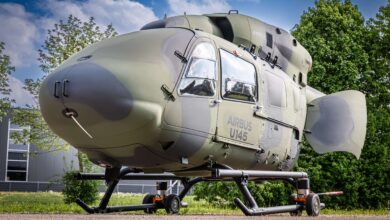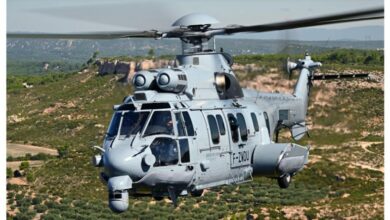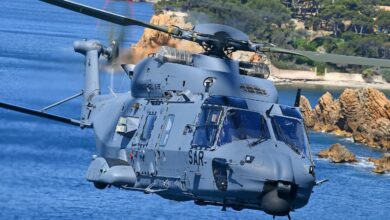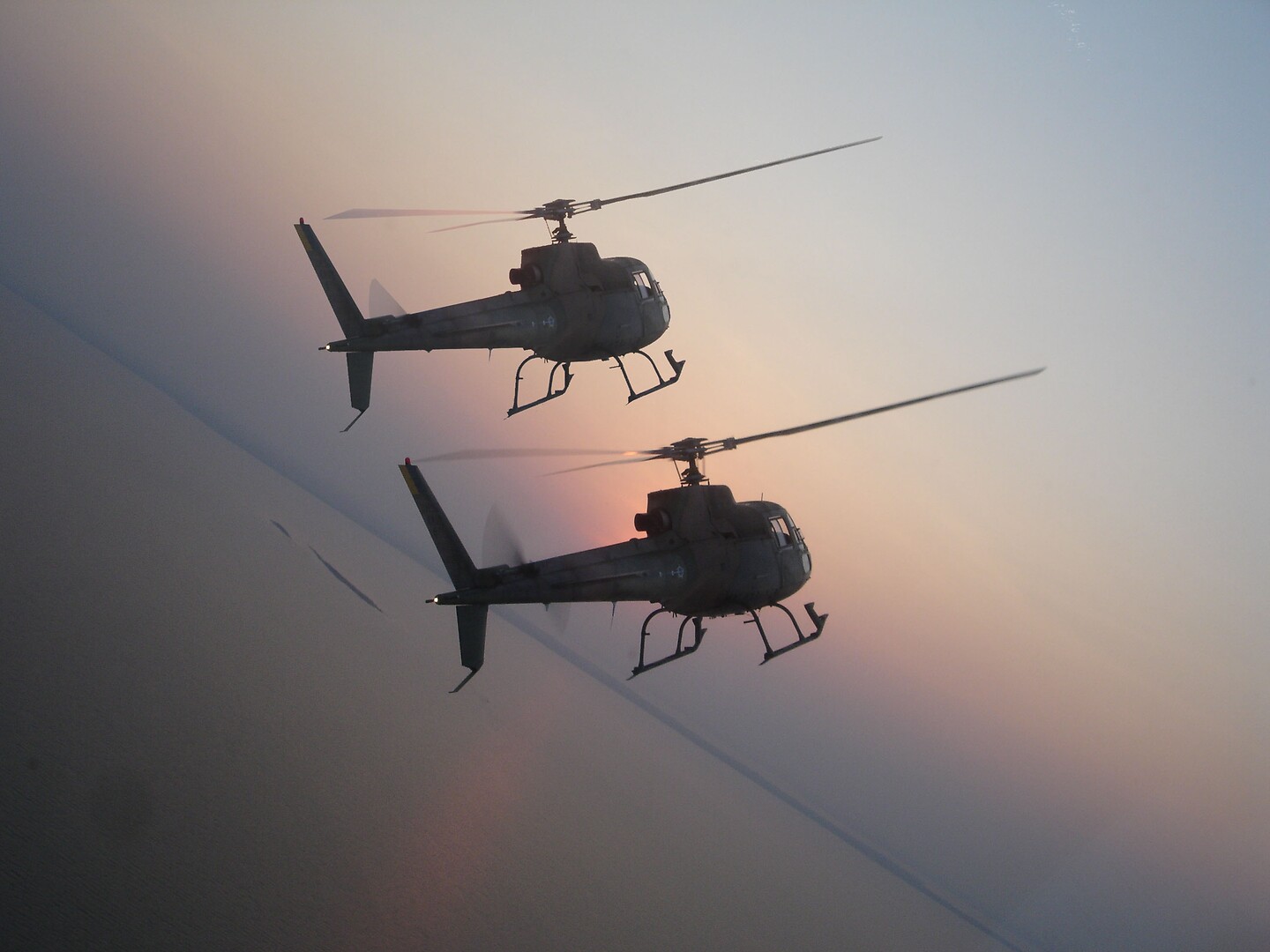
In thin mountain air where most rotorcraft struggle to hold a stable hover, one platform continues to push through. The Airbus H125 has built its reputation on operating in conditions where thin margins turn into mission-critical decisions.
From high-altitude military logistics and reconnaissance to border security operations and rapid insertion of personnel in remote areas, the H125 has become a trusted light utility helicopter for defense forces operating beyond conventional infrastructure.
Explore the full guide to see what defines its performance, and why it remains a go-to platform for high-altitude and expeditionary missions.
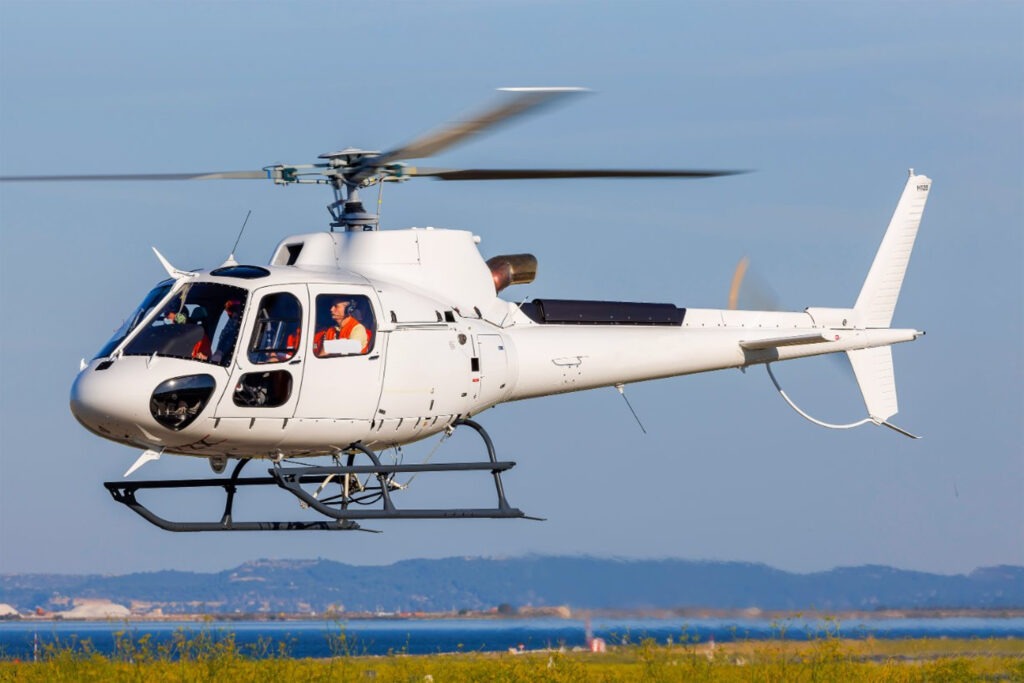
What Is the Airbus H125?
The Airbus H125 is a single-engine light utility helicopter designed for versatile operations across government, security, and defense support roles.
Its hot-and-high performance and low logistical footprint make it a practical choice for reconnaissance, troop transport in rugged terrain, border surveillance, pilot training, and expeditionary operations where sustainment infrastructure is limited.
It is part of Airbus’ Ecureuil family and is often recognized as an evolution of earlier designs, refined for improved power, efficiency, and mission flexibility.
Origins and Development
The H125’s lineage traces to the AS350 Écureuil, originally developed by Aérospatiale in the 1970s as a lightweight utility helicopter.
It passed through Eurocopter before being formally redesignated under Airbus Helicopters in the 2010s, with each phase bringing improvements in reliability, avionics, and operational range.
The integration of the Safran Arriel 2D engine was a significant step forward, delivering a meaningful boost in payload capacity and hot-and-high performance that directly expanded the platform’s military utility.
Designed for Demanding Missions
Rather than focusing on a single role, the H125 is built as a multi-mission platform that can adapt to diverse operational needs.
- Search and rescue operations: High-altitude extraction, casualty evacuation, and rapid response in contested or remote terrain
- Medical evacuation: Forward casualty transport and battlefield medical support in expeditionary environments
- Security and law enforcement: Border surveillance, reconnaissance patrols, and internal security operations
- Logistics and utility support: Light cargo transport, resupply missions, firefighting support, and infrastructure operations in remote areas
- Military applications: Pilot training, reconnaissance support, liaison duties, and light utility transport for ground forces
Variants of the Airbus H125
The Airbus H125 is not a single, fixed configuration but a family of adaptable variants.
Baseline H125
The standard Airbus H125 serves as the foundational platform for a wide range of government, security, and defense-support operations.
Its strong hot-and-high performance, compact footprint, and operational reliability make it particularly suited for border patrol, reconnaissance support, utility transport, and missions in mountainous or austere environments.
H125M (Military Variant)
The H125M is the dedicated military configuration of the platform, adapted for tactical support and light combat operations.
It performs missions including pilot training, reconnaissance, special operations support, and light troop transport.
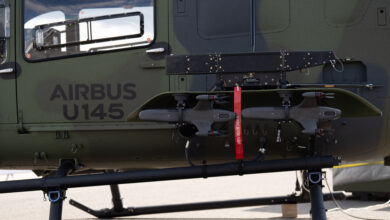
The aircraft can integrate Airbus Helicopters’ modular HForce weapon system, enabling operators to equip machine guns, rockets, and guided munitions while retaining the agility and low logistical footprint of a light helicopter.
AH-125 Ares (Armed Variant)
The Ares represents a more combat-focused adaptation of the platform for light attack and armed overwatch missions.
Configured for close support operations, it can carry integrated weapon systems such as machine guns, rocket pods, and potentially precision-guided munitions.
Its lightweight design and maneuverability allow it to provide responsive fire support in environments where larger attack helicopters may be less practical or more resource-intensive to deploy.
MH-125 Ares (Multi-Role Variant)
The MH-125 Ares is a multi-mission configuration tailored for a wide range of operations, including troop transport, search and rescue, medical evacuation, and disaster response.
Unlike the AH-125, which focuses on combat capability, the MH-125 emphasizes operational flexibility, allowing rapid transitions between mission sets.
The aircraft can be reconfigured in less than 30 minutes, enabling it to adapt quickly to changing operational demands.
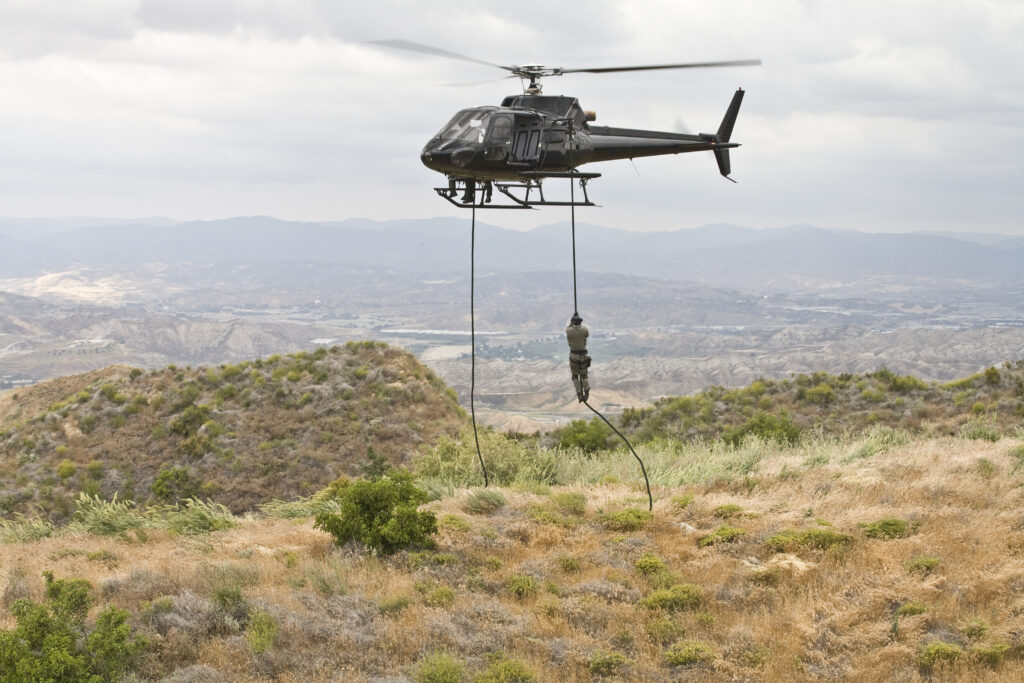
How It Performs
Key Features
The Airbus H125 combines high-altitude performance, mobility, and operational flexibility in a lightweight platform that can deploy where larger helicopters may struggle.
Its powerful engine and advanced rotor system provide strong lift capability in hot-and-high environments, supporting missions in mountainous terrain, remote border regions, and austere forward operating areas.
Modern avionics and enhanced cockpit visibility improve situational awareness during reconnaissance, patrol, and low-level flight operations, while the helicopter’s relatively simple architecture supports easier maintenance and sustainment in expeditionary conditions with limited infrastructure.
Strengths
The H125’s greatest advantage is its ability to support multiple mission types without the logistical demands of larger rotorcraft.
The platform can perform reconnaissance, light transport, pilot training, casualty evacuation, border surveillance, and special operations support using a single adaptable airframe.
Its reliability in harsh climates also makes it attractive for armed forces seeking sustained operations in difficult environments.
Limitations
As a light, single-engine helicopter, the H125 has payload and range limitations compared to larger, twin-engine platforms.
It may also face restrictions in certain regulatory environments where twin-engine aircraft are preferred for safety in urban or offshore operations.
While highly capable, it is not designed for heavy-lift or high-capacity transport missions.
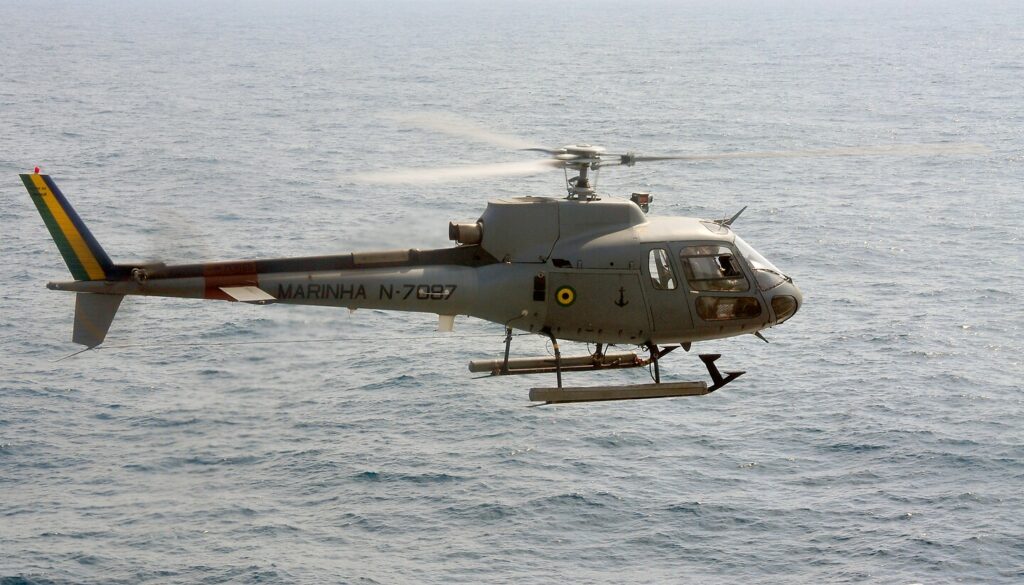
Global Presence and Real-World Use
The H125 is one of the most widely used helicopters in its class, with operators in many countries, including Brazil and India.
It plays a critical role in mountain rescue operations in regions such as the Alps and the Himalayas, where few helicopters can match its high-altitude capabilities.
Beyond civilian missions such as firefighting and law enforcement, the Royal Thai Army has used armed variants, primarily the AS550 and AS555 Fennec, for reconnaissance, border security, and light combat support.
On the other side of the world, the French Air Force places the helicopters at the center of its growing anti-drone operations while the Danish Air Force uses them for light observation and transport.
What’s Next for the H125?
Incremental upgrades continue across avionics, safety systems, and mission equipment.
As defense budgets in many markets favor cost-effective multi-role platforms over larger, more expensive rotorcraft, the H125 is well-positioned to remain relevant — particularly for smaller militaries, border forces, and special operations units that need altitude-capable utility without the overhead of a heavier fleet.