
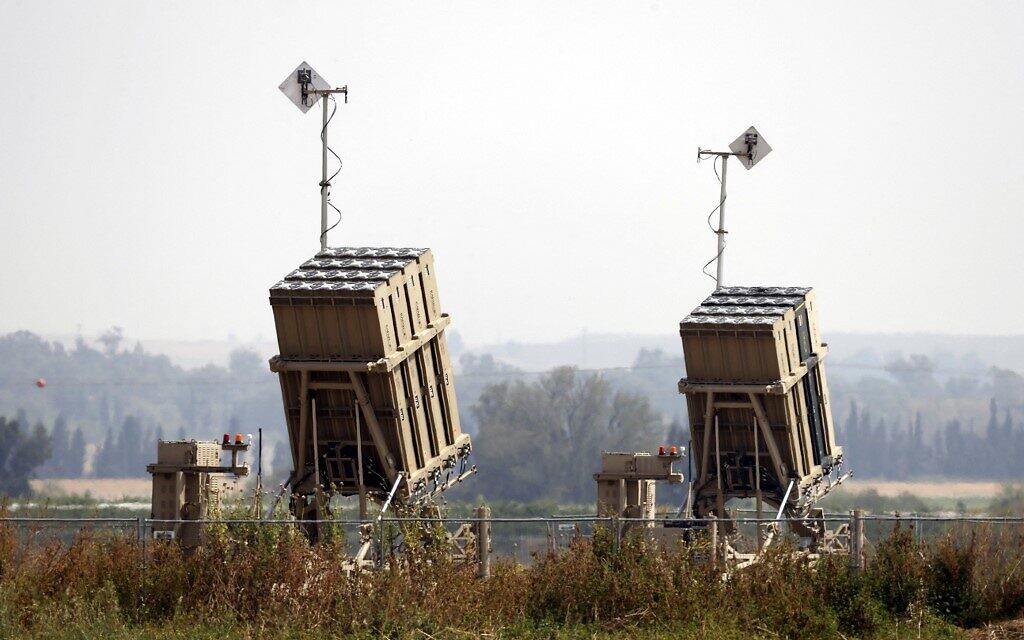
The Israel Missile Defense Organization (IMDO) and Rafael Advanced Defense Systems have tested the integration of the Iron Dome short-range air defense system with the Iron Beam high-power laser.
The integration was part of a series of Iron Dome trials against a wide range of advanced threats, incorporating lessons learned from the recent conflict with Iran.
While Iron Dome is designed to intercept large volumes of rockets, artillery, and other low-altitude aerial threats, each interception is estimated to cost tens of thousands of dollars.
Iron Beam, meanwhile, uses a high-power laser to engage short-range aerial targets for just a few dollars per shot. Unlike missile interceptor-based systems, it is not at risk of running out of ammunition, provided it has a continuous power supply.
While Iron Beam entered service in December 2025, its limited numbers meant it was not operationally deployed during the recent conflict.
According to The Times of Israel, citing an Israel Defense Forces officer, only one Iron Beam battery is currently deployed, while at least 14 are needed to have a significant operational impact.
Its integration into Iron Dome is expected to strengthen the air defense system’s ability to defeat large numbers of aerial threats at a significantly lower cost.
“Throughout the war, and even more so during Operation Roaring Lion, we confronted an unprecedented reality of relentless barrages that demanded extraordinary operational flexibility and real-time field support under peak conditions,” IMDO Director Moshe Patel said.
“The Iron Dome system remains a central pillar of Israel’s multi-layered defense concept for countering missiles and ABT (air-breathing target) threats.
During this test series, we also exercised the integration of the Iron Beam laser system into the Iron Dome command and control architecture — elevating the system’s capabilities and its importance to the defense of the home front.”
Upgraded System for Evolving Threats
The trials also evaluated several system upgrades against simulated rockets, cruise missiles, and drones to improve performance and enhance Iron Dome’s ability to counter high-volume attacks.
Operating alongside David’s Sling and Arrow as part of Israel’s layered air defense network, Iron Dome intercepted numerous aerial threats during the conflict with Iran.
However, ballistic missiles armed with cluster warheads penetrated the defenses, reportedly killing 20 people and injuring many more.
“The test series, conducted together with our partners in the Israeli Air Force, the IMDO, and the test and evaluation corps, represents a further expansion of the system’s capability envelope, which will be integrated into the IDF’s air defense array,” Rafael CEO Yoav Tourgeman said.
Iron Beam
Iron Beam is a 100-kilowatt-class high-energy laser weapon system designed to intercept aerial threats at the speed of light over ranges from hundreds of meters to several kilometers.
Developed by Rafael Advanced Defense Systems in partnership with Israel’s Ministry of Defense and Elbit Systems, Iron Beam offers low-cost interceptions and a virtually unlimited magazine, provided it has a continuous power supply.
An Iron Beam battery comprises an air defense radar, a command-and-control unit, and two high-energy laser systems.
During an engagement, the radar detects an incoming threat before a thermal camera takes over tracking, allowing the two lasers to engage the target simultaneously. The system focuses both laser beams on a coin-sized point to overcome atmospheric disturbances and destroy the target.
Designed for layered air defense, its modular architecture allows integration across multiple platforms and can be configured to meet customer requirements.
However, adverse weather conditions such as heavy dust, fog, and dense cloud cover can reduce the laser’s effectiveness.