India’s MiG-21 fleet earned a grim reputation — hundreds of crashes, dozens of pilots killed, and a nickname that stuck: the flying coffin.
The HAL Tejas was India’s answer to that dependency: a domestically built fighter that would never again leave the country’s air power in someone else’s hands.
To understand the HAL Tejas, let’s look at what it is, how it was developed, and how it fits into India’s future airpower.
At a Glance
| Category: | Details: |
| Type | Lightweight, single-engine, fourth-generation, multirole fighter aircraft |
| Role | Air defense and multirole combat missions, including ground attack and reconnaissance |
| Manufacturer | Hindustan Aeronautics Limited |
| Length | 13.2 meters (43.3 feet) |
| Width | 8.2 meters (26.9 feet) |
| Height | 4.4 meters (14.4 feet) |
| Maximum Takeoff Mass | 13,500 kilograms (29,762 pounds) |
| Engine | GE F404-IN20 |
| Engine Thrust | 85 KN |
| G Limits | +8g / -3.5g |
| Maximum Speed | Mach 1.6 (1,976 kilometers/1,227 miles per hour) |
| Service Ceiling | 15,240 meters (50,000 feet) |
What Is the HAL Tejas?
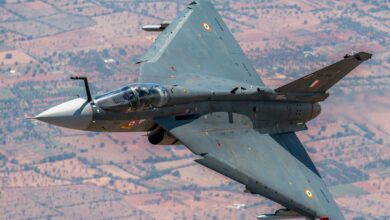
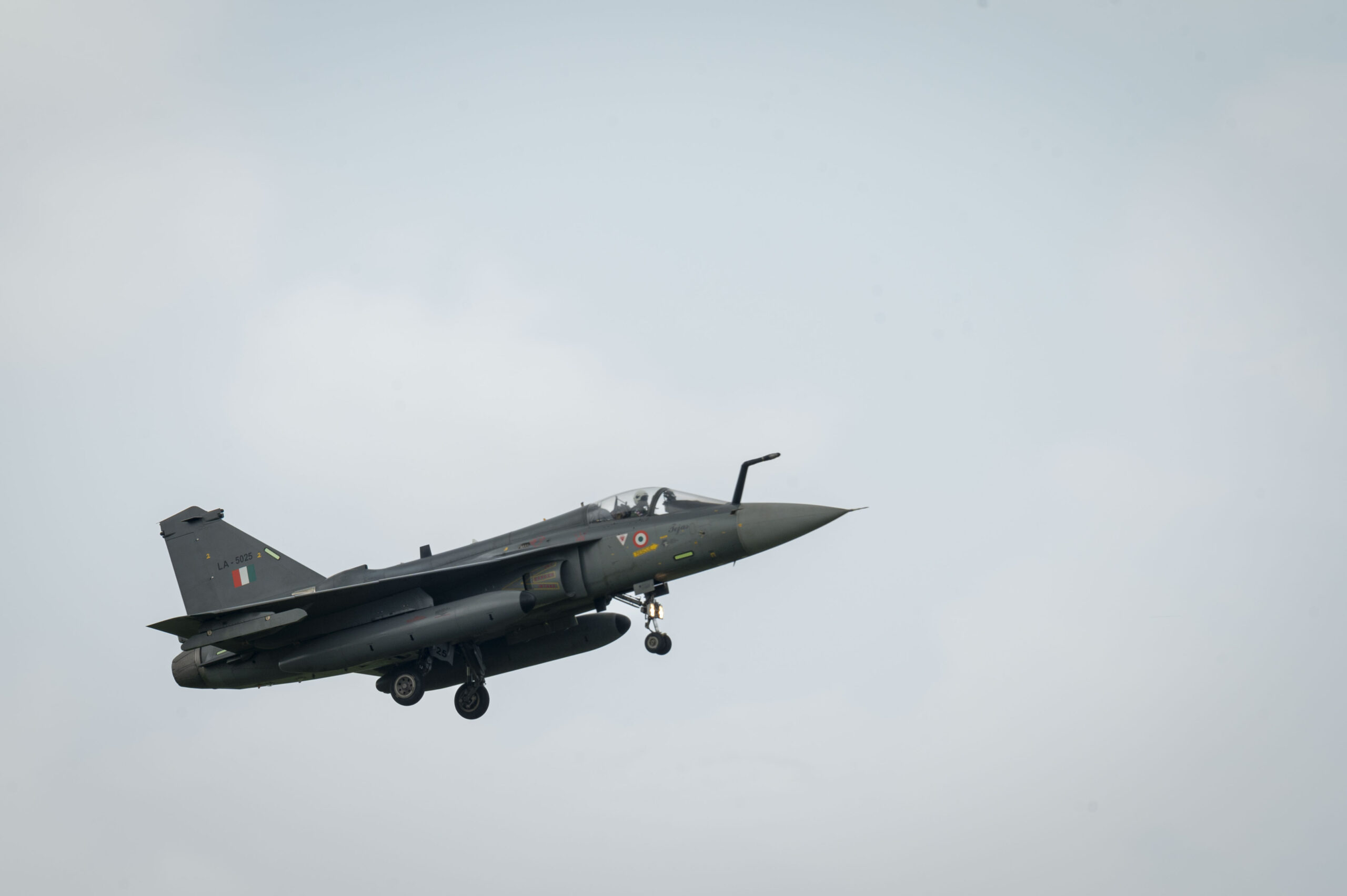
The HAL Tejas is a fourth-generation light combat aircraft developed by India for the Indian Air Force and Indian Navy.
At its core, the Tejas was designed to provide air defense and interception; short-range air superiority; and ground attack and strike capabilities.
It is built around agility, reduced radar signature, and cost-effective operation, making it a key platform in India’s effort to modernize its air fleet while maintaining domestic production independence.
Origins and Development
The Tejas program was initiated by India’s Defence Research and Development Organisation (DRDO) in the 1980s to replace the MiG-21, a Soviet-era jet that had formed the backbone of Indian air defense for decades but earned a devastating safety record in Indian service.
The urgency to replace it with a domestically built alternative drove the program’s founding logic and much of the political will that kept it funded through four decades of delays.
Development was led by state-owned Hindustan Aeronautics Limited (HAL), in collaboration with DRDO’s Aeronautical Development Agency, though technological complexity in avionics, materials, and engine integration meant the road to operational service was far longer than anyone originally planned.
Variants and Configurations of the HAL Tejas
The Tejas family has evolved into multiple configurations tailored for different roles:
- Tejas Mk 1: Initial production variant for the Indian Air Force
- Tejas Mk 1A: Upgraded version with improved radar, electronic warfare systems, and maintainability
- Tejas Trainer: Two-seat configuration for pilot training
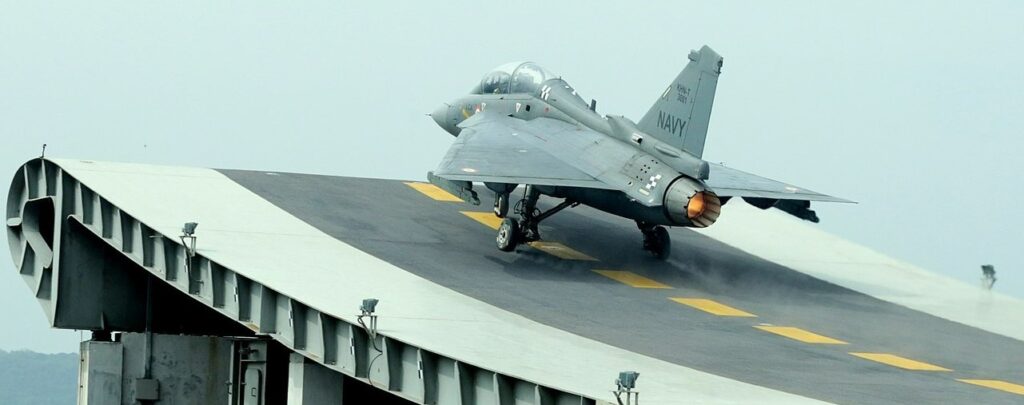
- Naval Tejas: Carrier-capable variant designed for aircraft carrier operations (testing phase)
- Tejas Mk 2 (under development): Larger, more powerful multirole evolution with increased payload and range
How the HAL Tejas Works
Key Features
Aerodynamics and Design Philosophy
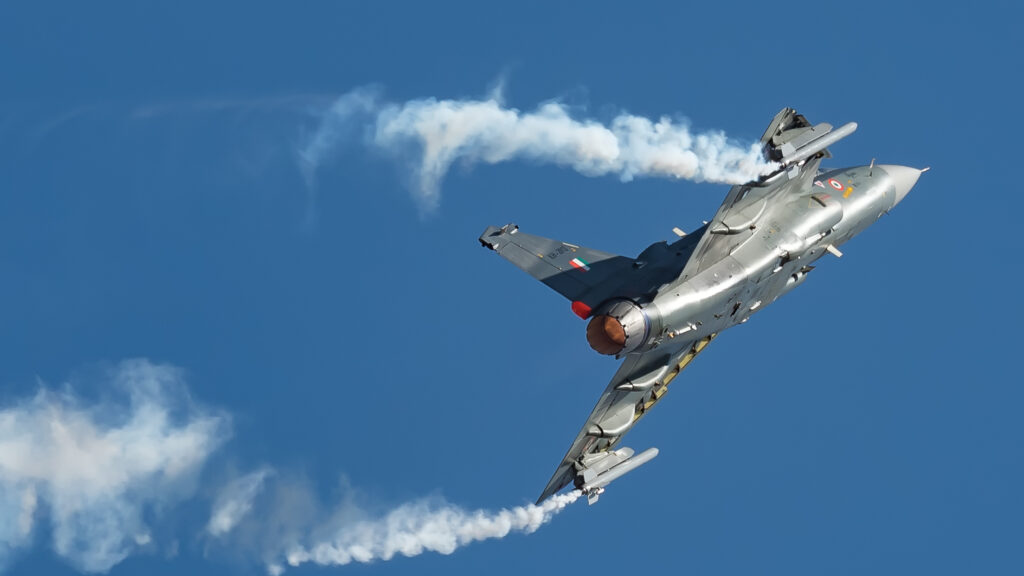
The Tejas uses a delta-wing configuration combined with a tailless design, giving it high maneuverability and stability at both high and low speeds.
Its lightweight composite airframe reduces radar cross-section and improves fuel efficiency.
The aircraft was designed with relaxed static stability, meaning it relies heavily on computerized flight control systems to remain stable, enhancing agility in dogfights.
Avionics and Combat Systems
The Tejas features a fully digital glass cockpit with advanced avionics, including radar, electronic warfare suites, and targeting systems.
It is equipped with modern sensors that allow it to detect, track, and engage multiple targets simultaneously, even in contested electromagnetic environments.
The Mk1A variant further enhances these systems with an active electronically scanned array (AESA) radar and improved electronic countermeasures.
Weapons and Mission Capability
The Tejas is a multirole platform capable of carrying air-to-air missiles, air-to-ground munitions, precision-guided bombs, and a built-in 23mm cannon.
Its weapon flexibility allows it to perform air superiority missions and strike missions, making it adaptable across a wide range of operational scenarios.
Strengths
- Indigenous design supporting strategic self-reliance
- High maneuverability and agile flight performance
- Modern digital avionics and sensor integration
- Flexible multirole capability
Limitations
- Limited combat range compared to heavier fighters
- Smaller payload capacity than medium or heavy-class aircraft
- Early production variants faced developmental delays
- Still building operational maturity compared to legacy global platforms
Global Use and Operational Role
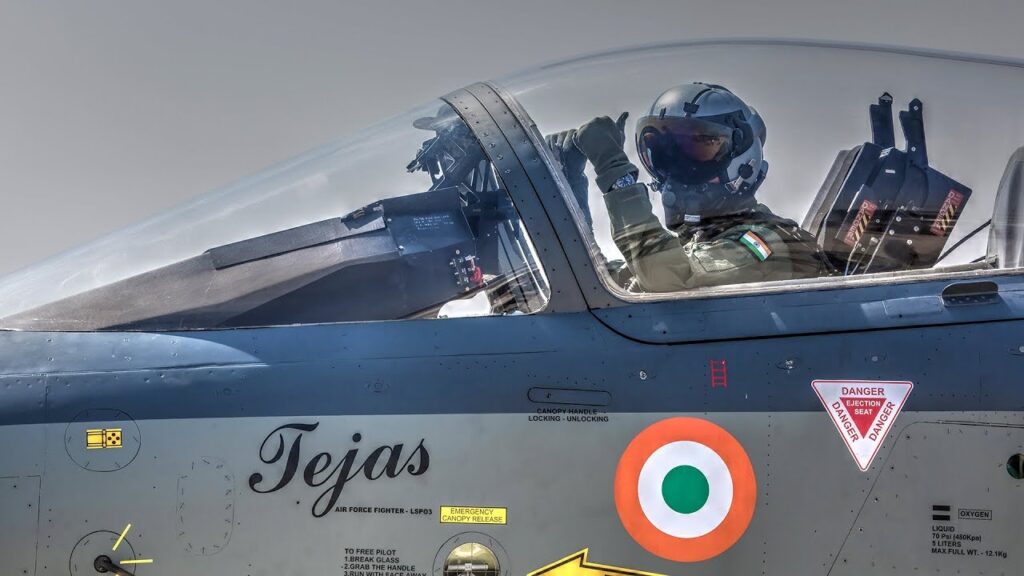
The Tejas is primarily operated by the Indian Air Force, where it is gradually replacing older MiG-21 squadrons and strengthening air defense coverage.
It has been showcased internationally at air shows as part of India’s defense export ambitions, although export success has been limited.
The primary constraint is not demand — Malaysia came close to selecting the Tejas before ultimately passing — but supply.
HAL’s production lines are already struggling to meet the Indian Air Force’s own order backlog, leaving little capacity to credibly promise delivery timelines to foreign customers. Until domestic production rates improve, export ambitions are likely to remain aspirational.
Its operational role is focused on homeland air defense, quick reaction alert missions, and tactical strike operations in support of ground forces.
The aircraft is increasingly integrated into India’s broader networked defense strategy, operating alongside ground-based radar systems, AWACS aircraft, and future unmanned platforms.
Future Outlook
The Tejas program is still evolving, with the Mk1A and Mk2 variants expected to significantly expand its range, payload, and network warfare capabilities.
However, production delays have plagued HAL’s aircraft program, drawing criticism from the country’s military.
Furthermore, the state-owned defense company has been sidelined from India’s fifth-generation fighter aircraft project due to its turnover rate with its existing order book.