The history of warfare is, in large part, a history of asymmetry — of clever actors finding ways to neutralize expensive advantages with cheap innovations.
The Greek fire that bewildered Byzantine enemies, the improvised explosive device that thwarted armored convoys in Iraq, the drone swarm that forced a rethink of carrier battle group doctrine.
Each time, the strategically dominant power was caught flatfooted not by a superior adversary but by a cheaper one.
So here is the question that the maritime security community must now confront with urgency: what happens when a state or non-state actor discovers that an untethered balloon costing a few hundred dollars can paralyze a shipping lane that moves one-fifth of the world’s petroleum?
A Threat Already Proven on Land
The use of balloons as a strategic instrument is no longer theoretical.
Russia’s employment of high-altitude balloons over Kyiv demonstrated something far more sophisticated than mere provocation. These platforms, equipped with corner reflectors and lightweight reconnaissance packages, were designed to complicate air defense decision-making and consume expensive interceptors, all at a fraction of the cost of the missiles scrambled against them.
The exchange ratio was laughable by conventional metrics: a balloon costing perhaps a few thousand dollars triggering the expenditure of interceptors priced in the hundreds of thousands.
That arithmetic is not lost on adversarial planners.
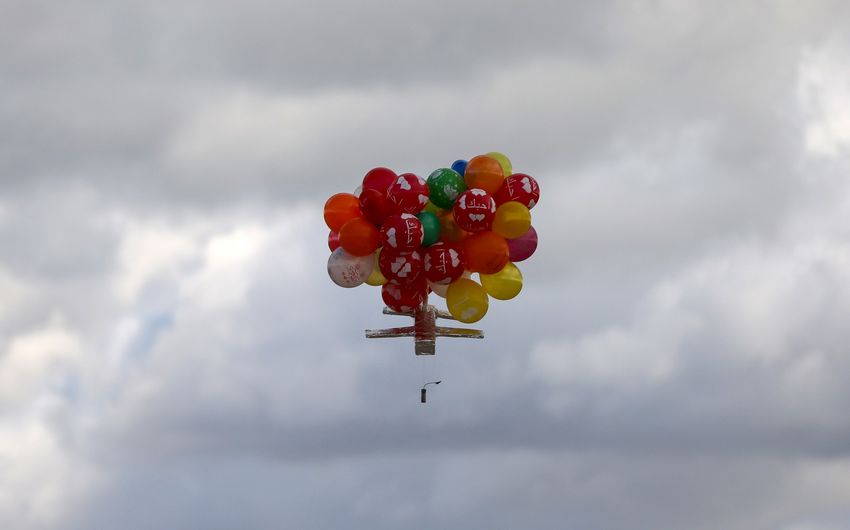
Gaza-based operators drew a different lesson: incendiary balloons required no command-and-control infrastructure and no military training to deploy, yet they generated fires, consumed emergency response resources, and applied sustained psychological and political pressure on Israeli civilian society.
North Korea’s trash-balloon campaign offered yet another variation on the theme, disrupting South Korean airports, triggering emergency government responses, and demonstrating that the threshold for a strategically meaningful balloon operation is embarrassingly low.
Why the Strait of Hormuz Is the Logical Next Stage
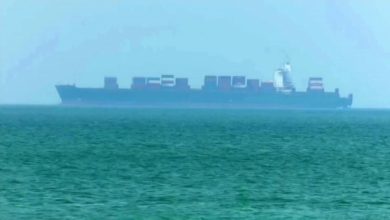
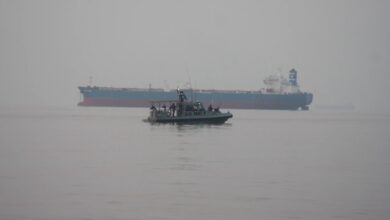
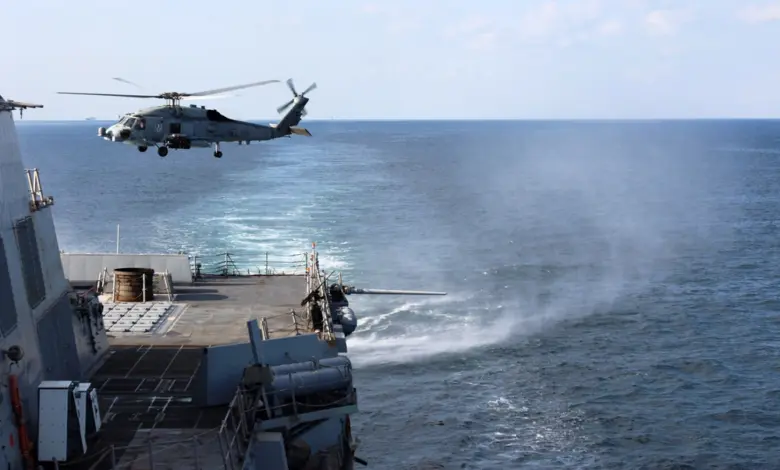
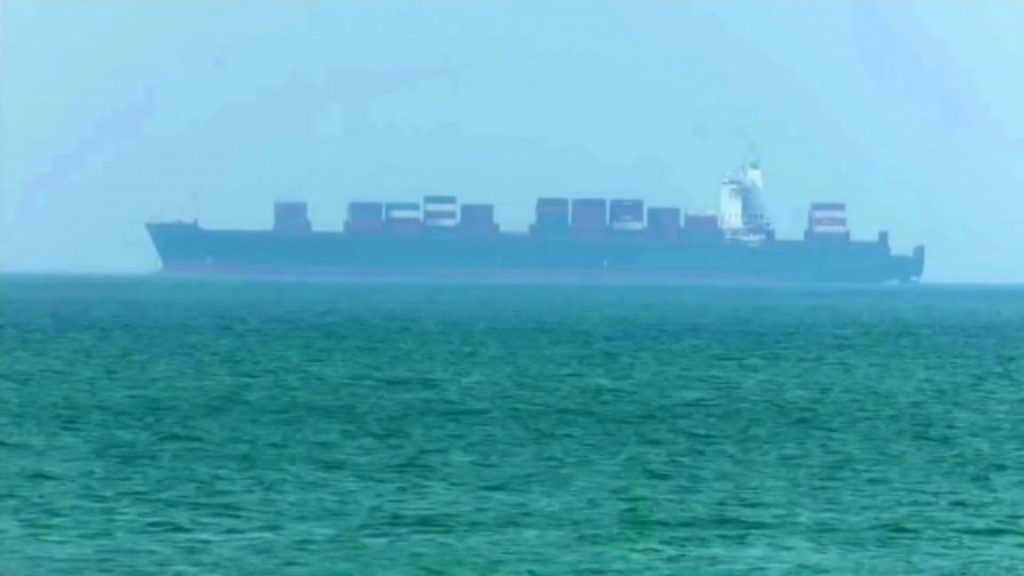
The Strait of Hormuz is the single most consequential maritime chokepoint on earth. Roughly one-fifth of global petroleum liquids consumption transits its narrow waters, making it the jugular of the global energy system.
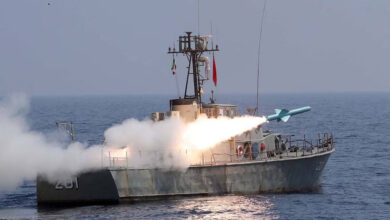
Iran has long understood this and has spent decades developing asymmetric capabilities. Fast attack boats, anti-ship missiles, naval mines, and underwater drones have been used to paralyze shipping traffic during the current conflict with the US and Israel.
What has received far less attention is the role that cheap airborne platforms could play in that same operational calculus.
Consider what a sustained balloon campaign over the strait would actually require: modest logistical infrastructure on the Iranian coastline, commercially available materials, and a rudimentary understanding of prevailing wind patterns. The technical barrier is not high. The strategic payoff, however, could be enormous.
What a balloon equipped with a corner reflector — or even a crude radar-reflective payload — drifting across a busy shipping lane forces every vessel in the vicinity into a calculation that has no clean answer. Is it a decoy? Is it carrying something worse?
Owners of crude carriers do not carry master’s degrees in threat classification. They carry insurance policies, and those policies respond to uncertainty by spiking premiums. War-risk insurance premiums for Gulf routes can surge dramatically during periods of elevated tension, converting what might otherwise be a six-figure transit cost into a multi-million-dollar expense.
No balloon needs to ever strike a vessel to achieve a meaningful strategic effect.
Building a Cost-Effective Counter-Balloon Kill Chain
The challenge of constructing a counter-balloon kill chain is not primarily technological. The harder problem is doctrinal and institutional. Effective response requires answering several uncomfortable questions that existing frameworks are not structured to ask.
At what threshold of uncertainty does a maritime commander authorize the expenditure of a costly interceptor against an object that may be commercially sourced weather equipment? Who bears the liability — legal, political, and financial — if that intercept triggers an escalation ladder that no one intended to climb?
Detection must begin well before a balloon enters the operational envelope of a maritime chokepoint. This means investing in persistent wide-area surveillance systems capable of tracking low, slow objects at extended range — not the high-performance radar arrays optimized for ballistic and aerodynamic threats, but lower-frequency systems, aerostat-borne sensors, and distributed networks of passive acoustic and optical detectors that can maintain track on objects the size of a beach ball from distances measured in hundreds of kilometers.
Directed-energy weapons, high-powered microwave systems, and even modified counter-drone effectors represent options that can engage balloon threats at a cost per shot far closer to the cost of the balloon itself.
Equally important is the intelligence and warning architecture that must feed such a system. Balloon launches require materials, infrastructure, and weather windows. Persistent collection against those indicators, integrated across naval intelligence, national technical means, and commercial imagery, can provide the warning time necessary to respond before a threat reaches the strait.
The Insurance Market as a Strategic Variable
It would be a mistake to analyze this threat exclusively through a kinetic lens, because the most potent effects of a sustained maritime balloon campaign may never involve a single physical engagement.
The war-risk insurance market is a real-time aggregator of expert judgment on threat probability, and it responds to ambiguity by raising premiums that can render entire trade routes economically unviable without a shot being fired.
Lloyd’s of London and the Joint War Committee’s designation of specific maritime areas as high-risk zones has historically been sufficient to redirect shipping, renegotiate contracts, and restructure logistics networks.
A state actor that understands this mechanism can use a balloon campaign not to sink ships but to price them out of the market, achieving a de facto maritime embargo through the instrument of actuarial uncertainty.
This is not speculation. The Houthi campaign in the Red Sea demonstrated exactly this dynamic: the threat of attack, rather than the attacks themselves, was sufficient to reroute a substantial portion of global container traffic around the Cape of Good Hope, adding billions to shipping costs.
Balloons, applied with strategic patience to a chokepoint as vital as the Strait of Hormuz, could achieve a comparable effect.
What Sound Policy Requires
The balloon threat at sea demands a response that is proportionate to its cleverness, not merely to its apparent simplicity. The threat is not in the payload; it is in the logic. Cheap, ambiguous, and deniable tools that exploit the cost-exchange dilemma are the defining instruments of this era of strategic competition.
What sound policy requires, then, is a set of integrated responses that address the threat at every layer: persistent surveillance capable of tracking low, slow airborne objects across maritime approaches; cost-effective intercept options; clear rules of engagement that give commanders the authority to act under ambiguity without triggering unintended escalation; a coordinated approach to war-risk insurance governance that prevents adversaries from weaponizing the market; and an intelligence collection posture that treats balloon launch indicators as a strategic priority.
None of these measures is technically beyond reach. The question is whether the institutional will exists to prioritize them before the first balloon drifts across the tanker lanes of the Strait of Hormuz — because by the time it does, the moment for deliberate preparation will have passed.
The history of asymmetric warfare suggests that we rarely lack the capability to respond to cheap and clever threats. We lack the imagination to take them seriously before they are used against us. That is a failure of strategic culture, one the maritime security community cannot afford to repeat.

Dominique Plewes is the founder and chairperson of the SOF Support Foundation, where she leads initiatives supporting US Special Operations Forces and their families.
A researcher, writer, and advocate, she has conducted field research in conflict zones around the world and works at the intersection of national security, military family support, and global affairs.
The views and opinions expressed here are those of the author and do not necessarily reflect the editorial position of The Defense Post.
The Defense Post aims to publish a wide range of high-quality opinion and analysis from a diverse array of people – do you want to send us yours? Click here to submit an op-ed.